
With UFC fight night wrapped at the White House, days of breakdown and cleanup begin
White House Hosting UFC Event Marks Presidential Birthday and National Anniversary
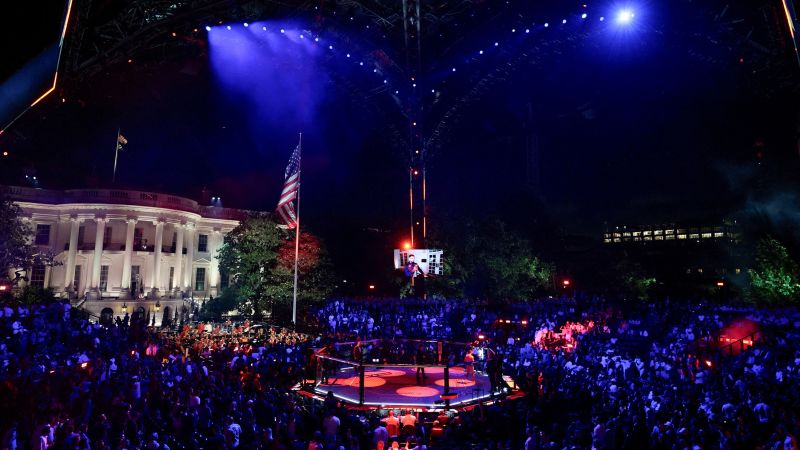
With UFC fight night wrapped at – Following the conclusion of a high-profile UFC fight night at the White House, a multi-day cleanup operation has begun, with teams working to dismantle the elaborate setup that transformed the South Lawn and Ellipse into a temporary arena. The event, which took place early Monday, was the culmination of months of preparation and required an extensive logistical effort. As the last guests were ushered out, crews moved in to clear the space, marking the start of a process expected to span over a week.
Logistical Challenges of the Event
The UFC event, hosted by President Donald Trump to coincide with his 80th birthday and America’s 250th anniversary, brought together thousands of fans and performers. The South Lawn served as the venue for the main competition, while the Ellipse hosted a massive fan festival. Over 100,000 visitors were accommodated during the event, which featured cutting-edge production elements and broadcast capabilities. According to White House management and administration director Joshua Fisher, the disassembly of the event’s infrastructure will begin promptly after the event’s conclusion, with the “Claw” lighting structure being one of the first components to be removed.
“The Claw will be disassembled immediately after the Event concludes. Plans are in place for demobilization to begin at 10:00am on June 15, 2026,” said Fisher in a sworn declaration.
The transformation of the White House grounds required a year of planning and weeks of on-site work. From May 20, teams worked under tight deadlines to install staging, seating, and broadcasting equipment, all while navigating security protocols and federal regulations. Fisher emphasized the complexity of the operation, noting that it involved collaboration between public and private entities, including the US Secret Service, which played a key role in securing the event.
Event Setup and Security Measures
The scale of the setup was unprecedented, with the White House becoming a temporary venue for mixed martial arts action. The arena featured seating for 4,000 spectators and broadcast infrastructure designed to handle live coverage. Surrounding the South Lawn, the Ellipse was converted into a fan festival zone, complete with interactive displays, food vendors, and merchandise stalls. This massive operation demanded not only physical resources but also strategic coordination to ensure smooth execution.
Security was a top priority, with the Secret Service implementing measures such as pedestrian barriers, anti-scale fencing, and magnetometers to screen attendees. These provisions were removed as part of the early cleanup phase, which also included the dismantling of food and beverage stations, broadcast equipment, and temporary structures. The event’s security team worked alongside federal agencies to maintain order and safety throughout the weekend.
“This is a highly complex, multi-faceted Event that has been carefully planned by a multitude of public and private entities over a significant period,” Fisher stated in his sworn declaration.
As the breakdown process progressed, each day brought a new phase of deconstruction. On Tuesday, restrooms and camera towers were targeted for removal, while staging and interior fencing were also taken down. By the end of the week, power lines, tents, and bleachers would be cleared, leaving the grounds largely restored to their original state. The final phase of the cleanup, set for the following Monday, would see the removal of exterior fencing and the disposal of remaining materials.
Costs and Funding Breakdown
The UFC event represented a significant financial commitment, with the organization covering approximately $60 million in costs related to production, labor, construction, and promotion. In contrast, the federal government provided essential emergency services, including first aid, law enforcement, and security measures, though the exact cost to taxpayers remains unspecified. Fisher highlighted that the coordination of these services was critical to the event’s success, with the Secret Service overseeing security screening and other federal departments managing logistical support.
Logistics were managed with precision, as daily installations required screening of 20 to 30 trucks carrying UFC equipment. Each shipment was carefully monitored to ensure compliance with White House guidelines. The setup process involved 700 to 900 subcontractors, each specializing in a particular aspect of the build, such as lighting, sound systems, or stage construction. These teams operated under strict time constraints, with the event’s buildout concluding just days before its debut.
Timeline and Final Phases of Cleanup
According to the detailed UFC schedule provided in a court filing, the cleanup timeline is structured to ensure the White House grounds are fully prepared for future use. By Friday, stage load-out should be complete, with all major components removed. The following Monday will see the final steps, including the removal of remaining exterior fencing and the departure of merchandise trailers. The process will conclude by the end of June 23, when parking for White House staff, temporarily relocated to Pennsylvania Avenue, is expected to be reopened.
While the event drew attention for its entertainment value, it also sparked debate over the use of federal resources. The White House’s decision to host the UFC fight night as part of its public engagement efforts raised questions about the balance between celebratory programming and taxpayer-funded expenditures. Despite this, Fisher defended the event as a necessary investment in promoting national unity and showcasing the White House’s ability to host large-scale public events.
As the cleanup continues, the White House is gradually returning to its usual operations. The transformation of the South Lawn and Ellipse into a combat arena and fan festival underscores the versatility of the presidential residence as a venue for diverse activities. While the physical remnants of the event will be removed, the legacy of the UFC night will remain as a symbol of the intersection between sports and politics in public spaces. The process, though extensive, serves as a reminder of the intricate planning and resource allocation required for such an undertaking.
Throughout the event, President Trump observed the action from a cage-side seat, flanked by First Lady Melania Trump and UFC CEO Dana White. This personal involvement highlighted the president’s engagement with the event, which was not just a spectacle but a carefully orchestrated celebration of both his milestone birthday and the nation’s bicentennial. As the final stages of dismantling unfold, the White House will continue to manage the aftermath, ensuring that the grounds are left in a condition suitable for their traditional functions.
The event’s coordination was a testament to the seamless partnership between the UFC and federal agencies. From the initial planning stages to the final cleanup, every aspect was managed with meticulous attention to detail. The White House’s ability to host such an event, despite the challenges posed by security and logistics, demonstrated its capacity to adapt to new formats of public engagement. As the days of breakdown and cleanup progress, the focus remains on restoring the iconic setting while reflecting on the event’s broader implications for national events and entertainment.
