
Supreme Court to decide if migrants detained for months must receive bond hearings
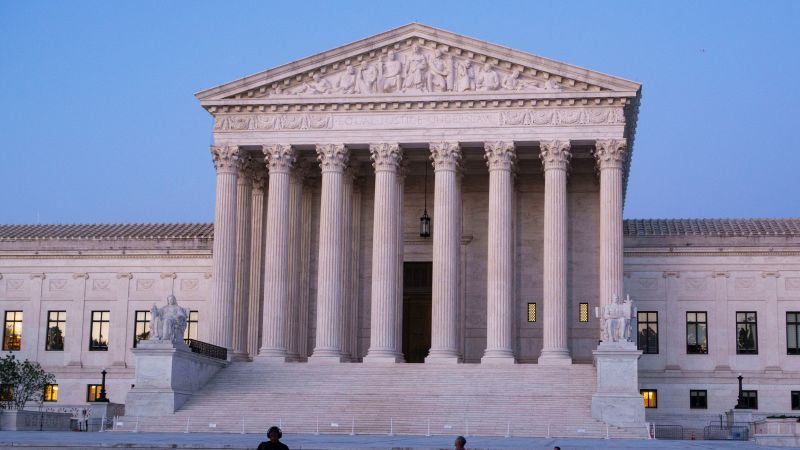
Supreme Court to Decide Migrants’ Bond Hearing Rights
Supreme Court to decide if migrants – The U.S. Supreme Court is set to determine whether immigrants detained for extended periods without bond hearings must be granted due process under federal law. This pivotal case, which centers on the legal rights of noncitizens, has drawn significant attention as it could reshape the administration’s approach to immigration detention. The Court’s decision will address whether prolonged detention without a bond hearing violates constitutional protections, potentially impacting thousands of individuals caught in the immigration system.
The Legal Challenge at Hand
At the heart of the dispute are two individuals, both green card holders, who were convicted of aggravated felonies and faced deportation to the Dominican Republic and Jamaica, respectively. One was held in custody for seven months, while the other endured nearly two years of detention without a bond hearing. Their legal team, represented by the American Civil Liberties Union (ACLU), argues that the government’s policy of mandatory detention for noncitizens convicted of certain crimes is inconsistent with the Constitution’s due process clause. The case is a direct challenge to the Trump administration’s strategy of expanding detention without judicial review.
Background of the Case
The legal battle began in 2024 when a federal appeals court in New York ruled that noncitizens detained for extended periods must receive bond hearings. This decision required the government to demonstrate that detainees posed a flight risk or were a threat to public safety before holding them without release. However, the Trump administration contested this ruling, asserting that it was “seriously misguided.” The appeal to the Supreme Court highlights a key legal question: does the Constitution mandate bond hearings for prolonged detention, or can federal law allow indefinite holding under specific conditions?
The case has broader implications for immigration policy, as it challenges the legal framework that enables mass detention. The Trump administration’s reclassification of certain immigrants into mandatory detention categories has led to prolonged separations from families and increased reliance on solitary confinement. Critics argue this approach undermines the rights of noncitizens, while supporters claim it enhances national security and immigration enforcement. The Supreme Court’s ruling will decide the balance between these competing interests.
Historically, the Court has grappled with similar issues. In 2016, it addressed a similar challenge and concluded that federal law did not require bond hearings for noncitizens. The decision, written by Justice Samuel Alito, left open the question of whether the Constitution would necessitate such hearings. Liberal Justice Stephen Breyer, who had since retired, dissented, stating that the majority’s interpretation could render the statute unconstitutional. This precedent now faces reevaluation as the current case brings renewed scrutiny to the issue of due process in immigration detention.
Legal experts are divided on the potential outcome. Some argue that the Court will uphold the 2024 ruling, emphasizing that prolonged detention without a bond hearing constitutes a constitutional violation. Others believe the Court may side with the administration, citing the importance of maintaining swift immigration enforcement. The case also raises questions about the fairness of the evidence required to justify detention, with the government needing to meet a higher standard than in other legal proceedings. This could affect how immigration courts assess risks and make decisions about custody.
“The Supreme Court’s decision will determine whether the government can detain migrants indefinitely without a judicial review,” said legal analyst Maria Lopez. “This case is a test of how the Constitution applies to noncitizens in a rapidly evolving immigration landscape.”
As the Court prepares to rule, the stakes are high. The outcome could influence the treatment of immigrants in custody, setting a precedent for future cases. Whether the Court affirms the right to bond hearings or allows continued detention without them, the decision will have lasting effects on the rights of noncitizens and the administration’s ability to enforce immigration policies. This case underscores the ongoing debate over the intersection of immigration law and constitutional protections, with the Supreme Court at the center of the controversy.
