
Mallory McMorrow drops out of Michigan’s crucial Democratic Senate primary
Mallory McMorrow Drops Out of Michigan’s Crucial Democratic Senate Primary
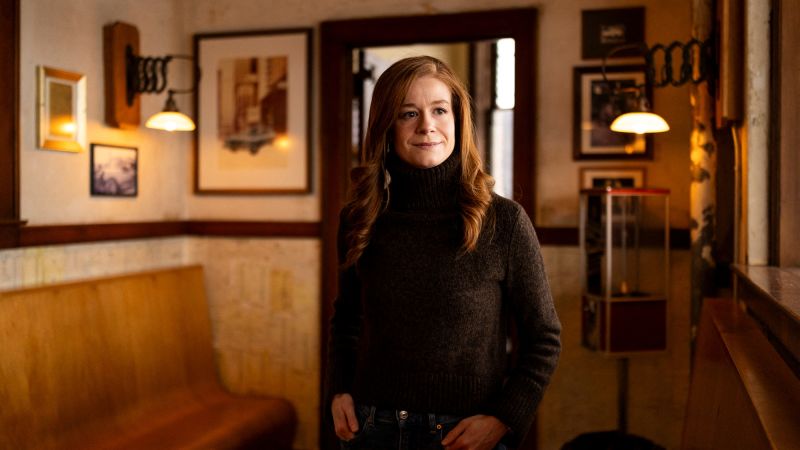
Mallory McMorrow drops out of Michigan – On Sunday, Mallory McMorrow formally withdrew from the Democratic Senate primary in Michigan, reducing the race to a showdown between Rep. Haley Stevens and Abdul El-Sayed. This development underscores the growing tension within the party as it prepares for a pivotal August 4 vote that could determine its candidate to defend a Senate seat widely considered a key battleground. The exit of McMorrow, a prominent figure in state politics, highlights the shifting dynamics of the race and the challenges facing Democrats in their quest to retain control.
Focus on the General Election
McMorrow’s decision to step aside came amid concerns that El-Sayed, a progressive voice associated with the Bernie Sanders wing of the Democratic Party, might struggle in the general election against former Rep. Mike Rogers, the Republican frontrunner. Democratic strategists have emphasized the need to prioritize candidates with broader appeal, fearing that El-Sayed’s left-leaning positions could alienate moderate voters in a state where the party’s margin for victory is slim. While El-Sayed has drawn energy from progressive activists, his ability to translate that momentum into a win against Rogers remains uncertain.
“Whoever wins this primary on August 4 will have my full support,” McMorrow stated in a video posted on X. She highlighted her tenure as majority whip of the state Senate, framing her candidacy as a campaign to secure victories for Democrats across all levels of government. Though she did not endorse either of her former rivals, McMorrow’s withdrawal signals a strategic pivot toward consolidating support behind a more unified front.
Stevens and El-Sayed Set to Clash
With McMorrow’s exit, Rep. Haley Stevens, a four-term congresswoman backed by Michigan Attorney General Dana Nessel—a key ally of McMorrow—now faces El-Sayed in the final stretch of the primary. Nessel’s endorsement marks a significant endorsement in the race, as outgoing Gov. Gretchen Whitmer has yet to commit to a candidate. Stevens, who has been favored by Washington-based Democratic leaders, has positioned herself as a pragmatic choice capable of translating the party’s progressive gains into electoral success.
El-Sayed, meanwhile, has leveraged his grassroots appeal and alignment with Sanders’ progressive agenda to build a strong base of support. His campaign has sought to counter the notion that he is too radical for the general election, emphasizing his ability to unite the party’s base while appealing to centrist voters. Despite past criticisms from opponents, El-Sayed has maintained a consistent message of reform, arguing that the current political system favors corporate interests over ordinary citizens.
McMorrow’s Campaign and Controversies
McMorrow’s withdrawal follows months of intense scrutiny over her campaign’s struggles to gain traction in a fractured field. Her early exit reflects not only personal challenges but also a broader realignment within the Democratic Party. As the party seeks to avoid a repeat of the 2022 primary, where internal divisions led to a chaotic race, McMorrow’s decision to leave the contest is seen as a calculated move to strengthen the chances of a more viable candidate.
Her campaign had initially drawn attention for its energetic outreach and social media-driven strategy. However, as the primary approached, her inability to secure a strong second-place finish raised doubts about her viability. Critics pointed to her shifting positions on issues like Israel’s war in Gaza and corporate PAC funding, accusing her of inconsistency. These accusations, combined with a viral 2022 speech in which she attacked a Republican colleague for a culture-war accusation, have shaped her public image.
“The energy is there. People are crying out for change. And we owe it to them to listen,” McMorrow said in a Sunday statement, reiterating her call for a new direction in the party. She had previously signaled her dissatisfaction with Senate Democratic leader Chuck Schumer, stating she would not support his re-election if it meant maintaining the status quo. This stance further differentiated her from more establishment-aligned candidates and positioned her as a symbol of internal Democratic conflict.
Legacy and Impact on the Race
McMorrow’s journey to the Senate race began with a viral moment in 2022, when she delivered a fiery speech criticizing a Republican for falsely claiming she sought to “groom” children. That speech, which captured national attention, helped establish her as a rising star within the party. She later became a prominent speaker at the 2024 Democratic National Convention in Chicago, further amplifying her visibility. Her campaign also benefited from high-profile endorsements, including support from Massachusetts Sen. Elizabeth Warren, Connecticut Sen. Chris Murphy, and former Vermont Gov. Howard Dean.
Despite these advantages, McMorrow faced obstacles in building a cohesive coalition. Her campaign was plagued by rumors of instability, with opponents spreading claims that she might withdraw at any moment. These rumors gained traction after CNN’s KFile revealed old tweets in which she criticized the rural Midwest and expressed reservations about moving from California to Michigan. Though she deleted the posts and defended her “authenticity” in an interview with CNN’s Manu Raju, the controversy lingered, affecting her ability to secure broader support.
A Defining Moment for Michigan Democrats
The withdrawal of McMorrow adds urgency to the final phase of the primary, as Democrats prepare to choose a nominee for a seat that is vital to their control of the Senate. The race for this open seat has become a microcosm of the broader national struggle between progressive and moderate factions. Retiring Sen. Gary Peters, a Democrat, has made the seat a must-win for the party, with Republicans eager to flip it and strengthen their majority.
Rogers, the likely GOP candidate, narrowly lost a 2024 race for the state’s other Senate seat, demonstrating his appeal to voters who prioritize fiscal responsibility and conservative values. If he secures the current seat, Republicans could gain leverage in their efforts to counter Democratic gains. For Democrats, the outcome hinges on their ability to unify behind a single candidate who can bridge ideological divides while maintaining a strong message of reform.
As the August 4 primary approaches, the remaining candidates will need to refine their strategies. Stevens, with her established name recognition and institutional backing, may benefit from a unified front, while El-Sayed’s ability to galvanize younger, more progressive voters could prove decisive. The race will ultimately test the party’s capacity to balance its core values with the realities of a competitive election.
Looking Ahead
McMorrow’s announcement comes just days before the final debate between the two remaining candidates, which will likely shape the final days of the campaign. The event provides a final opportunity for voters to compare the candidates’ visions for the state and the nation. As the Democratic Party narrows its focus, the August 4 vote will serve as a critical moment in determining the path forward for the Senate race and, by extension, the party’s strategy for the 2026 election.
With the primary field now reduced to two, the battle for Michigan’s Senate seat has entered its most intense phase. The choice between Stevens and El-Sayed will not only define the outcome of the race but also signal broader trends within the Democratic Party. As the nation watches, the implications of this decision could ripple across the political landscape, influencing the balance of power in the Senate and the future of progressive policies in the Midwest.
