
Johnson gets a bit of slack in his historically narrow House majority
Johnson Gains Minor Flexibility in Tight House Majority
Johnson gets a bit of slack – As the House of Representatives navigates a rapidly evolving political landscape, Speaker Mike Johnson has found himself with a slightly more manageable situation in his historically narrow majority. While the margin remains razor-thin, recent changes have allowed him to secure legislation with the loss of just three Republican votes on party-line decisions. This shift, however, may not last long, as the balance of power continues to fluctuate in unpredictable ways.
The Partisan Landscape and Vacant Seats
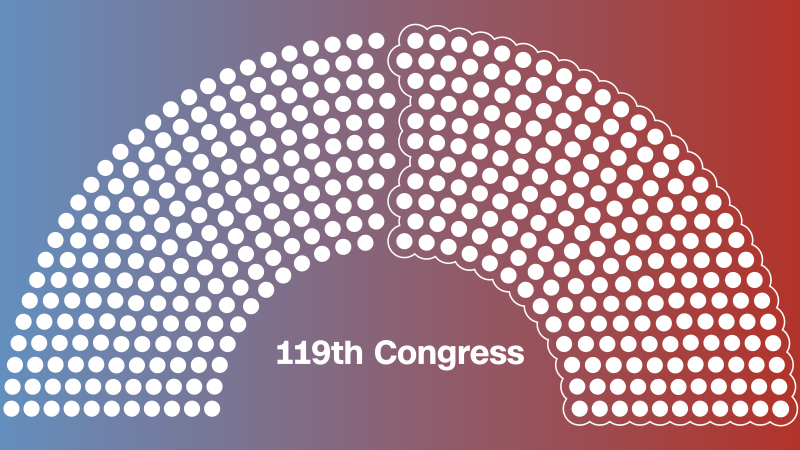
The current division in the House is 218 Republicans, 212 Democrats, one independent, and four seats that are still unoccupied. California’s Kevin Kiley, the lone independent, was initially elected as a Republican but transitioned to the GOP caucus following his official departure from the party this year. His continued alignment with the Republicans has provided a slight edge to Johnson, though the situation is far from stable. A significant development occurred with the swearing-in of Republican James Gallagher of California, who now occupies the seat previously held by the late Doug LaMalfa. This replacement has temporarily bolstered the majority, but the next special election in June could tilt the scales once again.
Historical Precedents and Electoral Shifts
Johnson’s current majority echoes historical precedents where party divides have created precarious political positions. The 119th Congress began with a margin of 219 Republicans to 215 Democrats, but the loss of Rep. Matt Gaetz in Florida reduced the Republican tally by one. This adjustment has raised questions about the sustainability of the majority. The situation mirrors that of the 72nd Congress, which commenced in March 1931 but didn’t fully function until December of that year due to delays and vacancies. At the term’s start, the House was evenly split at 217 Republicans to 216 Democrats, with one seat allocated to the Farmer-Labor Party and a vacancy caused by a deceased member. This historical context underscores how quickly the balance of power can shift, even in the early stages of a congressional term.
A Narrow Majority with Big Implications
The historically tight margin in the House has posed challenges for congressional Republicans seeking to advance Trump’s legislative agenda. With only a handful of seats separating the two parties, any misstep can lead to significant setbacks. The latest example of this fragility came during the passage of the massive tax and spending cuts package in July. Despite the narrow majority, the bill faced resistance, as two Republican lawmakers—Thomas Massie of Kentucky and Brian Fitzpatrick of Pennsylvania—voted alongside Democrats to block its final approval. This rare defection highlighted the difficulty of maintaining unity in a divided chamber.
The threshold for passing legislation in the House is a majority of the members present, meaning the magic number is 218 under full attendance and complete seat occupancy. However, this number can fluctuate with vacancies or absences. For instance, if the four vacant seats remain unfilled, the required majority could decrease, offering even more leeway for Johnson. Yet, the upcoming June 16 special election in California threatens to add another Democratic seat, potentially narrowing the margin further.
A Historic Tie in the 65th Congress
The closest party split in U.S. House history occurred during the 65th Congress, where Republicans secured 215 seats and Democrats claimed 214. This deadlock meant neither party had a clear majority, forcing third-party representatives to play a pivotal role in selecting a speaker. The situation was resolved through a series of compromise votes, but it remains a notable example of how a narrow majority can create legislative uncertainty.
While the 65th Congress’s division was unprecedented, the current scenario is not far removed in terms of its implications. The tight margins have forced GOP leaders to rely on strategic alliances and tactical voting to achieve their goals. For example, during the 119th Congress’s opening, Johnson won the speakership in a closely contested vote with the majority at 219 to 215. This meant he could afford to lose just one Republican vote if all Democrats opposed the measure. Yet, the reality of party dynamics proved more complex, as the tax bill’s passage required a careful balancing act between party loyalty and individual discretion.
Challenges of Unity and Leadership
Johnson’s ability to pass legislation is contingent on maintaining cohesion within the Republican ranks. The recent tax and spending cuts package, a key achievement for the administration, was passed with bipartisan support but not without internal dissent. The two defections from Republicans during the vote underscore the difficulty of uniting the party, especially in a high-stakes environment. Such moments of division raise concerns about the long-term viability of the majority and the potential for further challenges in the legislative process.
The House’s history of narrow majorities dates back to the early 20th century, but the current configuration is arguably the most precarious in recent decades. The 1930 elections saw a similarly tight split, with Republicans holding 218 seats and Democrats 216, though the Farmer-Labor Party added a single seat. This parallel to the 1930s highlights how political instability can persist even in times of economic or social upheaval. The current Congress, however, operates in a different context, where partisanship and polarization have intensified.
The Road Ahead for Congressional Republicans
With the June 16 special election in California looming, the race for a vacant seat has become a focal point for both parties. Democrats are expected to capitalize on this opportunity, which could further shrink the majority. If the election results in a Democratic win, the House’s balance will shift, potentially requiring Johnson to adapt his strategy or seek new alliances. This development could also impact the legislative calendar, as the new seat might be filled by a staunchly partisan member who could either support or challenge the Speaker’s agenda.
The role of vacancies in shaping the House majority cannot be overstated. From the loss of Rep. Gaetz to the passing of other lawmakers, these absences have created a dynamic environment where the composition of the chamber is constantly in flux. For Johnson, this means navigating a landscape where every vote counts and where even a single defection can ripple through the legislative process. The Speaker’s ability to manage these challenges will be crucial in determining the success of the Congress’s agenda, particularly as the focus shifts to key priorities like budgetary decisions and policy reforms.
In conclusion, the House’s narrow majority presents both opportunities and risks for Speaker Johnson. While recent changes have provided a slight buffer, the specter of further shifts looms large. The political tides may turn quickly, and the speaker must remain agile in maintaining the party’s momentum. As the 119th Congress progresses, the interplay between party strategy, individual loyalty, and external events will continue to define the legislative landscape, offering a fascinating case study in modern congressional governance.
This article has been updated with additional developments, reflecting the evolving nature of the House majority and its impact on policy-making. CNN’s Veronica Stracqualursi and Zach Wolf contributed to this report, ensuring the accuracy of key details and the latest updates on the congressional dynamics.
