
Diary entries, a subpoena and an anticipated clash: Dr. Anthony Fauci and Rand Paul’s long-running battle returns to the Hill
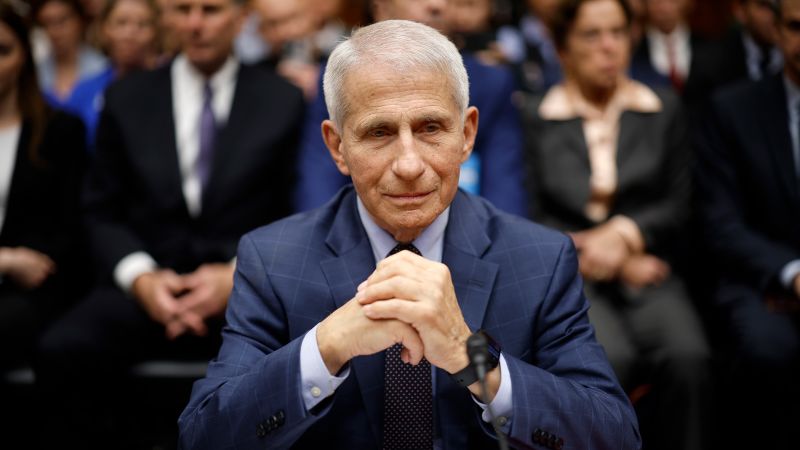
Dr. Fauci Faces Another Congressional Showdown as Rand Paul’s Investigation Intensifies
A Long-Standing Rivalry Reaches New Heights
Goldlaner.com – Before the United States implemented nationwide lockdown measures in response to the coronavirus outbreak, Dr. Anthony Fauci had already begun reflecting on his extensive congressional record. The veteran physician, who served as the public face of America’s infectious disease efforts for decades, testified approximately 250 times before lawmakers throughout his distinguished career. These appearances covered critical health emergencies ranging from the HIV/AIDS epidemic to the Ebola crisis. Now, at age 85, the retired scientist prepares for yet another congressional appearance—this one anticipated to be particularly contentious.
On Wednesday, Fauci will appear before the Senate Homeland Security and Government Affairs Committee, chaired by Senator Rand Paul. This hearing represents the latest chapter in a prolonged political battle between the two figures. Paul has consistently attempted to attribute blame for pandemic-related challenges and perceived failures in the American response directly to Fauci. Unlike previous testimonies, this appearance was not voluntary. In June, the senator issued a formal subpoena compelling the former National Institute of Allergy and Infectious Diseases director to attend.
Diary Entries Unearthed Without Prior Notice
Internal documents revealed to CNN indicate that Fauci initially refused to appear without being subpoenaed. His legal team cited ongoing tensions with Paul and the senator’s persistent efforts to hold the physician accountable for various pandemic decisions. In correspondence addressed to the senator, Fauci’s attorneys wrote: “Your request that Dr. Fauci appear before the Committee arises within a context that cannot be ignored — the context of repeated public and absolutely baseless pronouncements by you, a sitting United States Senator, that Dr. Fauci should be prosecuted and jailed.”
Adding fuel to the controversy, the committee recently made public more than 1,100 pages of Fauci’s personal diary spanning from 2019 through 2022. Health and Human Services Secretary Robert F. Kennedy Jr. announced on Fox News that he had delivered these documents to both Paul and Wisconsin Senator Ron Johnson after discovering them stored on government servers during an eight-month investigation. Neither the Department of Health and Human Services nor Paul’s committee informed Fauci in advance that they had secured his diary or intended to release its complete contents.
Personal Revelations and Political Fallout
The diary entries provide insight into Fauci’s increasing media presence and rising celebrity status. They document interactions with numerous public figures and journalists, including several CNN reporters. Beyond celebrity encounters, the entries chronicle the physician’s mounting worries about the coronavirus, his frustrations with governmental handling of the crisis, and his complicated relationships with officials from both the Trump and Biden administrations.
According to sources close to the scientist, Paul’s relentless campaign to undermine Fauci’s reputation has exacted a significant personal toll. The extended investigation has required Fauci to continue justifying his decisions long after retirement, while simultaneously encouraging conspiracy theories and eroding public confidence in health institutions. The Republican focus on Fauci has also impacted those surrounding him. During a Trump administration cleanup of federal health leadership last year, Fauci’s wife lost her position at the National Institutes of Health, and at least three of his longtime colleagues were reassigned to different roles.
“Nobody would want this. But I’ve known him for a very long time and we both use the phrase ‘Brooklyn strong’ quite a bit,” said Peter Staley, an AIDS activist and close friend of Fauci. “He’ll get through this,” he added. “He’s got all the facts on his side.”
Core Disputes Continue to Mount
Over the years, Paul and Fauci have engaged in numerous disputes concerning the origins of the coronavirus, recommendations regarding lockdown measures, and accusations that Fauci directed NIAID personnel to use private communication methods to circumvent Freedom of Information Act requirements. Since the pandemic’s beginning, the senator has claimed that Fauci approved controversial gain-of-function research designed to increase viral transmissibility and severity—work primarily intended to improve understanding of disease spread and treatment options.
Paul has asserted, though without presenting concrete evidence, that NIAID-sponsored investigations conducted at a laboratory in Wuhan, China, utilized gain-of-function techniques and ultimately triggered the global coronavirus outbreak. Fauci has consistently rejected this claim, both in congressional settings and within his diary entries. In a July 2021 entry, he documented scientific analysis stating that viral examination “clearly indicate(s) that it is molecularly impossible for the viruses under the auspices of the NIH grant to have been manipulated into or evolved into SARS-Cov-2.”
Previously, Paul demanded that Fauci face criminal charges for allegedly lying when denying that the American government financed gain-of-function research in China—a position Paul describes as false. Fauci has continued to maintain that American-funded investigations did not satisfy the criteria for what Paul considers true gain-of-function studies, setting the stage for what promises to be another dramatic confrontation on Capitol Hill.
Related Reading
Frequently Asked Questions
What is Diary entries a subpoena and an anticipated?
Diary entries a subpoena and an anticipated is the main topic of this guide. The article explains the context, practical details, and next steps readers should understand.
Why does Diary entries a subpoena and an anticipated matter?
Diary entries a subpoena and an anticipated matters because readers are looking for a useful answer, not just a short summary. Good content should match search intent and help them decide what to do next.
