
Democratic socialist holds large early lead in DC mayoral primary
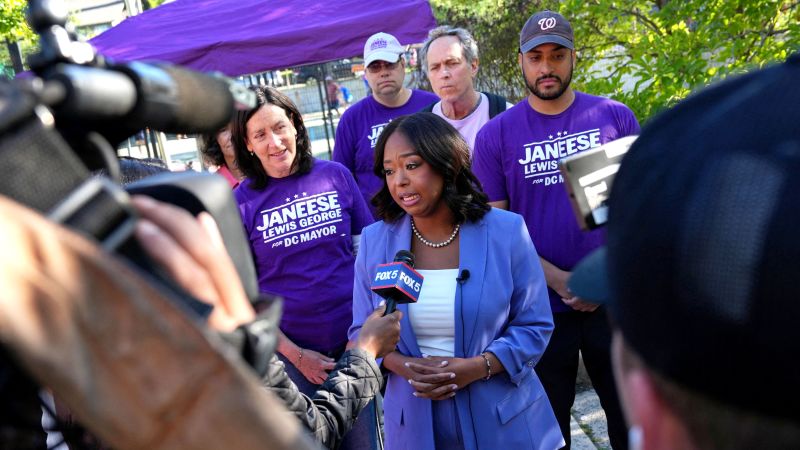
Democratic Socialist Maintains Strong Lead in DC Mayoral Primary
Early Results Show Janeese Lewis George Dominating Race
Democratic socialist holds large early lead – As of the latest updates, Janeese Lewis George, a Washington, DC, councilmember and democratic socialist, has secured a commanding early advantage in the Democratic mayoral primary, according to preliminary election data. While CNN has not yet officially projected a winner, her current standing suggests a strong path to the nomination. The contest, which will ultimately determine the Democratic candidate for mayor, has drawn significant attention due to the political and social stakes involved in shaping the city’s future.
George’s campaign has centered on three key priorities: reducing the cost of living, enhancing public services for DC residents, and advocating for a more assertive stance against President Donald Trump’s policies. Her platform has resonated with voters concerned about economic inequality and the need for greater local control. With 64% of the estimated ballots counted, she has amassed nearly 53% of the vote, leaving her rival, former DC Councilmember Kenyan McDuffie, in second place at approximately 36%. McDuffie, a former trial attorney under President Barack Obama, has positioned himself as a candidate focused on continuity and experience, but his support remains substantially lower than George’s.
Despite the current lead, the race is not yet decided. The DC mayoral primary employs a ranked-choice voting system, meaning that if George’s support drops below 50% as more votes are tallied, the process will shift to a second round. In this scenario, voters would rank their preferences, and the candidate with the broadest support would emerge as the nominee. However, analysts believe George is well-positioned to retain the lead, as her current tally provides a significant buffer against challenges. For McDuffie to overtake her, his support would need to surge sharply, which seems unlikely given the size of her lead.
The DC Board of Elections is set to release further updates on Sunday, including the finalization of vote counts and any initial results from the ranked-choice round. This timeline allows for a thorough examination of all ballots, including those submitted through mail-in drop boxes and late-arriving mail ballots. The initial results, while indicative, do not capture the full picture until the final tally is complete. Voters who cast their ballots by mail or in-person drop boxes may yet influence the outcome, adding an extra layer of uncertainty to the race.
Robert White Clinches Delegate Seat in Democratic Primary
Meanwhile, in another Democratic primary race, Washington, DC, at-large Councilman Robert White has been projected as the winner for the city’s nonvoting delegate position in Congress. CNN’s Decision Desk has confirmed that White will represent DC in Congress, a role that carries considerable influence despite the delegate’s lack of voting power. His victory comes amid a competitive field that included several notable figures, such as Ward 2 Councilmember Brooke Pinto, former senior aide to Eleanor Holmes Norton, Trent Holbrook, and former chairman of the Nuclear Regulatory Commission, Greg Jaczko.
White’s campaign emphasized his deep ties to Eleanor Holmes Norton, the long-serving delegate who has held the position for 18 terms. He ran to succeed Norton, who announced her intention to retire from the race in January, citing the challenges posed by the nation’s capital’s reduced autonomy during the second Trump administration. Norton’s decision to step down has sparked discussions about the importance of DC’s representation in Congress and the role of the delegate in advocating for local interests. White, who previously worked as a lead staff member on congressional oversight hearings for Norton, highlighted his experience in shaping legislation to strengthen DC’s independence.
White’s platform focused on expanding the authority of DC residents within the federal government. He described his work as “drafting legislation to loosen Congress’ grip over DC government in favor of greater autonomy and independence for DC residents,” a vision that aligns with the broader movement for enhanced self-governance. His background in public service includes roles as the first director of community outreach for the city’s attorney general office and a graduate of American University Washington College of Law. These credentials have bolstered his credibility among voters seeking a candidate with both legal acumen and a commitment to local empowerment.
The delegate race, while less high-profile than the mayoral contest, remains critical for DC’s political voice. The nonvoting delegate plays a pivotal role in shaping legislation through committee work and floor debates, ensuring that the city’s priorities are heard in Congress. White’s victory signals a shift toward candidates who prioritize DC’s autonomy, a theme that has gained traction in recent years. His win also underscores the importance of the primary process in selecting leaders who can advocate for the city’s interests in a federal context.
Political Dynamics and Voter Sentiment
The outcomes of both races reflect the evolving political landscape in Washington, DC. Janeese Lewis George’s campaign has tapped into the frustrations of residents over rising costs and bureaucratic inefficiencies, while Robert White’s focus on legislative independence has appealed to those who see the delegate position as a gateway to greater control over DC’s governance. These divergent priorities highlight the multifaceted nature of the city’s political challenges, from economic concerns to institutional autonomy.
McDuffie, who is running in second place, has not yet conceded, positioning himself as a potential contender in the event of a ranked-choice runoff. His campaign has drawn comparisons to the earlier administration, with his experience under Obama serving as a counterpoint to George’s progressive stance. However, the gap in support between the two candidates suggests that most voters have already made their decisions, leaving McDuffie with limited room to close the distance.
White’s win also marks a return to the spotlight for his political career. His role in Norton’s congressional team provided him with a platform to address issues like federal oversight and DC’s status as a territory. By securing the delegate seat, he aims to continue this work, advocating for policies that prioritize DC’s needs in the national legislature. The race for the delegate position, though less contentious than the mayoral contest, has still required a significant effort, with multiple candidates vying for the same role.
As the DC Board of Elections prepares to release further results, the focus remains on how these outcomes will shape the city’s political future. Janeese Lewis George’s lead in the mayoral primary and Robert White’s victory in the delegate race indicate a strong Democratic base, but they also highlight the diversity of viewpoints within the party. The upcoming ranked-choice results will be closely watched, as they could determine whether George’s candidacy remains unchallenged or if a second round is needed to finalize the nominee.
“Drafting legislation to loosen Congress’ grip over DC government in favor of greater autonomy and independence for DC residents,” said White, reflecting his commitment to the city’s self-determination.
The story headline has been updated to reflect the latest developments in the primary races. This article was contributed to by CNN’s Jennifer Agiesta and Ethan Cohen, who have tracked the evolving narratives and key moments in both contests. Their reporting underscores the significance of these elections in the broader context of DC’s political aspirations and the challenges faced by its residents in shaping their own destiny.
With the primary results serving as a barometer of voter sentiment, the Democratic Party in DC is poised to move forward with candidates who represent the core values of the community. Whether through the mayoral race or the delegate election, the outcomes signal a renewed push for progress, equity, and local empowerment in the nation’s capital.
