
US puts up $750K to evacuate an American who was aboard hantavirus cruise ship from remote island
U.S. Allocates $750,000 for Evacuation of American from Remote South Pacific Island Amid Hantavirus Outbreak
US puts up 750K to evacuate – During the ongoing hantavirus crisis, the Trump administration has spent $750,000 to secure a private yacht for the evacuation of a U.S. citizen stranded on a remote South Pacific island. This action has added to the financial pressure on the State Department’s emergency funding, a critical reserve known as the “K Fund,” which has seen its balance drop to the lowest level in seven years. The woman, identified as an American, was initially on a cruise ship linked to the outbreak in April, then traveled to Pitcairn Island—a British territory—after disembarking in San Francisco.
The evacuation process, which took weeks to finalize, highlights the complex challenges of relocating individuals in isolated regions. According to two U.S. officials and an internal government report, the woman had stepped off the Dutch cruise liner MV Hondius before flying to Pitcairn via Tahiti. Her journey to the small island, home to approximately 50 residents, was complicated by its lack of an airport and limited maritime access. French authorities, overseeing Tahiti, initially blocked her transit to their territory, citing concerns over her potential exposure to the virus during her stopover.
The U.S. State Department’s decision to charter a yacht for this operation underscores the urgency of the situation. While the woman showed no symptoms, the need for immediate medical attention required her relocation to a safer location. The plan now involves transporting her to Easter Island, a Chilean territory with direct flights to Santiago, enabling her return to the United States for further care. This move has sparked discussions about the department’s preparedness for handling crises beyond its usual scope.
Internal documents reveal the department is exploring financial adjustments to bolster the K Fund. Officials are considering shifting $50 million from other accounts, including $35 million from embassy security and maintenance funds and an additional $15 million from diplomatic programming budgets. However, no final decision has been reached. One official suggested that Congress could also be asked to replenish the fund, though the department maintains it is capable of managing both current and emerging emergencies.
The State Department has declined to provide specific details about the woman’s case, emphasizing its commitment to offering assistance when Americans face risks abroad. “When an American is at risk and unable to access commercial transportation, the Department of State seeks to provide appropriate assistance to get them home or to a secure location,” said a statement cited in the report. This reflects a broader strategy to ensure rapid evacuation for diplomats and private citizens affected by conflicts like the Iran war, as well as health emergencies such as Ebola outbreaks.
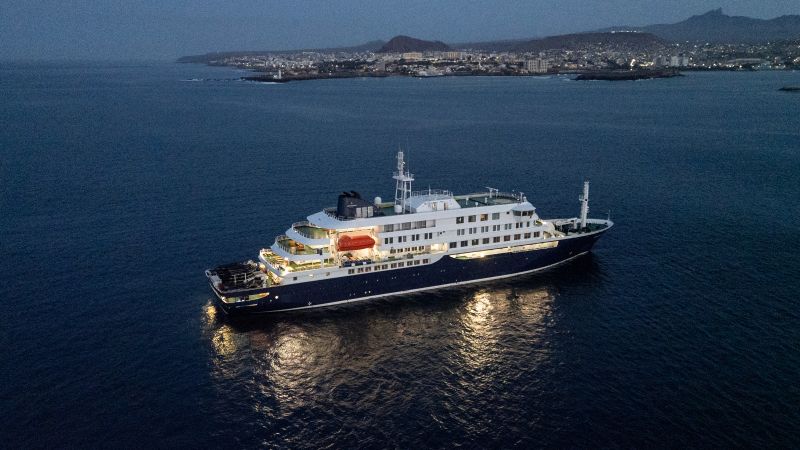
The hantavirus outbreak on the MV Hondius has had a ripple effect, with the cruise continuing to other South Atlantic destinations. Some passengers fell ill, and at least three died, prompting the need for swift action. Pitcairn Island, often associated with the legendary “Mutiny on the Bounty,” became a focal point as the woman’s case gained attention. The island, where Fletcher Christian and mutineers from the HMS Bounty sought refuge in 1789, is now home to descendants of those historical figures, further emphasizing its unique status.
British authorities, who manage Pitcairn, initially sought U.S. aid to evacuate the woman. However, their request was met with resistance from French Polynesian officials, who refused to allow her into their territory without confirming her health status. The woman had not disclosed her potential exposure during her transit, creating a bureaucratic hurdle. After weeks of coordination, the U.S. successfully arranged her transfer via the “Titaina Explorer” trimaran yacht, a vessel owned by a private entity.
While the cost of this evacuation has strained the K Fund, officials argue that the department remains well-equipped to handle such situations. They noted that the fund is designed for unforeseen emergencies, and the current shortfall does not compromise its ability to support ongoing operations. The woman’s case, though isolated, serves as a reminder of the logistical and financial challenges involved in rescuing individuals from remote locations. The department is balancing the immediate needs of this evacuation with long-term planning for future crises.
The incident has also drawn attention to the broader implications of the K Fund’s depletion. With the outbreak on the MV Hondius and the recent evacuations from the Middle East, the State Department faces mounting pressure to allocate resources efficiently. The potential transfer of $50 million from other accounts, as outlined in the documents, aims to prevent further strain on the emergency budget. However, the process of securing these funds requires careful evaluation, as each move impacts different sectors of the federal government.
As the evacuation proceeds, the focus remains on ensuring the woman receives proper medical care. Her journey from Pitcairn to Easter Island, spanning about 1,400 miles, represents a critical step in her recovery. The U.S. government’s intervention highlights its dedication to protecting citizens abroad, even in the face of logistical difficulties and financial constraints. The case also underscores the importance of international cooperation in addressing health and safety crises, particularly in regions with limited infrastructure.
Despite the challenges, the State Department continues to emphasize its capacity to manage emergencies. Officials have stated that while the current situation is costly, the department is prepared to handle both ongoing and future contingencies. This confidence is bolstered by the K Fund’s role as a flexible resource, designed to respond to unexpected situations. The woman’s evacuation, though a single event, exemplifies the delicate balance between immediate action and long-term fiscal planning.
As the details of the hantavirus outbreak and the woman’s journey unfold, the incident serves as a case study in the complexities of global emergencies. The U.S. government’s decision to charter a yacht for her evacuation reflects not only the urgency of the situation but also the adaptability required in addressing crises in remote areas. The outcome of this operation may influence future policies on emergency funding and international response strategies.
