
RFK Jr. orders passenger from hantavirus-stricken cruise to remain in quarantine in Nebraska, despite CDC recommendation
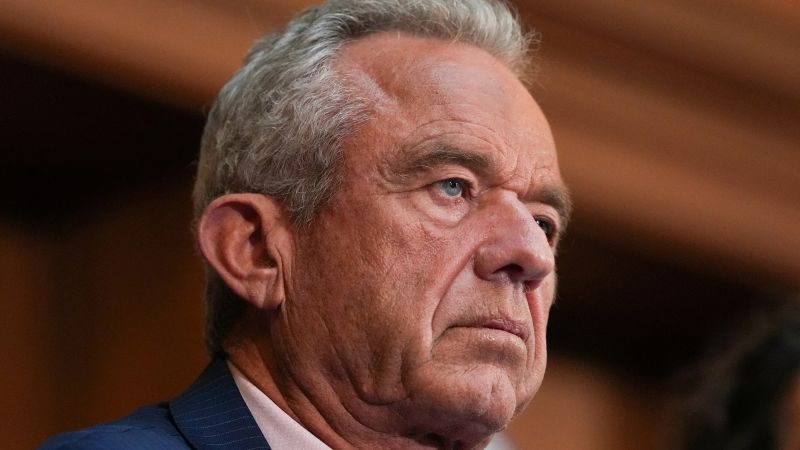
RFK Jr. Directs Passenger to Remain in Federal Quarantine Amid Hantavirus Outbreak
RFK Jr orders passenger from hantavirus – In a recent development, U.S. Health and Human Services Secretary Robert F. Kennedy Jr. has directed Angela Perryman, a Florida resident exposed to a rare hantavirus strain on the MV Hondius cruise, to continue her federal quarantine in Nebraska. This decision contradicts the CDC’s recommendation that Perryman could safely return home after being cleared for release. The case has sparked controversy, with Perryman alleging that the quarantine is being used as a political tool rather than a public health necessity.
Quarantine Dispute and Passenger Experience
Angela Perryman, 47, has described her situation as a “prison” in an interview with CNN. She claims the health system has exploited her as “a prop and a political stunt.” Perryman was among 18 U.S. passengers sent to the National Quarantine Unit at Nebraska Medical Center in early May following their exposure to hantavirus on the cruise ship. While some chose to stay voluntarily for the full 42-day period, most left the facility, provided their state health departments agreed to daily symptom checks and 24/7 oversight until June 21. Ten passengers have already departed, but Perryman remains in quarantine, despite her home state’s agreement to less stringent monitoring.
“At this point, it’s just a state-federal spat, and I’m just a hostage,” Perryman told CNN. “If it had been from the beginning that ‘this is the reason that we need to do this, and there is an actual scientific justification,’ then that would have been OK.”
Federal Quarantine Extension and Medical Review
The initial 42-day quarantine for Perryman was set to end on May 31, but the CDC extended it through June 21. This extension followed a medical review led by Dr. Michael Bell, a CDC quarantine specialist. Bell’s assessment, outlined in a nine-page report, concluded that Florida’s proposed once-daily telehealth monitoring would suffice to protect public health, as long as the state’s health department “accepts responsibility” for her care and has a plan for emergency hospitalization if needed.
Supporting Bell’s findings, Dr. Christopher Braden, acting director of the CDC’s National Center for Emerging and Zoonotic Infectious Disease, and Dr. David Fitter, director of the Global Migration Health division, testified that the federal quarantine could be relaxed. They argued that the primary goal of isolation—preventing infectious spread—would still be met with Florida’s alternative measures. However, Kennedy’s decision to keep the order in effect has raised questions about the consistency of public health protocols.
Opposing Views: Federal vs. State Authority
On Monday, Kennedy issued an order reaffirming the federal quarantine for Perryman. He cited the CDC’s “requirements for Federal quarantine” as being “continuously met” and emphasized the necessity of the order to safeguard both Perryman’s health and her community. His decision did not address the detailed arguments in Bell’s report, which suggested that the extended isolation was overly restrictive.
HHS spokesperson Courtney Spencer clarified that Kennedy had considered Bell’s findings and recommendations before issuing the order. “The Administration’s quarantine is necessary to ensure both Ms. Perryman’s and her community’s wellbeing,” Spencer stated. This highlights a broader tension between federal oversight and state autonomy in managing health crises. While some passengers have left the facility, Perryman remains isolated, with her state refusing to commit to the federal monitoring framework.
Public Health Concerns and Trust Erosion
Perryman’s frustration stems from a perceived lack of transparency and consistency in the quarantine process. She said she has lost trust in doctors, public health officials, and the CDC due to “rescinded promises” and conflicting guidance. “If there was a scientific reason for this, if I could see that, yes, this actually does further public health, I would have agreed,” she said.
Nebraska Medical Center has stated that questions about quarantine orders should be directed to the CDC, though Florida officials have yet to respond to CNN’s request for comment. The situation has also drawn attention to the role of the CDC in shaping quarantine policies and the potential for political influence in public health decisions.
Broader Implications for Cruise Travelers
While Perryman’s case has become a focal point, it reflects a broader challenge in balancing public health safety with individual freedoms. The CDC’s extension of the quarantine period for her underscores the agency’s cautious approach to hantavirus, which is known for its potential to cause severe respiratory illness. For other passengers, the decision to stay or leave the facility has been influenced by varying state commitments to monitoring protocols.
Florida’s stance to adopt less rigorous oversight has created a rift with federal authorities. This disagreement highlights how state and federal agencies may differ in prioritizing risk management strategies. For instance, the CDC’s requirement for daily in-person checks contrasts with Florida’s proposal for telehealth-based monitoring, which Perryman’s medical team deems adequate for her condition.
Quarantine Unit’s Role and Pending Decisions
The National Quarantine Unit at Nebraska Medical Center has been critical in managing the U.S. passengers exposed to hantavirus. However, its role has been contested, with some questioning whether the facility is being used to enforce a federal mandate rather than provide medical care. Dr. Michael Wadman, who oversees the quarantine unit, has not publicly commented on the dispute, leaving the situation unresolved.
As the quarantine period nears its end, the outcome of Perryman’s case could set a precedent for future health orders. Her ability to return home hinges on Florida’s willingness to adopt the CDC’s monitoring standards, a condition that has not yet been met. The federal government’s insistence on maintaining the order raises concerns about the flexibility of quarantine protocols and their alignment with scientific evidence.
Conclusion: A Test of Public Health Governance
The conflict between Kennedy and Bell has brought into focus the complexities of managing a health crisis across federal and state lines. While the CDC’s recommendation leans toward releasing Perryman, Kennedy’s order reflects a more stringent approach to ensuring compliance. This case has also exposed the vulnerability of passengers to political decisions, even when the health risks appear to be mitigated.
For now, Perryman remains in quarantine, her fate dependent on the resolution of the state-federal disagreement. As the 42-day period approaches its conclusion, the situation serves as a reminder of the challenges in harmonizing public health mandates with individual rights during global health events.
