
SpaceX sets the stage for a record $75 billion IPO
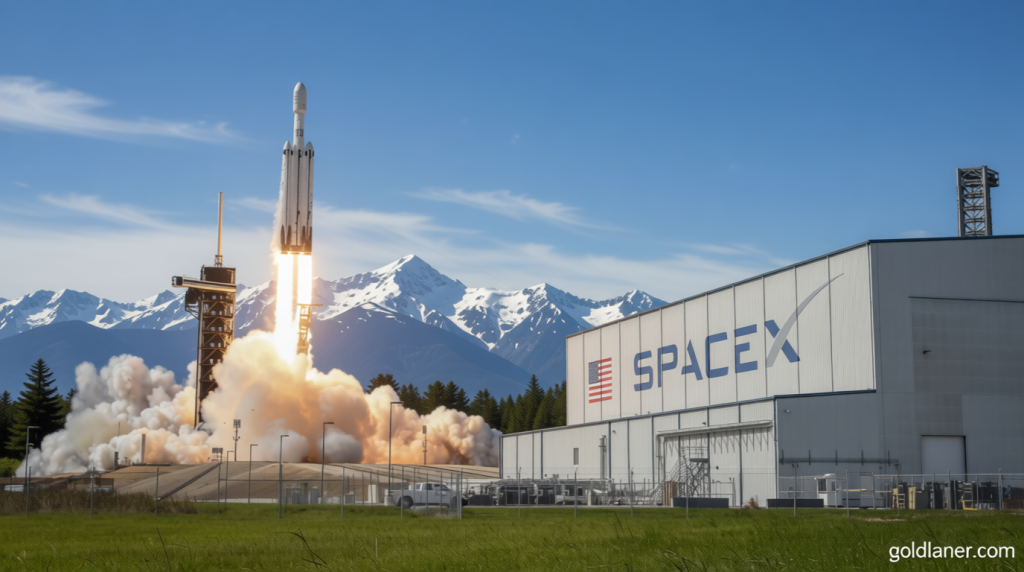
SpaceX Sets the Stage for a Record $75 Billion IPO
SpaceX sets the stage for a record – Elon Musk’s space exploration company, SpaceX, has taken a significant step toward public ownership, announcing plans to raise $75 billion through an initial public offering (IPO). This ambitious move would value the firm at approximately $1.77 trillion, positioning it as one of the most valuable companies in history. If successful, the IPO could elevate Musk to the status of the first trillionaire, surpassing his current status as the world’s wealthiest individual.
A Historic Valuation
The valuation of SpaceX, as outlined in a filing with the Securities and Exchange Commission, reflects the growing enthusiasm for space-related ventures and artificial intelligence (AI). The company plans to issue 555.6 million shares at an initial price of $135 each, a decision that underscores the fervor in the current IPO market. Unlike traditional offerings that provide a range of prices, SpaceX has opted for a single target, a strategy that aligns with the hyper-competitive landscape driven by AI innovation and speculative investments.
Musk’s Continued Influence
Despite the IPO, Musk will retain substantial control over SpaceX. Currently, he owns half of the company, but the offering will dilute his shareholding slightly. However, the special voting shares he holds will ensure his grip on the company remains strong. According to the filing, Musk will maintain 82.4% of the voting power post-IPO, a figure that highlights his strategic dominance even in a public market setting.
The IPO’s scale is unprecedented, surpassing the previous record of $29.4 billion set by Saudi Aramco in 2019. This staggering figure underscores the confidence investors have in SpaceX’s long-term potential, particularly in its pursuit of space commercialization and lunar/Mars colonization ambitions. The company’s rockets already dominate the corporate space sector, launching both astronauts and satellites, but its AI division is playing a critical role in shaping its valuation.
The AI Factor in Valuation
SpaceX’s expansion into AI has become a key driver of its market appeal. The company recently merged with xAI, Musk’s AI enterprise, which also operates his social media platform, X. This integration has positioned SpaceX as a major player in the AI industry, which has seen a surge in valuations amid rapid technological advancements. Investors are increasingly betting on AI’s potential to revolutionize industries, even as profit margins for many startups remain elusive.
The IPO documents emphasize SpaceX’s dual focus on space exploration and AI innovation. They outline plans to establish data centers in space and leverage AI to enhance operational efficiency. While profits are not yet a reality for the company, the perceived future value of these initiatives has attracted significant attention from Wall Street. The AI sector’s influence is evident in the broader market, where tech companies are reaping rewards for their cutting-edge developments, even before generating consistent returns.
Musking the Wealth Gap
If the IPO proceeds as planned, Musk’s personal wealth would skyrocket. At $135 per share, his stake in SpaceX alone could be worth $841 billion. This figure would dwarf the combined net worth of the next three richest individuals, including Google founders Larry Page and Sergey Brin, and software magnate Larry Ellison, according to Forbes’ real-time billionaire tracker. Adding Musk’s Tesla holdings, valued at nearly $300 billion, his total net worth could reach $1.1 trillion—surpassing not only the next three billionaires but also Jeff Bezos, the fifth on the list.
“Musk’s stake in SpaceX, if the shares trade at $135, would be roughly equivalent to the combined net worth of the next three richest people on the Forbes list,” the report noted.
SpaceX’s IPO, set to begin trading next Friday, marks a pivotal moment in the commercialization of space. It signals a shift from government-led space programs to private-sector ventures, with the company aiming to establish human outposts on the Moon and Mars. However, the IPO also reflects a broader trend in the financial markets: the fixation on AI as a transformative force. Investors are pouring billions into tech firms that promise breakthroughs in automation, data analytics, and machine learning, even if those firms are yet to prove their financial viability.
The Path to Public Ownership
SpaceX first announced its IPO intentions last month, but the specifics remained shrouded in mystery until now. The company did not disclose the expected share price or valuation, leaving room for speculation. This approach contrasts with the more transparent strategies of many startups, which often provide detailed forecasts to attract public investors. Nonetheless, the decision to fix a price target may be a calculated move to capitalize on the AI-driven market hype.
Since its founding in 2002, SpaceX has evolved from a niche rocket manufacturer to a diversified tech giant. Initially focused on payload delivery to orbit, the company expanded into telecommunications with the launch of Starlink in 2021, a satellite-based internet service that has revolutionized global connectivity. The integration of xAI into SpaceX’s operations further solidifies its position as a leader in both space and artificial intelligence, blending hardware innovation with software capabilities.
A Global Impact on Wealth Distribution
The IPO’s success would not only redefine SpaceX’s market presence but also reshape the global wealth landscape. Musk’s net worth could eclipse that of other industry titans, creating a new standard in billionaire status. This scenario raises questions about the concentration of wealth among tech executives, as their companies continue to outpace traditional industries in valuation and investor confidence.
As the artificial intelligence race intensifies, other major players are also preparing for public debuts. Anthropic has already announced its IPO plans, while OpenAI is expected to follow suit. Together, these offerings could create a wave of millionaires and billionaires, despite the challenges these companies face in demonstrating sustainable profitability. The market’s appetite for AI-driven growth remains undiminished, even as firms grapple with the practical applications of their technologies.
SpaceX’s IPO represents more than just a financial milestone; it symbolizes the merging of space exploration with cutting-edge innovation. The company’s ability to attract billions in capital, even before a clear path to profitability is established, highlights the transformative power of AI and the growing optimism surrounding the future of space-based industries. With its rockets, satellites, and AI initiatives, SpaceX is poised to redefine the boundaries of what is possible in the 21st century, capturing the imagination of investors and the public alike.
This story has been updated to reflect the latest developments in SpaceX’s public offering and its implications for the global tech and space sectors. As the IPO approaches, the world watches closely to see how this historic move will reshape the fortunes of Musk and the broader industry landscape.
