
Seattle’s solution for the middle-class housing squeeze: government housing
Seattle’s Approach to Middle-Class Housing: A Government-Driven Model
A New Era for Urban Living
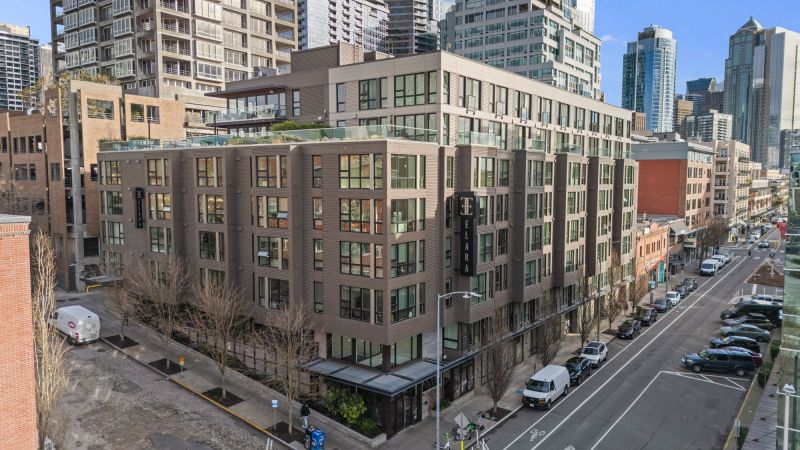
Seattle s solution for the middle – Nestled in the heart of Seattle’s Belltown district, the Elara at the Market once stood as a symbol of modern luxury—a 150-unit apartment complex with its own private courtyard, fitness center, and wine storage facilities. For six years, it catered primarily to Amazon employees, who paid over $2,000 monthly for one-bedroom units near the tech giant’s headquarters. However, recent changes have shifted its purpose. Now, this eight-story building operates under a different model: government-owned social housing for residents with varying income levels. The transformation has sparked discussions about affordability, equity, and the role of public investment in addressing the city’s housing challenges.
The Middle-Class Housing Dilemma
Seattle’s housing landscape has long struggled with rising costs, leaving many middle-class families in a precarious position. While the city’s affordable housing programs have historically supported low-income residents, they’ve left a gap for those earning too much to qualify for subsidies but still unable to afford market-rate rents. This group, often referred to as the “middle-income sandwich,” faces a dual challenge: high prices and limited options. The city’s latest initiative aims to bridge this divide by creating a social-housing model that blends public oversight with market-rate elements.
Vietnam’s Influence on Seattle’s Strategy
The city’s approach is inspired by Vienna’s success in social housing, where government-subsidized units coexist with private developments to serve a broad spectrum of income levels. Unlike traditional public housing, which has often been associated with rigid structures and lower quality, Seattle’s model seeks to offer mixed-income communities with greater stability. The goal is to ensure that residents from diverse backgrounds can access housing without facing the same economic strain. This strategy also differs from conventional affordable housing, which relies on private ownership with government incentives.
Government Acquisition and Reform
Seattle’s Social Housing Developer (SSHD), a newly formed public authority, recently acquired the Elara for $61 million. This marks the first step in a broader plan to purchase over 1,000 apartments and construct 600 new social housing units within five years. The move has been part of a growing movement on the political left, which advocates for public-sector leadership in housing solutions. By converting private properties into government-owned units, the city aims to stabilize rents and ensure long-term affordability.
At the Elara, this strategy has already begun to take shape. Approximately 15 units are vacant, and a lottery was held to allocate them to individuals earning up to 50% of the area’s median income—around $65,000 for a two-person household. Existing tenants, including Amazon manager Bilal Durrani, who has lived in the building for a year, now benefit from a two-year rent freeze. Durrani expressed initial surprise at the transition, questioning whether government ownership would alter the building’s dynamics. Yet, he remains satisfied with the outcome, noting the elimination of storage fees and the assurance of stable housing costs.
“People always get freaked out when the government steps in, but I’m glad the city is doing something,” said Durrani, reflecting on his experience as a tenant in the restructured building.
Funding and Policy Foundations
The initiative is backed by a combination of voter-approved measures and financial mechanisms. In 2023, residents ratified a proposal to establish the SSHD, enabling the city to develop housing for those earning up to 120% of the area’s median income—approximately $138,000 for a single person. To fund this effort, a dedicated “social housing tax” was introduced, targeting businesses like Amazon and Microsoft that pay employees over $1 million annually. This revenue will support acquisitions and new developments, while higher-income tenants’ rents will subsidize lower-income neighbors.
Seattle’s housing market has seen dramatic shifts in recent years. The average home value has nearly doubled since 2012, reaching $945,000, while rents have surged by 75% to around $1,800 per month. These figures highlight the urgency of the crisis, prompting policymakers to rethink traditional approaches. The social housing model represents a departure from private market dominance, emphasizing long-term planning and equity-focused policies.
Debates Over Efficiency and Equity
Despite its promise, Seattle’s social housing plan has drawn criticism from some experts and business leaders. They argue that the model, while well-intentioned, may divert resources from more immediate needs. For instance, critics question whether the social developer’s focus on middle-class units is effective, given the high costs of acquisition and the potential for displacement. Jamie Madden, an affordable housing consultant and author of “Bittersweet Lane: Cre,” contends that the tax could have been better allocated to building new homes or preserving existing affordable units.
“The social housing developer should develop social housing,” Madden said, highlighting the need for targeted investment. However, others see value in the model’s mixed-income approach, which could prevent gentrification by integrating lower-income residents into private developments. The challenge lies in balancing the goals of affordability and sustainability. With the tax generating $115 million this year, the debate centers on whether the funds are being used optimally to address the housing shortage.
Risks and Opportunities
The transition to social housing has raised concerns about the long-term viability of private developers. Dozens of nonprofit and for-profit housing providers in the region are reporting financial losses and selling off properties, risking their conversion to market-rate units. While the SSHD’s plan offers a solution for middle-class renters, it also requires careful management to avoid undermining the private sector’s role in housing production.
For Seattle, the Elara’s transformation is a test case. The building’s rooftop deck, once a symbol of luxury, now serves as a reminder of the city’s commitment to reshaping its housing landscape. By freezing rents and prioritizing mixed-income tenants, the SSHD aims to create a sustainable model that appeals to both residents and policymakers. Yet, the success of this experiment hinges on its ability to scale while maintaining affordability and quality. As the city moves forward, the lessons learned from the Elara will shape the future of social housing in Seattle.
A Vision for the Future
Seattle’s experiment with social housing reflects a broader trend of cities seeking innovative solutions to housing shortages. While the model is still in its early stages, it represents a significant shift in policy. By combining public ownership with market-rate elements, the city aims to create a system where all income levels can thrive. For residents like Durrani, who now see the benefits of government intervention, this approach may offer a lifeline in an increasingly expensive market. Whether it becomes a model for other cities or faces challenges of its own remains to be seen.
