
Who is Elon Musk calling a ‘traitor’?
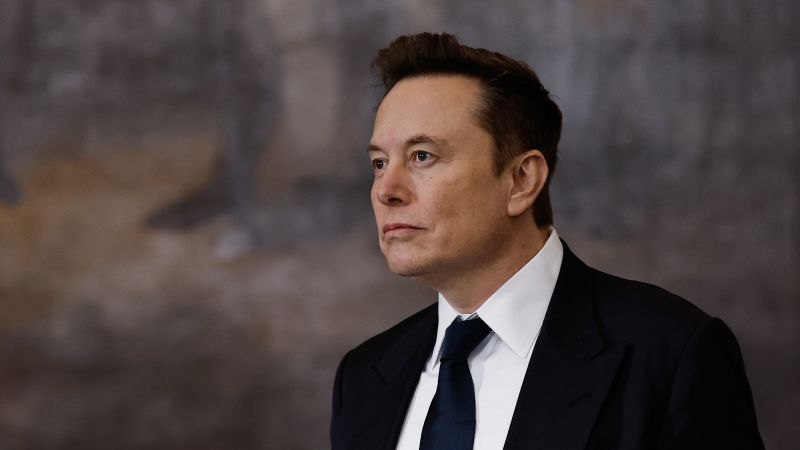
Musk’s New Wave of ‘Traitor’ Accusations Sparks Historical Reflection
Goldlaner.com – Following a comprehensive discussion with The Economist’s editor-in-chief Zanny Minton Beddoes, Elon Musk has been on a naming spree. The technology billionaire’s social media platform became a battleground as he hurled accusations against his interviewer and numerous public figures. During their conversation, Beddoes questioned Musk’s backing of European far-right movements, his statements critical of Muslims, and his reductions to humanitarian assistance while serving in the Trump administration.
The response from Musk was swift and pointed. On his personal social network, where he frequently broadcasts his opinions, he characterized Beddoes as “a traitor to the West, plain and simple.” This wasn’t an isolated incident in Musk’s vocabulary. He has been deploying the term with considerable frequency, declaring that “anyone who opposes remigration is a traitor” and extending the label to “anyone who doesn’t love America.”
A Growing List of Accused
Musk’s roster of alleged traitors continues to expand. Among those he has publicly branded are Minnesota Governor Tim Walz, Arizona Senator Mark Kelly, Minnesota Representative Ilhan Omar, and Spain’s Prime Minister Pedro Sánchez. CNN has contacted Musk’s office seeking additional commentary on these accusations.
This moment provides an opportunity to examine what “traitor” truly means. The term traces its lineage through Old French back to the Latin word “trādēre,” which translates to “to hand over.” English speakers first encountered the word in the early 1300s, using it to identify individuals who broke faith with someone or failed in a responsibility placed upon them. By the century’s close, the definition had broadened to include betrayals directed at one’s sovereign or governing body.
Historical Weight of the Term
Throughout history, being labeled a traitor has carried significant stigma. The title has been attached to figures like Marcus Junius Brutus, who participated in the conspiracy to murder Julius Caesar; Judas Iscariot, who betrayed Jesus in exchange for thirty pieces of silver; Benedict Arnold, who deceived both George Washington and the Continental Army; and Vidkun Quisling, a Norwegian military leader who worked alongside Nazi Germany during the Second World War.
Within legal frameworks, a traitor is someone convicted of treason—a crime sharing the same Latin root as “traitor” and entering English vocabulary around the same period. Article III of the United States Constitution provides a specific definition: “Treason against the United States, shall consist only in levying War against them, or in adhering to their Enemies, giving them Aid and Comfort.”
Thomas Main, a Baruch College professor and author of “The Rise of Illiberalism,” explained that this limited definition represented a conscious effort by the Founding Fathers to influence political behavior. In Federalist No. 43, James Madison cautioned against “new-fangled and artificial treasons” created by political groups to weaponize against each other during transitions of power. He noted that the convention “have, with great judgment, opposed a barrier to this peculiar danger, by inserting a constitutional definition of the crime.”
Main observed that this approach was designed to prevent “newfangled definitions of treason to be used as weapons in everyday debate between political factions.” However, he argued that the outcome has been “a political culture that is intolerant, which is not consistent with liberal democracy.”
The Race Traitor Concept
Despite these foundational efforts, Americans have consistently invoked “traitor” and “treason” in broader contexts. Many such accusations have centered on racial allegiances. During the mid-twentieth century, segregationists and the Ku Klux Klan popularized “race traitor” as a label for white individuals who supported the Civil Rights Movement.
Catherine Fosl, a historian and biographer of white civil rights activist Anne Braden, documented how the term appeared regularly in hate mail Braden and her husband received after purchasing a home for a Black family in 1954. “It’s often paired with charges of socialism, communism, outsider,” Fosl explained. “It connotes ‘They’re not like us. They’re not part of us, and they want to undermine our way of life.'” Fosl, who has also studied South African history, noted that the term was similarly directed at anti-apartheid dissenters in Musk’s homeland. The South African government prosecuted Nelson Mandela and over 150 other activists in a lengthy trial that concluded with acquittals in 1961.
By the 1990s, “race traitor” had become sufficiently embedded in American political conversation that some left-wing activists reclaimed the term. Noel Ignatiev, a steelworker who became a scholar, and John Garvey, a cab driver turned educator, launched the journal “Race Traitor” in 1993. Garvey reflected that while “it wasn’t exactly an everyday phrase,” the label carried meaningful weight for those embracing it.
Related Reading
Frequently Asked Questions
What is Who is Elon Musk calling a traitor?
Who is Elon Musk calling a traitor is the main topic of this guide. The article explains the context, practical details, and next steps readers should understand.
Why does Who is Elon Musk calling a traitor matter?
Who is Elon Musk calling a traitor matters because readers are looking for a useful answer, not just a short summary. Good content should match search intent and help them decide what to do next.
