
Iran appears to be preparing a major test of America’s blockade
Iran Readies Fleet for Potential Challenge to American Naval Restrictions
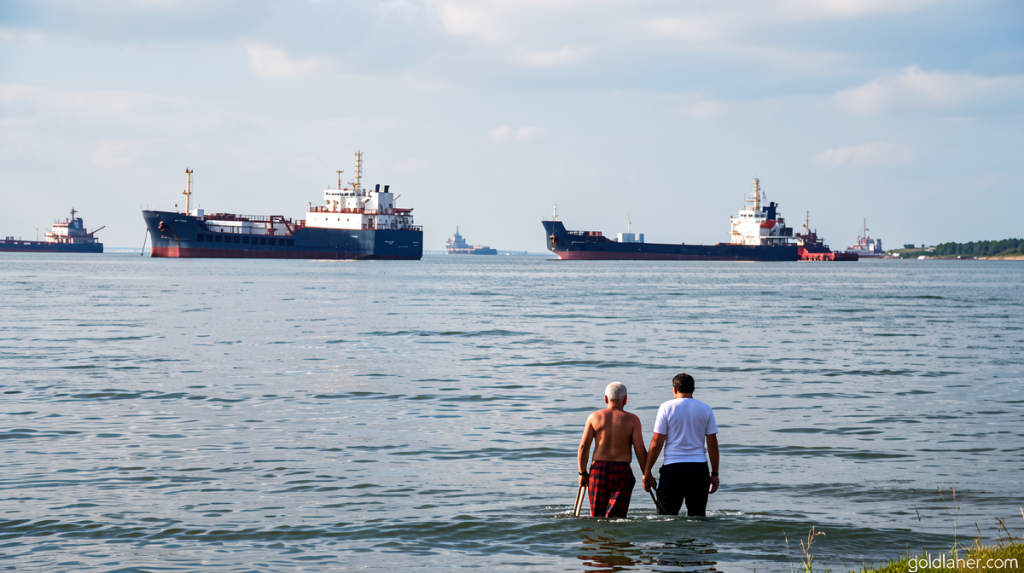
Iran appears to be preparing a major – As the United States moved to reinstate its maritime restrictions on Iranian ports during Tuesday’s afternoon hours, Tehran appeared to be positioning specialized vessels within the Persian Gulf. These ships could potentially navigate past American military forces attempting to enforce the renewed blockade. According to Windward Intelligence, a specialized maritime security organization, twenty-three Iranian vessels currently operating within the Strait of Hormuz have engaged in deceptive practices. These ships have either deactivated their transponders or employed other methods to transform into what maritime professionals term “dark vessels.” Such vessels collectively form what industry observers describe as “shadow fleets.”
The Mechanics of Shadow Fleet Operations
Iran possesses considerable historical expertise in circumventing American economic restrictions. For many years, the nation has utilized an intricate system involving shadow companies, confidential oil cargo exchanges, and opaque financial transactions. Adnan Mazarei, who serves as a senior fellow at the Peterson Institute for International Economics and previously held the position of deputy director at the International Monetary Fund, highlighted this sophisticated approach. Iranian shadow fleets routinely spoof their vessel identities while directing the majority of their petroleum exports toward Chinese markets.
One particularly illustrative example involves an Iranian tanker monitored by Windward Intelligence. This vessel follows an elaborate routing pattern, initially loading crude petroleum at Kharg Island—Iran’s primary oil distribution center—before navigating through Iraq’s Basrah Oil Terminal. Only after this detour does the ship proceed toward its ultimate destination in China. Windward analysts observed that this routing strategy aligns with established Iranian methods designed to obscure the true origin of exported cargo.
Cargo Status and Export Volumes
Among the twenty-three vessels that Windward identified as potential blockade-breakers, ten currently carry cargo according to Vortexa, a specialized cargo tracking organization. The remaining thirteen vessels are operating in empty conditions. This activity persists despite the United States having desanctioned Iranian oil through its now-expired Memorandum of Understanding arrangement. TankerTrackers’ analysis indicates that Iran continued utilizing its shadow fleet to export approximately fifty million barrels of crude oil throughout June. Furthermore, the nation managed to ship ten million barrels within a single day during the previous week.
Many vessels that departed the Strait of Hormuz during the three-week ceasefire arrangement have subsequently faced renewed sanctions. Windward reported that seven of these vessels represent massive oil tankers currently positioned in the Indian Ocean. These ships carry full loads of crude petroleum while awaiting suitable purchasers.
Economic Impact and Geopolitical Context
The initial American naval blockade, which operated from mid-April through mid-June, successfully constrained much—but not all—of Iran’s maritime commerce through the strait. The US Energy Information Administration estimates that the Iranian regime derives approximately fifty percent of its total revenue from petroleum sales. China has emerged as a reliable customer, importing roughly eighty percent of Iran’s oil exports despite American sanctions, according to EIA data.
The blockade has generated substantial economic pressure within Iran. Mazarei noted that the nation’s inflation rate, which had already averaged fifty percent over the preceding twelve months—the highest level recorded since World War II—surged significantly beyond that threshold beginning in April when restrictions commenced. Food price inflation has exceeded one hundred percent during this period. Mazarei emphasized that approximately ninety percent of Iranian commercial activity flows through the Persian Gulf, making maritime restrictions particularly impactful for the Iranian economy.
