
The war with Iran has become a battle about a tollbooth. Free seas are at risk
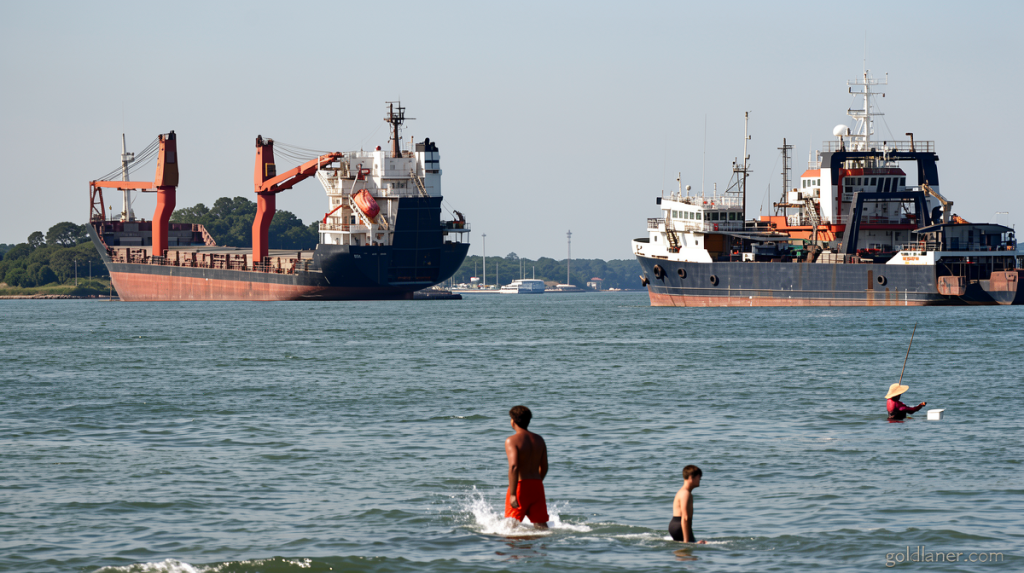
Strait of Hormuz: The New Battleground for Global Maritime Freedom
The war with Iran has become – What began as a military campaign aimed at curbing Iran’s nuclear ambitions and dismantling its international terror infrastructure has evolved into something far more consequential. The ongoing conflict has transformed into a fierce contest for dominance over one of humanity’s most critical commercial arteries. The Strait of Hormuz, that vital maritime corridor through which oil, natural gas, fertilizers, and countless other essential commodities flow, has become the central prize in this escalating struggle.
The stakes could not be higher. Should this conflict result in either Iran or the United States establishing permanent control over the strait, it may mark the twilight of free navigation on the world’s oceans—a principle that has sustained international commerce for hundreds of years. Erik Grundt, a senior analyst at Rystad Energy, warned CNN that this development “could set a dangerous precedent and make international seaborne trade much more expensive, a cost that would ultimately be passed on to end-consumers.”
A Historic Supply Shock
Following the commencement of American and Israeli military operations on February 28, Iran responded with remarkable speed by declaring the Strait of Hormuz closed. This decisive move triggered what experts are calling the largest oil supply disruption in recorded history. Recognizing the immense leverage this position provided over the global economy, Tehran has been determined to maintain its grip on the waterway.
Commercial vessels seeking passage through the strait now face a difficult choice: coordinate with Iran’s newly created Persian Gulf Strait Authority, potentially involving substantial payments, or risk coming under fire from the Revolutionary Guard Corps. Although these fees were temporarily suspended following Iran’s signing of a 60-day Memorandum of Understanding with the United States on June 18, Tehran’s authority over maritime transits has only strengthened during this period.
Iran has strategically invoked a specific provision within the MOU requiring Tehran to “make arrangements… for the safe passage of commercial vessels,” using this language to justify and solidify its control. On Tuesday, Iranian officials asserted that over 200 non-Iranian ships had coordinated with the PGSA during the three weeks following the agreement’s signing, though CNN was unable to independently confirm this figure.
Divergent Interpretations and Rising Costs
The Trump administration interpreted the same clause differently, believing it guaranteed unrestricted transit for 60 days. Ship movements certainly increased during this window, with approximately 70 vessels daily navigating the strait at the peak—roughly half the pre-war volume. However, renewed tensions have reduced this number dramatically to just over a dozen vessels by Sunday.
President Donald Trump briefly adopted Iran’s approach, announcing that the United States would impose a 20% fee on commercial ships utilizing Hormuz to cover American protection efforts. This declaration, however, lasted less than 24 hours before being withdrawn. According to the shipping association BIMCO, such a fee would have represented approximately $27 million per voyage for a very large oil tanker.
Despite the seemingly unreasonable nature of this price tag, Trump’s announcement inadvertently validated Iran’s actions—an irony the Iranian regime promptly highlighted with sarcasm on social media platforms. Iranian Foreign Minister Abbas Araghchi responded on X, stating: “20% is of course too much. We will be fair.”
Insurance and Legal Complications
Rob Thummel, senior portfolio manager at Tortoise Capital, noted that if toll collection becomes standard practice in Hormuz, shipping expenses could climb significantly. Yet the financial burden represents only part of the problem. Iran has reportedly been charging oil tankers between $1 and $2 per barrel onboard, generating roughly $2 million per Very Large Crude Carrier.
However, even willing shippers face a critical obstacle: insurance companies may refuse coverage to vessels making payments to sanctioned entities, which encompasses several major Iranian institutions. Nigel Green, CEO of deVere Group, explained: “Forget the legal arguments, insurers will settle this first. Involve a toll with sanctions risk and underwriters could simply stop writing cover.”
Even if a neutral third party like Oman collected these fees, such arrangements would likely violate international maritime regulations, including the United Nations Convention on the Law of the Sea, giving insurers grounds to cancel voyages or withdraw coverage entirely.
A Precedent for Global Chokepoints
Beyond immediate economic concerns lies a broader strategic worry: the monetization of Hormuz could establish a template for other critical maritime passages worldwide. Nations controlling strategic waterways—from Indonesia and Singapore to China, Taiwan, and the United Kingdom—may now feel empowered to weaponize their geographic advantages.
Across ten major global chokepoints, including Hormuz, Gibraltar, Taiwan, Dover, and Malacca, the potential annual revenue from passage fees could reshape international trade dynamics fundamentally. The question remains whether the world will return to the era of free seas or accept a new reality where maritime passage becomes a commodity to be bought and sold.
