
Man who killed Dartmouth professors at 17 to get a chance at parole in about 20 years, judge rules
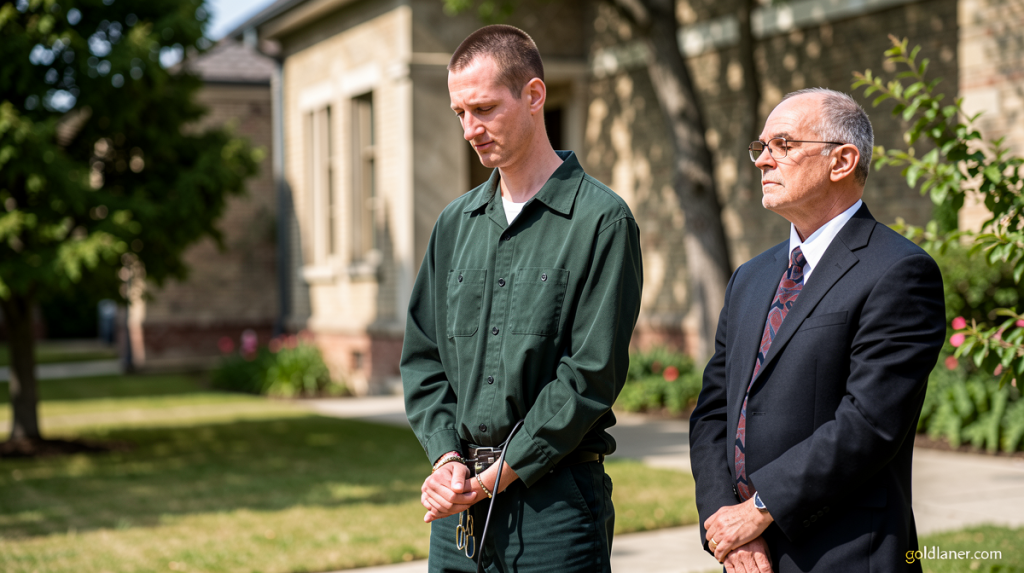
Robert Tulloch Receives 45-Year Minimum in Dartmouth Professors’ Murder Case
Man who killed Dartmouth professors at 17 – A Vermont resident who committed a brutal double homicide alongside a friend at age seventeen will finally have an opportunity to seek parole after approximately two decades, following a judicial decision announced on Monday. Robert Tulloch, currently 43 years old, was sentenced to a minimum term of 45 years by Judge Lawrence MacLeod in Grafton County Superior Court in North Haverhill, New Hampshire. This ruling means Tulloch could potentially be released in 2046, when he reaches 62 years old—the exact age that victim Half Zantop was when he was murdered.
Legal Background and Supreme Court Precedent
Tulloch had originally received an automatic life sentence without the possibility of parole after entering a guilty plea to first-degree murder charges related to the 2001 stabbing deaths of the married couple. However, the legal landscape shifted dramatically following a landmark 2012 United States Supreme Court decision that declared mandatory life without parole sentences unconstitutional for juvenile offenders. This precedent was subsequently applied retroactively, creating opportunities for hundreds of individuals who had been sentenced as teenagers to seek freedom through parole proceedings.
Among those affected were five men in New Hampshire serving life sentences for crimes committed during their youth. Tulloch’s resentencing hearing represented the final case among these five individuals. The proceeding was originally scheduled to last three days, but lawyers representing both sides reached an agreement that allowed them to avoid the extended court session.
Victim Impact and Courtroom Proceedings
During the hearing, a shackled Tulloch kept his head lowered and appeared to breathe heavily as prosecutors recounted the gruesome details of the stabbings. He offered an apology to Veronika Zantop, one of the professors’ two daughters, who participated in the proceedings remotely. She delivered a powerful statement opposing leniency for the convicted murderer.
A psychiatrist with two sons, one of whom was the same age Tulloch was when he committed his crimes, she said she can appreciate that brain functioning can change over time. But she does not believe it’s true for Tulloch, saying he meticulously planned the killings and followed through in a cold, predatory manner.
“This wasn’t a crime of passion or retribution,” she said. “He wasn’t using substances, he wasn’t psychotic. There was just sheer depravity.” She urged that he stay in prison “for the longest possible sentence.”
Tulloch abandoned his prepared statement after hearing her testimony. “After listening to that, I feel disgusted by even thinking I could say anything that would mean anything,” he told the court.
Circumstances of the Crime
According to Tulloch’s friend James Parker, who was 16 at the time of the murders, the teenagers had grown bored with their lives in Chelsea, Vermont. They devised a scheme to kill random strangers, steal their money, and relocate to Australia. For several months, they knocked on doors across New Hampshire and Vermont, pretending to conduct an environmental survey before gaining entry to the Zantop home.
Susanne Zantop, 55, served as head of Dartmouth’s German studies department, while her husband Half Zantop taught Earth sciences. Parker later told prosecutors that Tulloch stabbed Half Zantop first, then directed Parker to attack Susanne Zantop. Tulloch also stabbed her during the assault.
Fingerprints discovered on a knife sheath and a bloody boot print connected the teenagers to the crime scene. After police questioned them, the pair fled Vermont and hitchhiked westward. They were apprehended weeks later at a truck stop in Indiana.
Arguments for and Against Leniency
Tulloch’s attorneys, Richard Guerriero and Oliver Bloom, presented evidence showing that prison records indicate significant maturation. They noted that after some initial misconduct early in his incarceration, Tulloch had committed no major infractions since 2012 and no minor infractions since 2017. Quoting from therapy documentation, they emphasized that he has expressed “significant remorse” for what he recognizes as a heinous and unforgivable crime, acknowledging his “warped youthful thinking” and demonstrating his “good capacity for empathy.”
In a court filing submitted the previous week, Tulloch’s legal team argued that a minimum sentence ranging from 30 to 40 years would be appropriate. Their position was based on a comprehensive review of other murders committed by juveniles in New Hampshire, as well as cases nationwide that were influenced by the Supreme Court rulings.
Meanwhile, Parker, who cooperated fully with prosecutors and pleaded guilty to being an accomplice to second-degree murder, was released from prison on parole in 2024 at the age of 40.
New Hampshire Attorney General John Formella issued a statement supporting the agreed-upon sentence. “The agreed upon sentence provides certainty that Tulloch will remain incarcerated for a substantial period of time, allows Tulloch to pursue some measure of rehabilitation, and it secures important protections for the community,” Formella explained.
Judge MacLeod stated that he carefully reviewed the applicable law, the circumstances surrounding Tulloch’s offenses, his conduct while imprisoned, the outcomes of the other New Hampshire cases, and Veronika Zantop’s statement before reaching his decision.
