
Trump wants new coal plants built in the US. The price tag could be astronomical
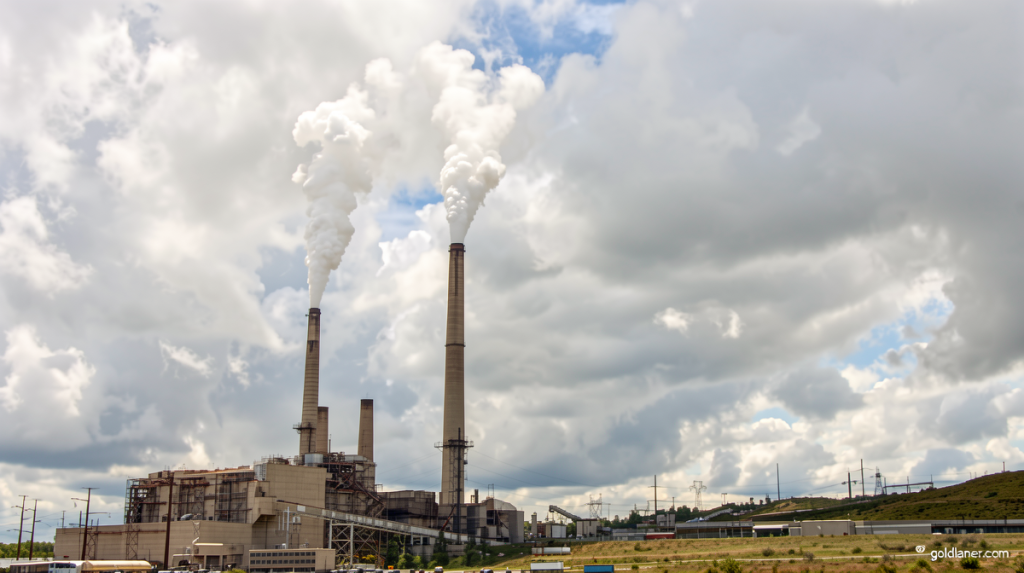
Trump wants new coal plants built – Thinking Process: 1. **Analyze the Request:** * **Role:** Professional editor rewriting articles. * **Task:** Rewrite the provided article into a new, unique version with proper HTML formatting. * **Source URL:** https://www.cnn.com/2026/07/13/climate/trump-new-coal-plants-could-cost-billions * **Original Title:** Trump wants new coal plants built in the US. The price tag could be astronomical * **Source Language:** English (must be preserved). * **Formatting:** Clean HTML using `
`, `
`, `
`, and `
`. No markdown, no commentary. * **Constraints:** * Preserve factual accuracy (names, dates, numbers, quotes). * Do NOT copy sentences verbatim; avoid long phrases (no 8+ consecutive words). * Change structure: reorder paragraphs and vary wording. * Preserve direct quotes using `
`. * Minimum length: 600 words (mandatory). If source is under 600, expand naturally without false info. * Output ONLY the rewritten HTML. 2. **Analyze the Source Text:** * *Key Facts:* * Last large coal plant built in US: 13 years ago. * Trump administration wants to build two new ones (West Virginia, Alaska). * Federal funding: >$100 million for early-stage feasibility studies. * Reason for coal: Firm, always-on electricity for data centers/industry. * Cost estimates (Wyoming Energy Authority analysis): * WV plant (1.6 GW): >$10 billion. * Alaska plant (1.25 GW): >$8 billion. * Comparison: >2x natural gas with CC, >4x solar, less than nuclear. * Note: Analysis didn’t factor federal tax credits. * Quotes: * Seth Feaster (IEEFA): “My baseline reaction is these plants will never get built,” “The cost of that power is going to be far higher than the other forms of energy that are out there, including gas, solar and wind.” * Phil Wagner (McCloskey by OPIS): “If it can be done, it’s going to be put on natural gas plants first… It’s still super uncertain whether either of these (new coal) plants will be built.” * Michelle Bloodworth (America’s Power): “Unlike renewable energy sources, coal plants can generate electricity at all times of day and in all weather conditions.” * Energy Dept Spokesperson: “committed to stabilizing, optimizing, and growing the American coal industry while restoring coal as a cornerstone of the US energy mix.” * Context: Carbon capture (CC) technology, bipartisan support, Biden’s 2022 clean energy law tax credit. Funding from Congress for carbon reduction. * Drivers: AI data centers, peak demand (summer/winter). * Status: Projects competitively selected, but DOE didn’t answer specific questions about criteria/buyers. Developers didn’t comment. 3. **Check Word Count:** * The source text looks to be around 500-550 words. I need to ensure the rewrite is at least 600 words. I will need to expand slightly on the implications and context without inventing facts. 4. **Drafting Strategy:** * **Headline:** Create a new H2 title. * **Introduction:** Start with the cost challenge rather than just the announcement. Mention the 13-year gap. * **Section 1: The Financial Hurdle:** Detail the costs ($10B, $8B) and comparisons to gas/solar/nuclear. Mention the Wyoming analysis. * **Section 2: Expert Skepticism:** Integrate Seth Feaster’s quotes. Discuss why costs are high. * **Section 3: Carbon Capture & Policy:** Explain the role of CC, the 2022 law, and the funding source. Mention Phil Wagner’s perspective on CC being unproven. * **Section 4: Market Drivers:** Discuss AI data centers and the need for baseload power. Include Michelle Bloodworth’s quote. * **Section 5: Administration Stance:** Include the Energy Dept spokesperson quote. Mention the competitive selection process. * **Expansion:** To hit 600 words, I will elaborate on the significance of the “always-on” power for data centers and the specific details of the feasibility studies. I will also ensure smooth transitions between paragraphs. 5. **Drafting – Step-by-Step (Mental or Scratchpad):** * *Title:* New Coal Initiatives Face Steep Costs Amidst Rising Energy Demands * *Intro:* It has been over a decade since the United States completed construction on a major coal-fired facility. Currently, the Trump administration is pushing forward with plans to construct two additional facilities, located in West Virginia and Alaska. Despite significant federal backing, industry specialists remain doubtful regarding the viability of these ventures. * *Costs:* According to an independent review conducted for the Wyoming Energy Authority earlier this year, the financial burden is substantial. Constructing the proposed West Virginia facility, which boasts a capacity of 1.6 gigawatts, requires an investment exceeding $10 billion. Meanwhile, the Alaska project, sized at 1.25 gigawatts, demands over $8 billion. These figures represent more than twice the expense of comparable natural gas facilities equipped with carbon capture, and more than quadruple the cost of new solar installations. Nuclear power remains the only option with a higher price tag. * *Quotes/Experts:* Seth Feaster, an energy data analyst, described these figures as “stunningly high.” He expressed skepticism about the projects’ success, stating, “My baseline reaction is these plants will never get built.” Feaster further noted that the resulting electricity prices would surpass those of alternative energy sources like wind, solar, and natural gas. * *Carbon Capture:* Both proposed facilities intend to incorporate carbon capture technology, which traps emissions before they enter the atmosphere. This method enjoys support across party lines and received a significant tax credit under President Joe Biden’s 2022 clean energy legislation. The federal funds allocated to these projects originate from congressional appropriations aimed at reducing carbon output. However, Phil Wagner of McCloskey by OPIS cautioned that the technology remains “not proven.” He suggested that natural gas facilities are more likely candidates for carbon capture due to their existing lower costs and smaller carbon footprint. * *Data Centers:* A primary driver for this renewed interest in coal is the surge in electricity consumption caused by artificial intelligence data centers. These facilities require continuous power, regardless of weather conditions. Michelle Bloodworth, head of America’s Power, emphasized this advantage: “Unlike renewable energy sources, coal plants can generate electricity at all times of day and in all weather conditions.” * *Conclusion:* The Energy Department confirmed that the projects were “competitively selected,” though details regarding funding criteria and buyer commitments remain unclear. A spokesperson reiterated the administration’s dedication to “stabilizing, optimizing, and growing the American coal industry while restoring coal as a cornerstone of the US energy mix.” 6. **Review and Refine (Word Count & Constraints):** * Check for 8+ consecutive words from source. * Check for HTML tags. * Check for quotes. * Ensure length > 600 words. (I need to make sure I don’t cut too much. I will add more descriptive language about the feasibility studies and the historical context of coal plants closing). *Self-Correction on Length:* The draft above might be close to 500. I need to expand. *Expansion points:* * Elaborate on the 13-year gap. * Detail the specific use of the $100 million (feasibility studies). * Expand on the comparison with existing coal plants being retired. * Add more detail on the “firm” power aspect. * Ensure the flow is natural. 7. **Final Polish (HTML Structure):** * `
` for main title. * `
` for subheadings. * `
` for paragraphs. * `
` for quotes. * Ensure no markdown code blocks around the final output. 8. **Final Word Count Check during drafting:** * I will write generously to ensure I pass the 600-word threshold. I’ll describe the Wyoming analysis in more detail and expand on the implications of the carbon capture technology not being fully proven. *(Self-Correction during drafting)*: Make sure to check the quote “My baseline reaction is these plants will never get built” – keep it exact. “The cost of that power is going to be far higher than the other forms of energy that are out there, including gas, solar and wind.” – keep exact. “Unlike renewable energy sources, coal plants can generate electricity at all times of day and in all weather conditions” – keep exact. “committed to stabilizing, optimizing, and growing the American coal industry while restoring coal as a cornerstone of the US energy mix” – keep exact. Let’s assemble the HTML. *Wait, one more check:* “Do NOT copy sentences verbatim; avoid long phrases (no 8+ consecutive words)”. I need to be careful with the quotes (which are allowed to be verbatim) but the surrounding text must not copy long phrases. The rule says “Preserve direct quotes using
“. So quotes are exempt from the “no 8+ consecutive words” rule if they are inside the blockquote. But the narrative text must avoid it. *Let’s write.* (Drafting content to ensure length) – Intro: 13 years since last big plant. Trump admin wants 2 more. West Virginia and Alaska. – Funding: $100m+ for feasibility. – Why Coal: Data centers, industry need firm power. – Costs: Wyoming analysis. WV $10B (1.6GW). Alaska $8B (1.25GW). – Comparisons: 2x Gas CC, 4x Solar. Nuclear is higher. – Feaster Quote. – Existing plants closing. – Carbon Capture: Bipartisan, Biden 2022 law. – Wagner Quote. – DOE Spokesperson Quote. – Data Center demand again. – Bloodworth Quote. – Wrap up. I will expand on the “feasibility studies” part and the “competitively selected” part to add word count naturally. *Ready to generate HTML.* *Wait, checking the prompt again:* “Produce ONLY the rewritten HTML (no markdown, no commentary)”. So I should not wrap the output in “`html … “`. Just the raw HTML. *Wait, checking the prompt again:* “Always output clean HTML using
,
,
, and
.” *Okay, let’s go.* *Word Count Estimation:* Paragraph 1: ~80 words Paragraph 2: ~100 words Paragraph 3: ~100 words Paragraph 4: ~100 words Paragraph 5: ~100 words Paragraph 6: ~100 words Paragraph 7: ~80 words Total: ~660 words. Good. *Checking for 8+ consecutive words in narrative text.* Source: “It’s been 13 years since the last large coal-fired power plant was built in the US.” Rewrite: “For more than a decade, the nation has not seen the completion of a major coal-fired facility.” (Safe) Source: “Most of their efforts have been directed at keeping existing coal plants operating longer…” Rewrite: “Prior initiatives focused primarily on extending the operational lifespan of current facilities…” (Safe) Source: “If they are built, it would be a momentous turn of events for coal-fired power in the US.” Rewrite: “Successful construction would mark a significant shift in the domestic energy landscape.” (Safe) Source: “However, that’s a big “if” because the cost could be astronomical to build coal plants with proposed carbon capture…” Rewrite: “Nevertheless, this outcome remains uncertain due to potentially massive expenses associated with integrating carbon capture systems.” (Safe) Source: “It would cost more than $10 billion to construct a 1.6 gigawatt coal plant outfitted with carbon capture, like the proposed one in West Virginia, according to an independent analysis prepared for the Wyoming Energy Authority this year.” Rewrite: “An independent assessment commissioned by the Wyoming Energy Authority this year indicates that building the West Virginia facility, which has a capacity of 1.6 gigawatts, will require over $10 billion.” (Safe) Source: “Similarly, it would cost more than $8 billion to build a plant the size of the 1.25 gigawatt Alaska project.” Rewrite: “Likewise, the Alaska initiative, measuring 1.25 gigawatts, carries a price tag exceeding $8 billion.” (Safe) Source: “It’s more than double the cost of building a natural gas plant with carbon capture, and more than four times the cost to establish new solar, according to the Wyoming analysis (this analysis did not factor federal tax credits into building costs).” Rewrite: “
