
Man pulled from rubble in ‘miraculous’ rescue 8 days after devastating Venezuela earthquakes
Man Rescued from Rubble Eight Days After Venezuela Earthquakes
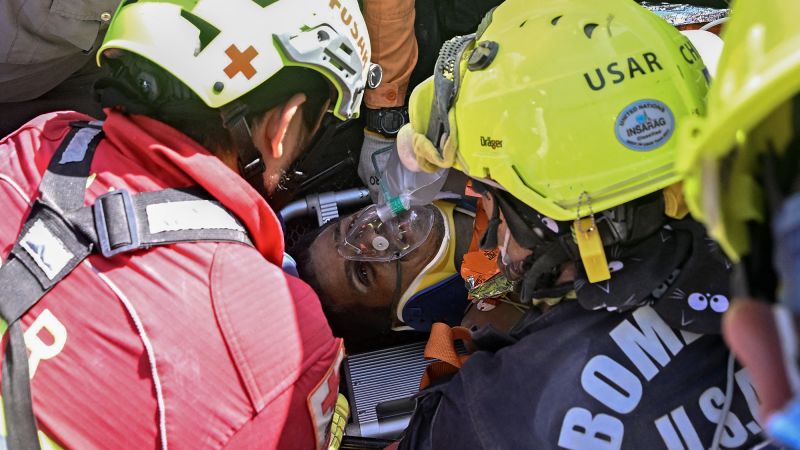
Man pulled from rubble in miraculous – Eight days after a series of powerful earthquakes devastated parts of Venezuela, rescue teams successfully extricated a man from beneath the collapsed structure of a nine-story building in La Guaira. Hernán Alberto Gil Flores, a 40-year-old security guard, was found alive after being buried under 29 feet of debris from a shopping mall parking lot. The operation, described as a “miraculous” effort, concluded on Thursday with Gil in “good condition,” according to Chile’s fire brigade.
Rescue Effort Spans 70 Hours
The extraction process took over 70 hours, requiring coordinated efforts from local and international rescue teams. Chile’s fire brigade reported that the teams faced significant challenges, including the instability of the building and the risk of further collapses. Despite these obstacles, Gil was eventually pulled to safety, with his vital signs remaining stable during the entire operation.
“Fortunately, once we received Mr. Hernan in the ambulance, he was stable,” said Luis Rodríguez, a paramedic with the Venezuelan Red Cross, who was on-site during the rescue. “During the whole ride he was conscious, focused, and collaborating, and all of his vital signs were within normal.”
Gil’s wife, Gusvimar Gonzales, expressed relief moments before the rescue was completed, recounting the emotional toll of the past days. “I had days of great sorrow, thinking he might not survive,” she told CNN. “But once I found out he was alive, I saw a ray of sunshine.” Gonzales added that her children were anxiously awaiting their father’s return at home.
Visual Contact and Life Support
Video footage captured the moment rescuers first made visual contact with Gil through a search camera on Wednesday. In the clip shared by the Chile Fire Department, his fingers were seen waving through a narrow gap in the rubble, a small but hopeful sign of his survival. Emergency crews had been communicating with Gil via a hose and syringe, providing him with water, food, and medication over the past week to sustain his health.
As the rescue continued, a video posted on Thursday showed Gil’s head and shoulders partially exposed from the debris. He was wearing a mask and had a bloodshot eye, indicating his condition had been critical but stable. The Chile Fire Department highlighted the complexity of the operation, noting that the building’s continued instability posed a constant threat to both the survivor and the rescuers.
International Collaboration in the Rescue
The rescue effort involved teams from multiple countries, including Chile and Costa Rica, working tirelessly to clear a safe passage through the rubble. Rescuers used advanced equipment like radar sonar and sound detection systems to confirm Gil’s presence and monitor his condition. Sebastián Mocorquer, a representative from the United Nations Disaster Assessment and Coordination team, emphasized that the rescue was a rare success after seven days, stating, “Only miraculous rescues have been achieved” in the aftermath of the quakes.
The “golden window” for finding survivors is typically limited to three days post-earthquake, during which time the chances of survival without a water source decline rapidly. However, in Gil’s case, the persistence of rescue teams extended the window, allowing for a breakthrough that kept him alive. This underscores the critical role of sustained efforts in complex disaster scenarios.
Challenges in the Rescue Tunnel
Video shared by El Salvador’s President Nayib Bukele depicted the final moments of the rescue, showing a team member interacting with Gil as they prepared to extract him. The footage revealed Gil responding to questions about his injuries, stating, “No, I’m not hurt. I’m just uncomfortable because of the rocks.” Bukele noted that the operation had been particularly difficult due to repeated collapses in the tunnel used to reach Gil, requiring frequent adjustments to the rescue plan.
Despite these challenges, teams managed to create a stable path through the rubble, though the structure remained vulnerable throughout the process. “Rescue teams from several countries have been working together tirelessly to stabilize the tunnel, shoring it up, reinforcing it, and isolating it,” said Bukele. “But it has not been possible to hold it up entirely.” This highlights the delicate balance between progress and risk in such operations.
Impact of Earthquakes on La Guaira
La Guaira, the coastal city where Gil was rescued, was among the hardest-hit areas during the twin earthquakes. The region’s infrastructure, including high-rise apartment buildings and commercial structures, suffered extensive damage, complicating rescue efforts. CNN observed locals using pickaxes, shovels, and even bare hands to dismantle collapsed buildings, as resources such as fuel and supplies were in short supply.
Venezuela’s acting president, Delcy Rodríguez, praised the rescue on Thursday, calling it a “testament to human resilience.” She thanked both national and international rescue workers for their dedication, stating, “Today we celebrate the life of Hernán Gil. Thank you to the national and international rescue workers who gave their bodies, their time, and their souls to this mission.” The rescue has offered a glimmer of hope in a time of widespread devastation.
Ongoing Search for Survivors
While Gil’s rescue marks a significant achievement, the search for other survivors continues in La Guaira. The city’s morgues have been overwhelmed, with the death toll steadily increasing. However, the success of this operation has demonstrated that life can still be saved even beyond the typical “golden window,” provided rescue efforts remain relentless.
Experts remain cautious, noting that the early stages of the rescue were crucial in preventing further loss of life. The ability to maintain communication with Gil and provide him with life support for eight days was a key factor in his survival. As teams continue their work, the focus remains on both recovering additional victims and stabilizing the damaged buildings to prevent further casualties.
This rescue serves as a reminder of the importance of international cooperation in disaster response. The combined efforts of local and global teams have not only saved a life but also provided a beacon of hope for communities still reeling from the earthquakes. As the situation evolves, the resilience of the people and the dedication of the rescue workers will be central to the recovery process in Venezuela.
