
The president’s getting richer — but many midterm voters aren’t
A New Era of Presidential Wealth
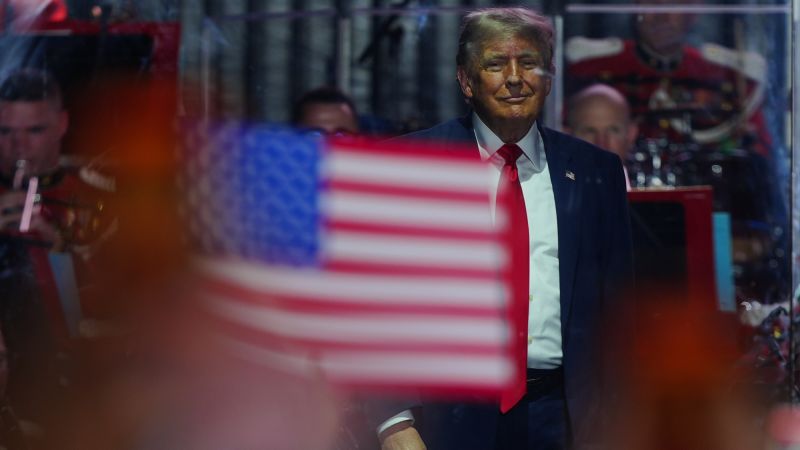
The president s getting richer – As midterm elections approach, many voters are grappling with economic challenges, yet the financial trajectory of the current president continues to climb. Despite the struggles of everyday Americans, Trump’s personal fortune has surged, highlighted by a recent annual financial disclosure that revealed billions in earnings. These gains come from a mix of cryptocurrency holdings, royalty income, and real estate ventures, along with significant profits from branded merchandise like Bibles, watches, and sneakers. The document, released Tuesday, underscores a presidency that diverges sharply from historical norms, where leaders often distanced themselves from personal wealth to maintain public trust.
The Cryptocurrency Connection
Trump’s financial strategy has evolved in recent years, incorporating new tools like digital assets into his wealth-building approach. Unlike previous presidents who adhered to traditional methods of managing their finances, he has embraced innovative avenues, including issuing his own cryptocurrency tokens. This move has positioned him as a pioneer in blending personal branding with financial gain, even as the White House oversees the regulation of the crypto industry. Critics argue that the administration’s relaxed stance on Securities and Exchange Commission oversight could benefit Trump’s ventures more than the broader economy.
While most presidents and vice presidents are not bound by existing ethics laws, they often conduct their affairs as if they were, partly to shield themselves from political backlash. Trump, however, has taken this a step further by openly defying conventions. His 2016 campaign, which refused to release tax returns, set a precedent for prioritizing personal interests over transparency. This pattern has continued, with his latest disclosures showing a steady accumulation of wealth without apparent consequences. The question remains: Does this wealth accumulation reflect a genuine economic policy or a personal advantage?
Public Trust and Political Accountability
The presidency is traditionally seen as a public trust, tasked with serving the nation’s interests. Yet Trump’s financial gains have sparked unease among voters, who may feel disconnected from the benefits he enjoys. This disconnect was starkly evident during a recent event where he addressed the public before boarding his newly acquired luxury Air Force One, a $400 million gift from Qatar. “We’re all profiting. I’m profiting because I have a lot of money and a lot of cash,” he remarked, highlighting the perceived contrast between his prosperity and the economic struggles of his constituents.
Trump’s wealth is not just a matter of personal success; it raises broader questions about the role of the presidency in economic policy. His administration has placed the cryptocurrency industry at the heart of its agenda, creating a regulatory environment that favors innovation. However, this focus on crypto has drawn scrutiny, with experts debating whether the policy serves the public good or private gain. Danielle Caputo, a senior ethics counsel at the Campaign Legal Center, noted, “It becomes impossible to know: Is the president creating this regulation around cryptocurrency for his own benefit, for his holdings, or is he doing it because he thinks that’s truly what’s best for the American people?”
Historically, leaders like Jimmy Carter have taken steps to separate their personal finances from their official roles, such as placing his family’s peanut farm into a blind trust. Trump, however, has opted for a different approach, allowing his business empire to intertwine with his presidency. His sons, Eric and Donald Trump Jr., oversee the operations of World Liberty Financial LLC, the company behind his cryptocurrency tokens. This arrangement has enabled Trump to profit handsomely, with disclosures showing over $526 million from token sales and a licensing deal for his meme coin generating an additional $635 million.
While there is no evidence of criminal activity, the growing disparity between Trump’s wealth and the economic conditions of many voters has intensified concerns about conflicts of interest. Some see this as a sign of political bravado, while others argue it reflects a lack of accountability. The White House has consistently dismissed these questions, framing Trump’s financial success as a result of his leadership. Yet, as the midterm race heats up, the public’s perception of his wealth may influence their judgment of his presidency.
The Balance of Power and Public Perception
Trump’s financial arrangements have also sparked debates about the integrity of the U.S. political system. By leveraging his position to advance personal interests, he risks casting doubt on the fairness of economic policies. The administration’s support for the crypto industry, which has seen reduced regulatory scrutiny, adds to these concerns. Critics warn that such policies could prioritize the needs of wealthy individuals over the broader population, especially as inflation and rising living costs weigh on average Americans.
Despite the controversy, Trump’s approach to wealth management has not yet resulted in lasting political damage. This resilience may stem from his ability to frame his financial gains as a testament to his economic acumen. His brand, now a global phenomenon, has generated over $200,000 in royalties from Bibles, $4.7 million from watches, and $67,634 from fragrances and sneakers. These figures, while impressive, raise questions about whether the presidency should be a platform for personal enrichment or a tool for national progress.
As the midterm elections near, the public’s reaction to Trump’s wealth could shape the outcome. Voters, who may feel economically marginalized, are being asked to reconcile their leader’s prosperity with their own hardships. The challenge for Trump is to demonstrate that his financial strategies align with the interests of all Americans, not just his own. Whether he succeeds in this effort will depend on how effectively he addresses the growing unease about the balance between presidential power and public welfare.
The latest financial disclosures serve as a reminder of the unique nature of this presidency. Unlike predecessors who often sought to distance themselves from personal wealth, Trump has integrated his financial interests into the executive branch. This integration has allowed him to benefit from policies that may favor his business ventures, creating a potential conflict that could impact the nation’s economic direction. As the public watches closely, the question of whether Trump’s wealth is a sign of progress or privilege will remain central to the political discourse.
