
As Venezuelan morgues fill and the death toll slowly rises, questions remain about how many are truly gone
As Venezuelan Morgues Overflow, Doubts Grow Over Earthquake Death Toll
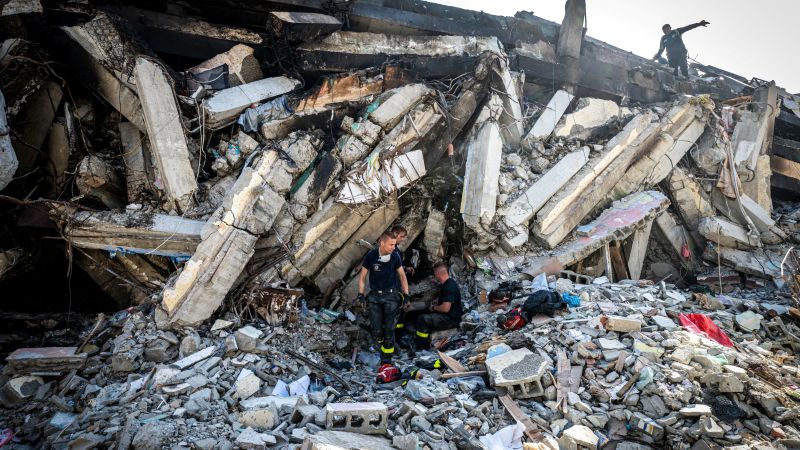
As Venezuelan morgues fill and the death – One week after a devastating series of earthquakes struck Venezuela, the country’s official death count remains a subject of intense scrutiny. With over 2,295 fatalities officially reported, the figure has drawn skepticism from both local citizens and international analysts. While authorities have gradually increased the tally by approximately 300 over the past day, many argue that the number underrepresents the true scale of the disaster.
Frontline Forensics Highlight the Gap
In the aftermath of the quakes, a forensic pathologist in La Guaira, a port city severely affected by the tremors, has voiced concerns about the accuracy of the government’s figures. Speaking to CNN under anonymity to avoid retaliation, she described the makeshift morgue where her team is working as a critical hub for identifying victims. However, the volume of bodies processed daily—around 400—has left the facility overwhelmed, with refrigerated trucks unable to accommodate all remains.
“La Guaira is indescribable,” the pathologist said. “There are so many cases, so many families. The earthquakes hit the lower-income families the hardest—they are the most affected.”
She emphasized that many bodies recovered are in advanced stages of decay or unrecognizable due to the destruction. To cope, refrigerated trucks are now leaving body bags exposed to the sun, accelerating decomposition. This situation has raised questions about the government’s ability to track all casualties, especially as families themselves are often the first to recover their loved ones from the rubble.
According to the pathologist, the official death toll “amounts to not even a third of what is actually there.” This discrepancy has sparked a broader debate about transparency in Venezuela’s disaster response. Opposition leaders, including María Corina Machado, have accused the government of downplaying the severity of the crisis, with Machado recently stating via an Instagram video from exile that officials are deliberately obscuring the extent of the damage.
“Authorities are trying to hide the true scale of the destruction,” Machado said. “They are blocking communications to control the narrative.”
Meanwhile, Venezuelans living abroad have taken it upon themselves to document missing persons, creating informal networks to share information when the government has not released a comprehensive list of the deceased. These efforts underscore the frustration with official reports, which have yet to provide a clear picture of the toll.
Discrepancies Between Official and Estimated Numbers
The US Geological Survey initially estimated that the back-to-back 7.2 and 7.5 magnitude earthquakes could have claimed tens of thousands of lives. Yet, the Venezuelan government has only shared a daily death count, without offering a final projection. Gianluca Rampolla del Tindaro, the United Nations’ Venezuela coordinator, acknowledged this gap during a press conference, stating, “We are definitely looking at a number higher than the one already reported.”
Human rights groups have also expressed doubt about the official numbers. Provea, a prominent advocacy organization, criticized the lack of transparency, calling the figures “more questions than answers.” The NGO stressed the need for clarity in the government’s response to the crisis, highlighting the importance of open communication during a national emergency.
Despite these concerns, some experts remain cautious about attributing the undercount to deliberate misrepresentation. David Smilde, a Tulane University sociologist and Venezuela specialist, noted that the government may not have a strong motive to hide deaths, given the influx of international aid following the disaster. “The government can use the death toll to request more support,” he said. “It’s not clear they’re trying to suppress the truth.”
“We’ll need more studies and research to understand the full impact before assuming the government is withholding information,” Smilde told CNN. “They might be undercounting for strategic reasons, but it’s not yet proven.”
Smilde also pointed out key differences between the current situation and the 1999 floods in La Guaira. At that time, bodies were washed out to sea, with some found as far away as Curaçao. Others were simply buried without proper records, leaving no definitive list of missing individuals. In contrast, the present crisis has exposed challenges in the recovery process, with families playing a central role in identifying victims.
The 1999 floods under President Hugo Chávez’s administration were notable for their lack of official death tolls. This absence of data has led to lingering doubts about the government’s ability to accurately report casualties in times of crisis. Critics argue that the current undercount may follow a similar pattern, using the tragedy to shape a narrative that serves political interests.
As the morgues in La Guaira continue to fill, the situation in Venezuela remains a complex interplay of facts, perception, and governance. The pathologist’s account highlights the physical and emotional toll of the disaster, while opposition voices and international observers question the government’s transparency. The absence of a unified estimate for the total number of deceased adds to the uncertainty, with many families still searching for loved ones trapped beneath collapsed structures.
David Smilde’s perspective offers a counterpoint to the skepticism, suggesting that the government’s numbers may reflect a more gradual process of accounting rather than outright manipulation. However, the persistent delays in reporting and the logistical challenges in body recovery have fueled speculation. The dual magnitude of the earthquakes, combined with the country’s existing infrastructure strains, has created a scenario where the death toll could be significantly higher than officially stated.
As CNN continues to seek clarification from the Venezuelan government, the debate over the accuracy of the figures is likely to intensify. The organization’s outreach underscores the need for more detailed information on how the government calculates its casualties. With the morgues operating at full capacity and the rubble still yielding new victims, the final toll may take weeks or even months to determine.
In the meantime, the story of Venezuela’s earthquakes serves as a reminder of the delicate balance between factual reporting and political influence. Whether the current numbers are an undercount or a realistic reflection of the situation remains unclear. What is certain is that the tragedy has exposed vulnerabilities in the country’s emergency response and sparked a broader conversation about accountability and transparency in the face of disaster.
