
The American town that keeps rising from the ashes
The American town that keeps rising from the ashes
A vibrant hub with a history of resilience
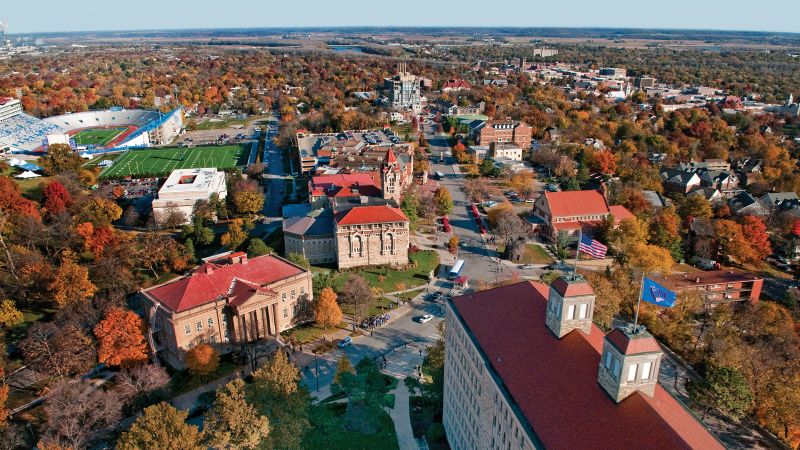
The American town that keeps rising – Nestled on the eastern edge of Kansas, Lawrence is a town that defies expectations. Its downtown area, centered around Massachusetts Street, boasts a unique blend of charm and character, offering a lively mix of boutique shops, eateries, and cultural venues. Yet beneath this idyllic surface lies a rich tapestry of history, marked by conflict and transformation. Known locally as “Mass,” the street is more than just a commercial corridor—it’s a living testament to the town’s enduring spirit.
Massachusetts Street is a prime example of Main Street revitalization in the Midwest. This walkable district remains a vital community hub, where independent retailers thrive in an era when many urban centers have seen their local businesses replaced by chain stores. The area buzzes with activity from dawn until dusk, creating an atmosphere that feels both welcoming and dynamic. During the warmer months, Lawrence exudes a sense of peace and anticipation, as if every corner holds a story waiting to be uncovered. The presence of Hallmark Cards in the town adds to this allure, with its iconic greeting cards often inspired by the same kind of heart and creativity that define the local scene.
A town shaped by battle and rebirth
Lawrence’s journey is one of resilience, beginning with its founding in 1854 by abolitionists who sought to create a free state. This act of defiance immediately placed the town in the crosshairs of pro-slavery forces. Just months after its establishment, Lawrence became a target, enduring brutal attacks that left its infrastructure in ruins. Two years later, the town was violently ransacked, with its hotel reduced to ashes—a moment that would come to symbolize its struggle for freedom.
Despite these early trials, Lawrence refused to fade. It emerged as a key stop on the Underground Railroad, offering shelter and support to those fleeing enslavement. The town’s ability to recover from such devastation was further tested in 1863, when Confederate raiders, led by William Quantrill, launched a devastating assault. Over 150 men and boys were killed, and the destruction of the city’s heart left a profound mark on its history. Yet, like a phoenix, Lawrence rose again, rebuilding with determination. The Eldridge Hotel, for instance, was resurrected on the site of its twice-destroyed predecessor, now standing as a modern landmark that hosts international events, including the Algerian national soccer team this summer.
Protest and progress in the 1970s
The 1970s brought another chapter to Lawrence’s story, as the town grappled with social unrest. Years of simmering racial tensions and anti-war sentiment erupted into a summer of chaos, with the University of Kansas at the center of the turmoil. This period of conflict revealed Lawrence’s dual nature: a place where peaceful coexistence and fierce activism collide.
Though the city faced challenges, it also demonstrated its capacity for growth. The University of Kansas, established on Mount Oread overlooking the town, became a beacon of progress. Even as it embraced progressive values from the outset, the 1970s protests pushed it to confront its own identity. The university’s creation of an African and African-American Studies department was a landmark achievement, while the city emerged as a sanctuary for grassroots movements, including early LGBT liberation efforts. These developments cemented Lawrence’s reputation as a forward-thinking community, unafraid to challenge the status quo.
Defending the soul of the city in the 1980s
By the 1980s, Lawrence was once again at a crossroads. The rise of enclosed malls across America threatened the character of its downtown, prompting fierce resistance from locals. At this time, Sarah Fayman had already spent over a decade running Sarah’s Fabrics, a small but influential shop on Massachusetts Street. When the threat of a massive retail development loomed, Fayman and a group of independent merchants united to fight for the town’s soul.
“It was a very Lawrencian kind of thing,” Fayman recalls, reflecting on the collective effort to preserve the area. Her involvement in the Downtown Lawrence Inc. initiative highlighted the community’s commitment to maintaining its unique identity. The group’s campaigns successfully rallied public support to protect historic buildings and the cultural heart of the city. This resistance was not just about saving architecture—it was about safeguarding the community’s values and heritage against the homogenizing forces of modernization.
The battle over Massachusetts Street’s future became a defining moment for Lawrence, showcasing its ability to adapt without losing its essence. The town’s fight against commercial encroachment resonated far beyond its borders, inspiring other cities to rethink their approaches to development and preservation.
A living museum of resistance
The Watkins Museum of History, located at the southern end of Massachusetts Street, serves as a repository for Lawrence’s turbulent past and enduring legacy. Housed in a beautifully restored 19th-century bank building, the museum captures the town’s journey through exhibits that highlight both its peaceful charm and its history of conflict.
Among its many displays, the museum features artifacts from the 20th-century commercial battles that shaped the area. A protest button badge with the slogan “Closing Massachusetts is a dead end” stands as a poignant reminder of the 1980s fight. Visitors can trace the evolution of the town from a battleground of ideological clashes to a vibrant cultural destination. The museum’s role as a bridge between history and the present ensures that Lawrence’s story remains accessible to future generations.
The legacy of resilience
Lawrence’s ability to rise from the ashes has made it a symbol of American tenacity. From the abolitionist struggles of the 1850s to the civil rights movements of the 1970s and the preservation battles of the 1980s, the town has consistently found ways to reinvent itself. Its history is not just a series of events but a continuous dialogue between past and present.
Today, as the city continues to evolve, its residents carry the spirit of those who came before them. The streets of Massachusetts Street remain a testament to this resilience, where every storefront and gathering spot tells a story of perseverance. Lawrence’s journey reminds us that a town’s true strength lies not in its ability to avoid conflict, but in its capacity to overcome it. Whether through the artistry of its independent businesses, the echoes of historical battles, or the ongoing efforts to protect its heritage, Lawrence stands as a beacon of hope and determination. Its story is one of continuous rebirth—a living example of how a community can shape its own destiny, even in the face of adversity.
