
Alaska’s capital is small by population but massive in nature
Alaska’s Capital: A Compact Town Amidst Vast Natural Splendor
Alaska s capital is small by population – Nestled in the heart of Alaska’s rugged northwest, Juneau stands apart from the rest of the state. Unlike most American capitals, it lacks the convenience of roads, offering only three entry points: by boat, plane, or through the unique circumstance of being born there. This isolation, however, is far from a drawback. In fact, it enhances Juneau’s charm, making it a destination that feels almost mythical in its untouched beauty.
The City That Defies Convention
Juneau’s allure lies in its paradoxical nature. While it is home to just over 21,000 residents, the city’s geographical footprint rivals that of many larger metropolises. As the largest state capital in the United States by land area, its towering peaks remain perpetually snow-capped, even in late summer. Seaplanes streak across the sky, while the forested landscape teems with wildlife—bears, mountain goats, and whales share the same environment as humans. The region is so remote that it almost feels like a different planet, yet the weather here demands a rain jacket as much as a passport.
Surrounding Juneau is the Tongass National Forest, the world’s largest intact temperate rainforest. This vast ecosystem is a sanctuary for biodiversity, and its influence is palpable in the city’s daily life. Juneau’s climate is as dramatic as its scenery, with over 230 days of rain annually. June, the city’s sunniest month, still averages 50% wet days, creating a unique rhythm of weather that shapes both its culture and tourism.
“It does rain a lot here,” admits Nathan Hickok, a lifelong resident and heavy equipment operator. “But one sunny day makes all the wet and cold days totally worth it.”
The city’s secluded setting and rugged terrain defy conventional urban expectations. For visitors, the journey to Juneau is an adventure in itself, whether they arrive via the Inside Passage, a network of coastal routes, or a direct flight from the mainland. Yet, the real magic of Juneau is its ability to offer both solitude and spectacle in equal measure.
Nature’s Masterpieces: Glaciers and Fjords
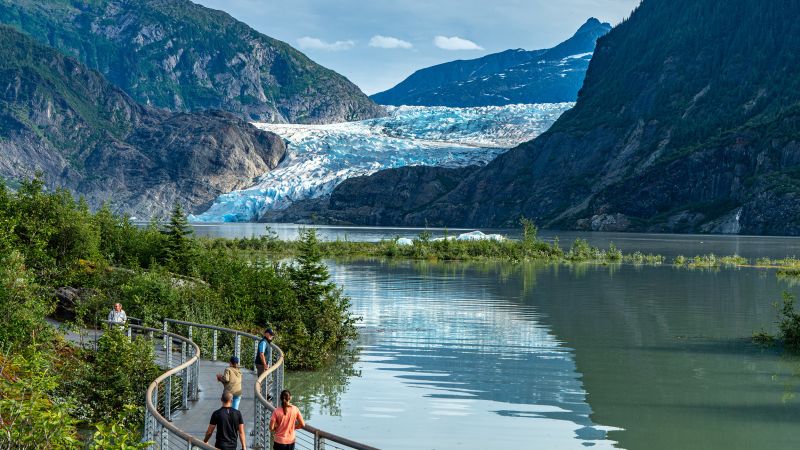
Among Juneau’s most iconic natural attractions is the Mendenhall Glacier, a striking example of glacial artistry. Its light-blue, frozen tsunami-like appearance is accessible from the main road just north of the city, aptly named the Glacier Highway. The glacier’s proximity to the town allows for a variety of experiences: hiking, dogsledding, boating, kayaking, or even a helicopter landing. However, like much of the region, it is increasingly affected by the climate crisis. As of last year, it no longer reaches the lake it feeds into, a stark reminder of the challenges facing this natural wonder.
Just beyond the city’s borders lies Tracy Arm Fjord, another geological marvel. This fjord features towering ice cliffs, cascading waterfalls, and the Dawes Glacier, which shares the same dramatic presence as its neighbor. Boat tours through Tracy Arm, often operated by True Alaskan Tours, are immersive experiences that can take a full day and require advance reservations. The fjord’s natural beauty is complemented by its relative tranquility, especially when compared to the bustling summer months.
Whale Watching and the Great Oceanic Show
Juneau’s coastal waters are a haven for marine life, particularly humpback whales. These massive creatures, comparable in size to city buses, graze on krill and fish in the waters off Auke Bay during the summer. Their migration from Hawaii to Alaska in the winter spans a 6,000-mile roundtrip, making their presence in Juneau all the more remarkable. The long summer days, with over 18 hours of sunlight, align perfectly with their feeding schedules, offering optimal viewing opportunities.
For those seeking a more intimate encounter, local whale tours provide a unique perspective. Juneau Whale Tours, a family-owned operation, recently made headlines for its discreet departure times. During a June visit, the company’s small group of about a dozen passengers, including this writer, launched their two-hour excursion before larger crowds were even cleared from the parking lot. The custom-built 50-foot catamaran features a wraparound deck, designed to accommodate photographers and journalists eager to capture the action.
“The Alaskan experiences here are endless,” says Hickok. “There are enough trails here that my wife and I couldn’t get to all of them in the summer.”
On this particular day, the weather proved cooperative, and the group was rewarded with “muggings”—a term locals use for close encounters with whales. A humpback and a pack of orcas joined the spectacle, synchronized in their movements above the water. Captain T.J. Miller, the tour’s leader, urged passengers to keep the sighting private, fearing it might raise expectations for future groups.
Managing the Crowds: A New Era for Juneau
With over 1.5 million visitors arriving annually, Juneau has become a hotspot for travelers seeking adventure. The influx of cruise ship passengers, which often swells the city’s population to double its usual size, has led to the implementation of visitor caps. For the first time, the city limits daily disembarkation numbers to 16,000, roughly half of its total population. This move aims to balance accessibility with the need to preserve the city’s natural and cultural treasures.
While the glacier and fjord remain popular draws, the city’s cultural and historical offerings are equally compelling. Juneau’s history is woven into its landscape, from its indigenous heritage to its role in the state’s political and environmental movements. For those who prefer a quieter pace, the local nature trails provide a serene escape from the tourist rush. These paths wind through the forest, offering opportunities to observe wildlife and appreciate the region’s untouched beauty.
Juneau’s unique blend of natural grandeur and cultural depth makes it a standout destination in the United States. Whether you’re drawn by the call of the wild, the thrill of whale-watching, or the charm of a city that feels as remote as it is vibrant, Juneau offers an experience unlike any other. As the climate crisis continues to reshape its glaciers, the urgency to visit—and to witness these wonders before they vanish—only grows stronger.
