
America’s smallest biggest city is surprisingly wild
The Compact Metropolis of Burlington, Vermont: A Hidden Urban Adventure
America s smallest biggest city is surprisingly – Burlington, Vermont, holds a peculiar place in the United States. With a population of nearly 45,000 residents, it is the largest city in the state—yet it remains the smallest among the top population centers of any state. This paradox makes it an intriguing destination for travelers seeking a blend of urban charm and wilderness. The city offers a rare opportunity to experience city life without sacrificing access to nature, creating a unique atmosphere that feels both modern and timeless.
A Community Driven by Connection
Christine Tyler Hill, a local artist and crossing guard, captures the essence of Burlington’s character. “You get this feeling of, ‘Here is this place where people care a lot,’” she remarked. Hill, who resides in the city’s Old North End, highlighted the deep civic ties that define the community. Here, neighbors know one another, and local initiatives thrive. Her hand-printed newsletter, *The Cloud Report*, gained unexpected popularity this year, showcasing the city’s vibrant daily life and fostering a sense of shared identity.
“Six degrees of separation? In Burlington it’s two degrees,” Hill added, emphasizing the close-knit nature of the city. This interconnectedness extends beyond casual conversations—local events, from weekly markets to seasonal festivals, draw residents and visitors alike, creating a social fabric that feels personal yet dynamic.
Seasonal Events and Cultural Hub
Burlington’s cultural calendar is as lively as its community spirit. The weekly Burlington Farmers Market, for instance, is a bustling hub where fresh produce and artisan crafts come together. In July, the Vermont Brewers Festival transforms the city into a playground for beer enthusiasts, while September’s Art Hop offers a weekend of creativity with open studios and live music. These events are more than entertainment—they are a testament to the city’s commitment to local culture and community engagement.
Students are a constant presence in Burlington, shaping its energy and character. Founded by European settlers in the 1770s, the city became a college town in 1791 when Ira Allen established the University of Vermont. This legacy continues, with annual waves of undergraduate students contributing to Burlington’s cultural vibrancy. Their interactions with local businesses and attractions, such as the pedestrian-only downtown shopping district, underscore the city’s ability to balance urban development with a welcoming, small-town feel.
A Legacy of Leftist Roots
While Burlington’s modern reputation is often linked to its progressive values, its political evolution was gradual. In the early 1800s, the city thrived as a key shipping and lumber hub, with Lake Champlain’s docks bustling with trade. However, by the mid-20th century, a shift began. The 1960s and 1970s saw a surge of countercultural youth settling in Vermont, with Burlington at the forefront. This influx left a lasting imprint on the city’s political landscape and cultural identity.
“A lot of what makes Burlington special now is all the things that crazy hippies did decades ago,” Hill noted. This era of experimentation and idealism laid the groundwork for the city’s current leftist leanings. One of the most iconic figures of this movement was Bernie Sanders, who moved to Vermont in 1968 and later ran for mayor in 1981 on a socialist platform. His tenure marked a turning point, transforming Burlington’s once-industrial waterfront into a public space that now hosts recreational activities and community gatherings.
“His time as mayor reshaped the city, including turning a neglected stretch of Lake Champlain into Waterfront Park,” Hill explained. This 45-acre oasis is now a central destination for outdoor enthusiasts, offering serene views and easy access to the lake’s natural wonders.
Nature and Recreation at Every Turn
Burlington’s dedication to preserving open space is remarkable. Nearly half of the city is dedicated to parks, forests, and trails, providing ample opportunities for outdoor exploration. The Burlington Greenway, a paved path stretching eight miles along Lake Champlain, is a highlight for cyclists and pedestrians. It connects the city to the northern shore, where an elevated causeway offers panoramic views of the Green Mountains and New York’s Adirondacks.
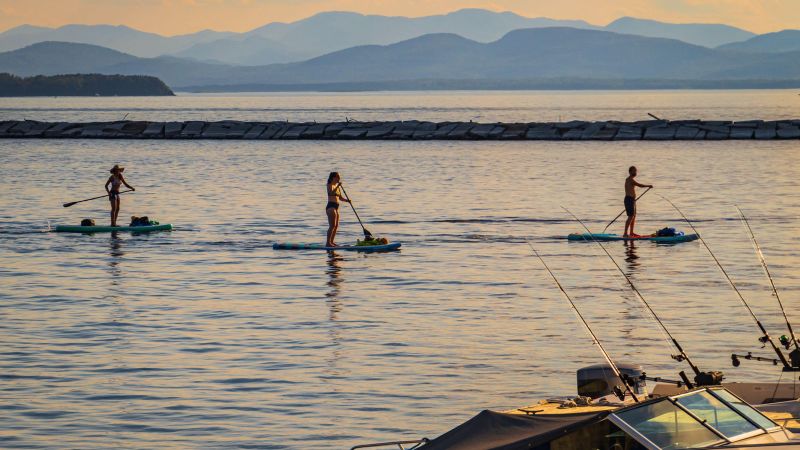
For those interested in water-based activities, the city’s waterfront is a hub of innovation. The Community Sailing Center and Whistling Man Schooner Co. host boats on sunny days, while the Burlington Surf Club launches summer camps focused on wing foiling—a thrilling watersports that combines surfing and kiteboarding. The Greenway also leads to the pop-up sauna SAVU Lakeside, a modern addition that blends wellness with the city’s natural surroundings.
Winter Wonders and Hidden Treasures
As the seasons change, Burlington’s charm adapts to the cold. In the winter, the city’s Arthur Park becomes a canvas for ice skating, with its cattail-lined pond serving as a frozen playground. Skaters glide across the surface, while hockey games and snowshoeing excursions keep the spirit of adventure alive. The park’s natural features, such as fox and otter tracks, add an element of discovery to the winter experience.
Lesser-known attractions also thrive in Burlington. The ECHO, Leahy Center for Lake Champlain, a science and nature museum, offers immersive exhibits and interactive displays. Visitors can explore native wildlife, including spotted turtles and bullfrogs, or listen to tales of Champ, a cryptid believed by some to dwell in the lake. This legend is even embraced by the city’s collegiate baseball team, which uses it as a mascot, blending folklore with local pride.
Burlington’s unique blend of urban and natural elements makes it a standout destination. Whether navigating its bustling downtown or exploring its extensive greenways, travelers will find a city that values community, creativity, and conservation. As Zoe Richards, director of Burlington Wildways, put it: “There are just fantastic natural places here, and they’re accessible to everyone.”
From its historical roots as a colonial settlement to its contemporary role as a cultural and ecological hub, Burlington remains a city of contrasts. Its small-town warmth coexists with urban convenience, while its progressive values are mirrored in its commitment to sustainability and public space. For visitors, this duality creates an unforgettable experience—one that feels both intimate and expansive, rooted in history yet ever-evolving.
