
Gavin Newsom opposes a California wealth tax. He’s proposing a national billionaire tax instead
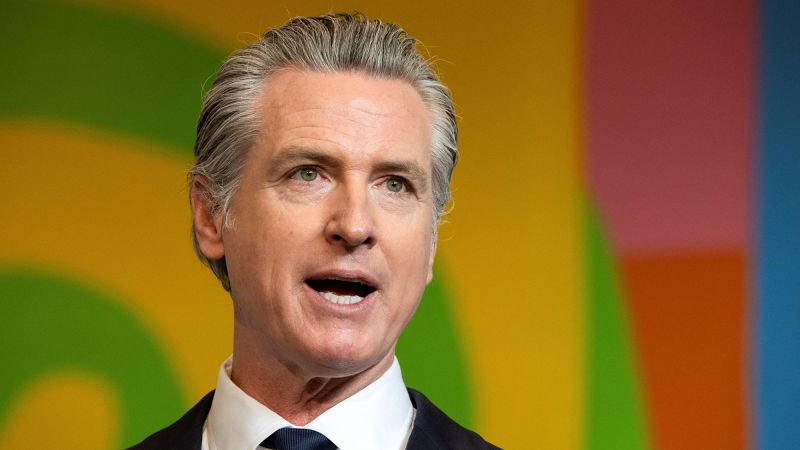
Gavin Newsom Advocates for National Billionaire Tax as California Voters Face Wealth Tax Decision
Gavin Newsom opposes a California wealth – On June 26, 2026, California Governor Gavin Newsom unveiled a bold proposal during a Substack post titled “An Economic Reset for America”, suggesting a federal tax on individuals with net worth exceeding $100 million. This initiative, which his aides describe as part of his growing consideration for a presidential bid, aims to address wealth concentration and reshape the nation’s economic landscape. Newsom’s plan contrasts sharply with the state-level wealth tax that California voters will decide on in November, following a failed negotiation between the governor and advocates to remove it from the ballot.
Rejecting State-Level Wealth Tax, Pushing for National Framework
Newsom’s focus on a national approach reflects his broader vision for economic reform. In his post, he argued that the American economic system, designed to prevent power consolidation, has instead allowed wealth to accumulate in the hands of a few over decades. “We’ve let this concentration happen slowly, in plain sight, but it’s time to reverse that trend,” he wrote. His proposal seeks to ensure billionaires pay at least the same tax rate as the average worker, who benefits from fewer loopholes and deductions.
“The system America’s founders built was designed to prevent the concentration of power in a few hands, but we have allowed that concentration to happen anyway, slowly, in plain sight, over decades,” Newsom writes. “We can reverse it together, as a country.”
This move aligns with Democrats’ increasing embrace of economic populism, as seen in earlier efforts like Senator Elizabeth Warren’s wealth tax plan during her 2020 presidential campaign. However, Newsom’s proposal expands the scope, emphasizing a nationwide strategy to counteract wealth disparities. His aides highlighted that the tax would serve as a tool to combat the influence of the ultra-wealthy in politics, a concern amplified by the rise of artificial intelligence and its potential to reshape economic structures.
Building a National Public Equity Fund to Offset Wealth Gaps
Complementing the billionaire tax, Newsom introduced the concept of a “national public equity fund”, which would distribute shares of future wealth to every American. This initiative, according to his team, is designed to provide universal access to economic growth, rather than concentrating it among tech companies and investors. The fund’s proposed uses include funding worker transition programs, expanding childcare services, subsidizing higher education, and enhancing healthcare access. Additionally, it would support a national industrial strategy focused on AI development, aiming to secure the U.S. position in the evolving global economy.
Newsom’s reasoning is rooted in his prediction of an unprecedented intergenerational wealth transfer. “If we don’t act, the ultra-wealthy will cement their dominance and create a permanent aristocracy,” he stated in the Substack post. This argument ties into his broader critique of the current system, which he believes favors the wealthy at the expense of public services and social safety nets. Critics, however, argue that the California billionaires’ tax—levying a one-time 5% fee on residents with net worth over $1 billion—could generate significant revenue for state programs.
California’s Billionaires’ Tax Stalls Amid Political Divide
Despite bipartisan support for the idea of taxing extreme wealth, Newsom and his allies have raised concerns about the state’s version. They claim the 5% tax, while well-intentioned, may not be robust enough to address systemic inequality. “We’re competing with 50 states,” Newsom told the World Economic Forum earlier this year. “Capital flows and moves. That’s real. It’s not imagined. It’s very, very real.” His team fears that the California tax could drive businesses out of the state, reducing its economic appeal and potentially undermining the revenue it aims to generate.
Newsom’s stance on the state tax is personal as well. He explained that he would vote against it, believing it lacks the comprehensive impact of a national approach. The measure, backed by over 870,000 signatures and supported by progressive figures such as Vermont Senator Bernie Sanders and California Representative Ro Khanna, represents a growing demand for wealth redistribution. However, Newsom’s opposition highlights a strategic divide between state and federal policies, as well as the political risks he perceives in enacting a tax that could be seen as a short-term solution rather than a long-term structural overhaul.
Political Calculus and the Role of Personal Scrutiny
Newsom’s recent push for a presidential campaign has been bolstered by his public criticism of the California tax, which he frames as a necessary step toward national reform. In a video shared last week, he subtly hinted at his ambitions, referencing a Justice Department investigation into his wife, Jennifer Siebel Newsom. “Donald Trump isn’t just coming after me because of my mean tweets,” he said. “He’s targeting me because I’m considering a run for president.”
“Donald Trump isn’t just coming after me because of my mean tweets, he’s coming after me because I am considering running for president.”
CNN confirmed earlier this month that Jennifer Siebel Newsom is under investigation, though a source close to the probe denied that the Trump-appointed leadership in Washington had initiated the inquiry. This personal scrutiny underscores the high stakes of Newsom’s presidential bid, as he navigates both economic policy and political challenges. By framing the California tax as a potential threat to broader economic goals, Newsom positions himself as a forward-thinking leader ready to tackle the complexities of a rapidly changing economy.
His strategy also reflects a calculated response to the political climate. While Democrats have increasingly championed wealth taxes to appeal to working-class voters, Newsom’s focus on a national framework could appeal to a broader coalition. By emphasizing the role of AI and the need for systemic change, he positions his proposal as both timely and transformative. This approach not only aligns with his campaign narrative but also reinforces his image as a leader capable of addressing the nation’s most pressing economic challenges.
Newsom’s vision for an economic reset includes dismantling outdated tax structures and creating new mechanisms to ensure wealth is shared more equitably. His aides argue that the state-level tax, while a step in the right direction, is insufficient to tackle the scale of inequality in the U.S. economy. “We need a national solution that protects the safety-net clinics and reproductive healthcare providers Planned Parenthood has fought for decades,” Newsom noted. “There’s nothing for housing, nothing for public safety workers, and nothing for our universities that have powered California’s growth.”
As the November election looms, the debate over wealth taxation will likely intensify. Newsom’s position—supporting a federal approach while opposing the state measure—highlights the tension between immediate action and long-term strategy. His proposal may resonate with voters eager for bold reforms, but it also requires navigating the complexities of federal legislation and ensuring widespread support for its implementation. Whether this plan becomes a cornerstone of his presidential campaign or a point of contention remains to be seen, but it underscores Newsom’s determination to reshape America’s economic future on a national scale.
