
US strikes Iranian targets in response to attack on cargo ship
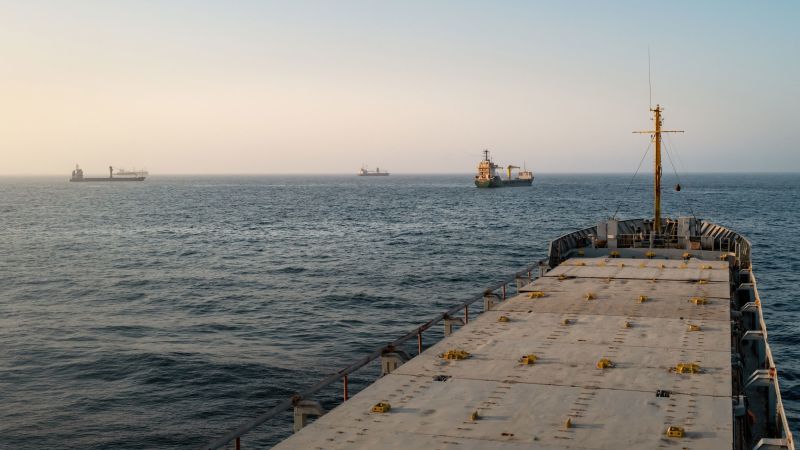
US Strikes Iranian Targets in Response to Attack on Cargo Ship
US strikes Iranian targets in response – On Friday, the U.S. military launched targeted strikes against Iranian military installations near the Strait of Hormuz, marking a renewed show of force following an attack by Tehran on a commercial vessel the previous day. According to the U.S. Central Command (CENTCOM), the strikes focused on missile and drone storage facilities, as well as coastal radar systems. The operation was framed as a direct reaction to what CENTCOM called an “unwarranted aggression” against civilian shipping, which it claimed violated the existing ceasefire agreement.
Trump’s Response to the Incident
President Donald Trump addressed the attack shortly after it occurred, emphasizing Iran’s breach of the agreement. “The Islamic Republic of Iran launched at least four one-way attack drones at ships moving through the Strait of Hormuz,” he stated on Truth Social. “One of those drones struck the upper deck of a large, costly cargo ship, causing damage but allowing it to continue its journey.” He added, “We neutralized three other drones. This is clearly a foolish violation of our ceasefire terms.”
“You’ll find out”
Later in the day, during an Oval Office event, Trump was asked whether the U.S. would retaliate. He responded with the same cryptic remark, “You’ll find out,” leaving the details of the response unclear. This came after he had earlier criticized the attack during a speech to conservative Christians in Washington, D.C., where he noted, “Nobody saw it coming. It hit a ship and did some damage. Can’t do that stuff.”
The incident occurred just hours after Iran’s Revolutionary Guard Corps issued a warning about maritime security. The group had declared that only ships following routes approved by Tehran would be granted safe passage through the strait. This statement challenged the Trump administration’s claim that the waterway was fully reopened and accessible without restrictions. Despite this, the U.S. had previously lifted its blockade of Iranian ports following the signing of a memorandum of understanding with Iran.
Agreement Terms and Disputes
The U.S.-Iran agreement, signed to ease tensions and revive negotiations on Iran’s nuclear program, included provisions for restoring shipping levels to prewar norms. However, the document left room for ambiguity regarding whether Iran would impose tolls on vessels using the strait. Trump insisted the waterway would remain toll-free, but Tehran maintained it would have the authority to charge fees for passage.
While the strikes on Friday were described as a targeted action, officials clarified they did not signal a return to large-scale combat. A U.S. source told CNN the response was limited in scope, aiming to deter further aggression rather than escalate the conflict. The attack on the cargo ship, however, highlighted ongoing challenges in maintaining the agreed-upon flow of maritime traffic.
The vessel under attack was damaged on its starboard side by an unidentified projectile, according to the United Kingdom’s Maritime Trade Operations, which tracks activity in the region. The damage affected the ship’s bridge but did not result in casualties or environmental harm. The incident underscored the vulnerability of commercial shipping in the strategic strait, which serves as a vital route for global oil exports.
Trump’s comments on the attack also reflected his broader stance on the war with Iran. He acknowledged last week that the conflict could have led to “economic catastrophe” if it had continued. Yet, he seemed determined to keep the pressure on Iran, even as he avoided committing to a full resumption of hostilities. “They have some capability, not much,” he told the audience, adding, “They’re not winning, but they can still shoot.”
The agreement’s implementation has been a point of contention between the two nations. While the U.S. had removed its naval restrictions on Iranian ports, the attack suggested that Iran was still using the strait as a strategic tool to assert control over maritime routes. This comes amid negotiations over Iran’s nuclear program, which have been stalled for months. The incident may further complicate efforts to reach a lasting understanding.
Despite the recent strikes, the U.S. military remains cautious about its next steps. The operation focused on infrastructure rather than personnel, indicating a preference for precision over broader conflict. However, the choice of targets—missile storage and radar sites—suggested a readiness to respond to any escalation. The attack on the cargo ship, meanwhile, raised questions about the effectiveness of the ceasefire in preventing military actions against commercial interests.
As tensions persist, the U.S. and Iran continue to navigate the complexities of their agreement. The strait of Hormuz, a narrow passage through which a significant portion of the world’s oil traffic flows, remains a focal point for both nations. The attack on Thursday and the subsequent U.S. response have reignited discussions about the balance between diplomacy and military deterrence. For now, the strikes appear to be a measured response, but the long-term implications for the ceasefire and regional stability remain uncertain.
The incident also brought renewed attention to the role of the United Kingdom in monitoring maritime activity. The UK’s Maritime Trade Operations reported the damage, providing critical evidence of the attack’s impact. This data supported the U.S. assertion that Iran had breached the ceasefire, though it did not resolve the underlying disagreements over the agreement’s terms. With the strait’s security remaining fragile, both sides face pressure to uphold their commitments or risk renewed conflict.
As the situation unfolds, Trump’s rhetoric continues to shape public perception. His comments on the attack, both in the Oval Office and during earlier speeches, suggest a combination of firmness and unpredictability. While he called the drone strike a “foolish violation,” he also framed it as a demonstration of Iran’s lingering military capabilities. This dual narrative highlights the challenges of maintaining a ceasefire while managing the risks of renewed hostilities.
The cargo ship’s survival after the strike was a key point in Trump’s remarks. “It was fine, but it took a little beating,” he said, acknowledging the damage without fully endorsing Iran’s actions. The president’s reluctance to commit to a specific response has left analysts speculating about the U.S. strategy. Whether the strikes are a warning or the beginning of a broader campaign remains to be seen, but the event has clearly intensified the focus on the strait’s strategic importance.
With the agreement still in effect, the U.S. and Iran are racing to establish clarity on the strait’s operational rules. The attack on Thursday has become a pivotal moment, testing the resilience of the ceasefire and the willingness of both sides to adhere to its terms. As the world watches, the question is whether this incident will mark the start of a new phase in the conflict or serve as a reminder of the delicate balance between peace and war.
