
Rubio’s spin on the Iran MOU sounds different from Trump and Vance
Rubio’s Position on the Iran Agreement Contrasts with Trump and Vance’s Views
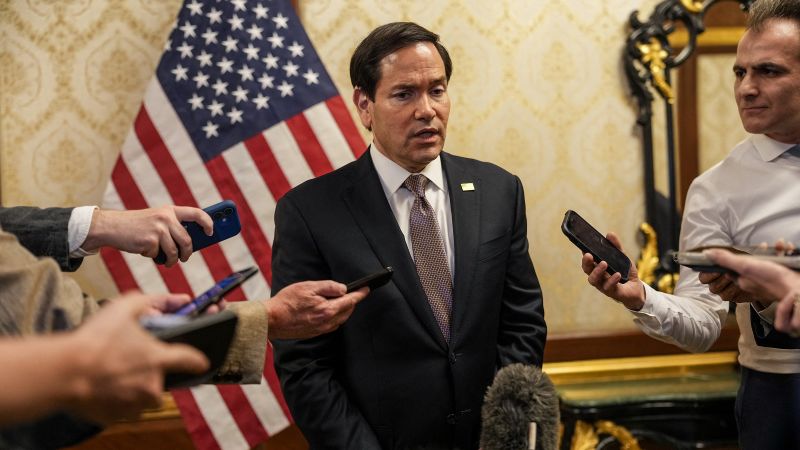
Rubio s spin on the Iran – For over a week, the top U.S. diplomat remained silent on the Iran agreement, sparking curiosity and speculation among analysts. This period of quietness raised questions about whether Secretary of State Marco Rubio, a prominent conservative foreign policy figure, shared doubts about the deal. Now, with renewed public engagement, Rubio’s statements have diverged from the perspectives of President Donald Trump and Vice President JD Vance. During recent diplomatic trips to Middle Eastern allies, Rubio has not only refrained from aggressively endorsing the controversial memorandum of understanding but has also emphasized a distinct interpretation of the agreement’s implications.
A Shifting Narrative in the Trump Era
While Trump and Vance framed the Iranians as potentially open to reform, Rubio took a more assertive stance. In Bahrain, he reiterated his past characterization of Iran’s leaders as “religious lunatics,” stating,
“The Iranian system is led by clerics – radical clerics. That’s what it’s always been led by. And that’s what it continues to be led by.”
This contrasted sharply with Trump’s June 16 remarks at the G7 summit, where he described the Iranian leaders as “very rational people,” dismissing the notion that they were “radicalized.” Trump argued that the nation’s leaders had been “nice to deal with” and were “looking to help their country.” Similarly, Vance, who championed the agreement as a breakthrough, suggested that Iran might reconsider its long-standing anti-American policies.
“This is a very interesting thing about these negotiations – is you see people, both the hard-liners, but also the more political people, saying our relationship with the United States over the past 47 years has been a mistake. Let’s turn over a new leaf.”
Despite these divergent approaches, both Vance and Rubio acknowledged that Iran’s intentions could evolve. They emphasized that the agreement’s success would depend on future actions, rather than immediate declarations. However, the difference in their perspectives highlights a broader shift in how the administration is framing its relationship with Iran. While Trump and Vance portrayed a path to reconciliation, Rubio’s remarks leaned toward maintaining a cautious stance.
Unspoken Goals and Evolving Priorities
One of the most notable omissions from the MOU was a commitment to curtail Iran’s missile program, a key objective of the Trump administration during the early stages of the agreement. Though the pact aimed to address critical security concerns, it did not explicitly mention ending Iran’s missile capabilities. This raised eyebrows, as the Trump team had previously positioned the missile program as a central issue in negotiations.
Interestingly, Trump himself seemed to backtrack on this goal in recent days. He stated repeatedly that Iran should be allowed to maintain some missile arsenal, explaining,
“They have to have some, because other people have some. Missiles aren’t the problem because they don’t blow up the planet.”
The president later added that the missile program was “in relative proportion, I think it’s OK.” This softened the original stance, suggesting a pragmatic approach to Iran’s military capabilities.
Rubio, however, appeared to take a firmer position. During a meeting with Middle Eastern allies in Kuwait, he assured them that the U.S. would not tolerate Iran’s missile threats.
“We’re not going to do anything that undermines the security of our allies – our longstanding allies in the region.”
This pledge underscored Rubio’s alignment with regional concerns, particularly among nations wary of Iran’s growing influence through weapons like missiles and drones.
Clashing Interpretations of the MOU
The memorandum of understanding also left out a clear commitment to end Iran’s support for proxy groups such as Hezbollah and Hamas. While this was one of the Trump administration’s original goals, the MOU instead focused on mutual restraint. Rubio, in recent discussions, argued that the agreement’s language about avoiding “hostile action” and “threat or use of force” implicitly covered Iran’s backing of these groups. He claimed that a “careful reading” of the document revealed a stronger stance on this issue than initially perceived.
Tommy Pigott, the State Department spokesman, countered the idea that there was inconsistency in the administration’s messaging. He stated,
“Secretary Rubio and the entire administration is 100% in lockstep behind President Trump.”
According to Pigott, the agreement was a testament to Trump’s leadership in preventing Iran from acquiring nuclear weapons. He highlighted the “highest level talks in decades” between the U.S., Lebanon, and Israel, asserting that the MOU had made the world “safer.”
Yet, the differing interpretations between Rubio and the president suggest a nuanced strategy within the administration. While Trump emphasized diplomatic overtures and a more lenient view of Iran’s military posture, Rubio focused on safeguarding regional allies. This divergence may reflect internal debates about how to balance engagement with Iran and firm commitments to counter its expansionist activities.
As the MOU moves forward, its long-term impact will depend on how these contrasting viewpoints shape U.S. policy. The document’s silence on key issues like the missile program and proxy support leaves room for interpretation, and the administration’s messaging may evolve further. For now, Rubio’s emphasis on stability and security for allies positions him as a key figure in defining the agreement’s legacy, even as it diverges from the more optimistic narrative promoted by Trump and Vance.
The Road Ahead: Uncertainty and Strategic Divergence
The MOU’s effectiveness will likely be measured against its ability to address Iran’s nuclear ambitions while managing its regional influence. With Rubio advocating for a tougher line on missile threats and Trump defending Iran’s military assets, the administration appears split on how to approach this multifaceted challenge. This divide could influence the U.S.’s ability to secure lasting support from Middle Eastern partners, who are eager to see tangible progress on security issues.
Meanwhile, the lack of explicit goals in the MOU, such as dismantling Iran’s proxy networks, has sparked debate about its true scope. While Rubio insists the agreement contains provisions for restraining Iran’s aggressive tactics, others argue that these clauses are vague and open to reinterpretation. The outcome will hinge on whether the U.S. can translate these commitments into actionable policies, or if they will remain symbolic gestures.
As the political landscape shifts, Rubio’s role in shaping the MOU’s narrative becomes increasingly important. His statements, though aligned with the administration’s broader objectives, offer a more cautious and security-focused perspective. This approach may appeal to allies concerned about Iran’s regional ambitions, even as it contrasts with the more optimistic tone of Trump and Vance. The coming weeks will reveal whether this strategic divergence strengthens or weakens the agreement’s prospects for success.
