
Second cannonball found at the Alamo reveals more information about the historic battle
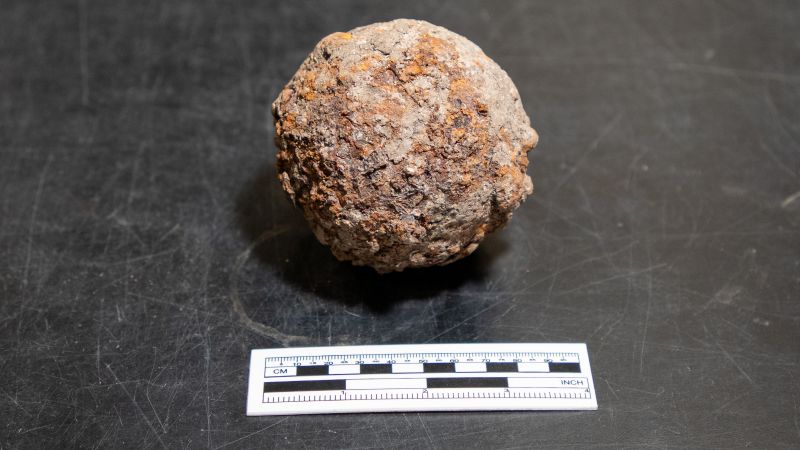
Second Cannonball Unearthed at Alamo Adds Clues to 1836 Battle
Second cannonball found at the Alamo – A new iron cannonball discovered at the Alamo in San Antonio, Texas, could have been fired during the 1836 battle, becoming the second intact artifact found at the site. The find, made in June, adds crucial details to the historical narrative. Researchers uncovered the cannonball 3 feet below the surface near the Alamo Church, suggesting it may have been used by the Texian defenders. This discovery, combined with a previously found 4-pound bronze cannonball from March, highlights the layered history of the site and the weapons employed during the 13-day siege.
Artifacts and Their Origins
The same team of archaeologists who previously unearthed a bronze cannonball in March has now identified an iron projectile, confirming its presence at the Alamo. The bronze artifact is believed to have belonged to the Mexican forces, while the iron cannonball is thought to have been used by the Texian defenders. These findings align with historical accounts of the Texian army’s weaponry and provide tangible evidence of the battle’s dynamics. Dr. Tiffany Lindley, director of archaeology at the Alamo Trust, noted the rarity of such well-preserved artifacts, emphasizing their value in understanding the conflict.
“What’s so amazing about this find is that one, they were missed by the Mexican army, and two, they remained untouched for 190 years. And then there they are, they’re still there,” Lindley explained.
The two cannonballs, though differing in material, offer a unique glimpse into the battlefield’s arms. The iron projectile’s intact condition suggests it was not removed by the Mexican forces after the siege, unlike many other artifacts. This discovery reinforces the idea that some Texian equipment survived the conflict, adding depth to the story of their resistance. The artifacts are now being analyzed to determine their exact roles and how they contribute to the broader historical context.
Historical Significance and Cultural Impact
The Alamo, a UNESCO World Heritage site, continues to captivate historians and the public alike. The latest findings, including the second cannonball found at the Alamo, underscore the importance of preserving these relics. Dr. Lee Spencer-White, founder of the Alamo Defenders Descendants Association, praised the discoveries as a reminder of the sacrifices made during the battle. “Whenever there’s a new artifact unearthed from the Alamo, it’s a moment of pride for all Texans. It connects us to the past and honors those who fought here,” Spencer-White said.
The phrase “Remember the Alamo!” has become a symbol of resilience, and these cannonballs serve as physical reminders of that legacy. The iron projectile’s presence at the site strengthens the narrative of Texian perseverance, while the bronze cannonball hints at the Mexican army’s strategic arsenal. Together, they help paint a more vivid picture of the conflict’s intensity and the diverse tools used by each side.
Preservation and Future Plans
With the Alamo’s history continuously being explored, the site remains a focal point for historical preservation. The Alamo Trust has launched a $700 million renovation project to protect the original structures and battlefield. This initiative will include a new museum, scheduled to open in 2028, where artifacts like the second cannonball found at the Alamo will be displayed. The museum aims to educate visitors on the battle’s role in Texas’s fight for independence.
“We might not be able to preserve all the artifacts, but we’re able to preserve that knowledge and make sure the voices of the past are still being spoken today,” Lindley noted.
These discoveries also highlight the importance of ongoing archaeological work at the Alamo. The site, which has seen centuries of development, still holds surprises beneath its surface. Researchers like Dr. Andrés Tijerina see these findings as vital to preserving the battle’s memory. “Each artifact, like the second cannonball found at the Alamo, helps reinforce the significance of this event in shaping Texas’s identity,” Tijerina remarked. The combined efforts of preservation and research ensure that the Alamo’s story endures for future generations.
