
Visualizing the Venezuela earthquakes in maps and charts
Visualizing the Venezuela Earthquakes in Maps and Charts
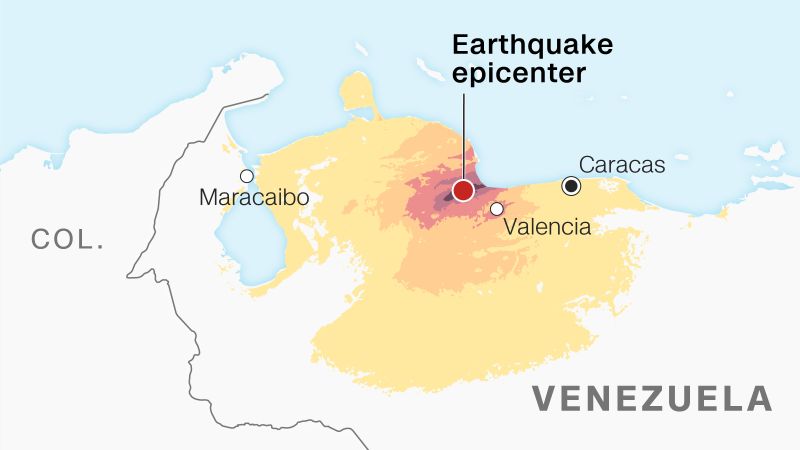
Visualizing the Venezuela earthquakes in maps – On Wednesday evening, Venezuela experienced a series of powerful seismic events that left the nation reeling. By Thursday morning, the death toll had surged past 160, with numerous reports of injuries and widespread destruction. The crisis has prompted CNN to create detailed visualizations, including maps and charts, to track the unfolding situation. These tools help contextualize the magnitude of the disaster and its regional implications, offering a clearer picture of the devastation.
The Quake Sequence: A Double Shock
What began as a 7.2 magnitude foreshock quickly escalated into a 7.5 magnitude main shock, striking mere seconds apart. The sequence, which lasted only 40 seconds, underscored the sudden and intense nature of the tremors. According to seismic data, the first event, a 7.2 quake, occurred at 5:20 p.m. local time, followed by the larger 7.5 magnitude quake at 5:20:40 p.m. The rapid succession of these shocks left communities scrambling for safety, with reports of panic spreading across both urban and rural areas.
Experts have noted that the 7.5 magnitude quake represents the strongest recorded seismic activity in Venezuela in over a century. This makes the event particularly alarming, as it highlights a rare but significant shift in the region’s geological patterns. The quakes were felt not only within Venezuela but also in neighboring Colombia, indicating a broader impact on the Andean region. Initial assessments suggest that the tremors may have triggered landslides in mountainous zones and caused structural stress in coastal cities.
Magnitude and Impact: Understanding the Scale
Earthquakes are measured using a logarithmic scale, where each whole number increase corresponds to a dramatic amplification of energy. Specifically, a 7.5 magnitude quake releases 32 times more energy than a 7.2 magnitude event. However, the difference in the second quake’s size was even more pronounced, as the 7.5 magnitude event was actually twice as powerful as the first. This multiplier effect is due to the exponential nature of the scale, which means the energy disparity between the two quakes was significant.
Maps tracking the epicenters reveal that the 7.5 magnitude quake occurred in the central region of Venezuela, near the border with Colombia. The proximity of the epicenter to populated areas amplified the quake’s impact, with many residents reporting that the ground shook violently enough to knock objects off shelves and disrupt daily activities. The charts also show that the tremors were concentrated in areas with high population density, particularly in the capital, Caracas, and the coastal city of Maracaibo.
While the primary focus has been on the two major quakes, seismologists warn that smaller aftershocks may continue to affect the region in the days ahead. These secondary tremors, though less intense, could still contribute to ongoing damage and pose risks to already weakened structures. The timing of the quakes—occurring on a single day—has added to the complexity of the situation, with emergency responders working around the clock to assess the full extent of the crisis.
Infrastructure and Connectivity: A Lingering Crisis
As the quakes rattled Venezuela, they also disrupted critical infrastructure. Reports indicate that power outages and telecommunications failures have spread rapidly, isolating communities and complicating relief efforts. Netblocks, a global internet monitoring watchdog, documented a sharp decline in internet connectivity across the country, with some regions experiencing complete blackouts. This has raised concerns about the ability of Venezuelans to access real-time information and communicate with loved ones during the emergency.
“The seismic activity has caused extensive damage to power grids and telecom networks, which are already under strain from ongoing economic challenges,” said a Netblocks analyst in a statement. “This has created a cascading effect, leaving many areas without reliable communication for hours.”
Authorities have begun deploying resources to restore services, but the process is expected to take time. The collapse of buildings and roads has also hindered the movement of rescue teams, slowing their response in affected zones. In some areas, residents have taken matters into their own hands, using flashlights and makeshift shelters to survive the night after the quakes.
Visualizations of the event, such as heat maps and timeline graphs, have become essential for understanding the pattern of seismic activity. These tools illustrate the rapid succession of the 7.2 and 7.5 magnitude quakes, as well as their geographical spread. The charts also highlight the depth of the tremors, with the 7.5 magnitude event occurring at a shallower depth than previous quakes in the region, which may explain its stronger impact.
Venezuela’s location on the boundary of the South American Plate and the Caribbean Plate makes it prone to earthquakes, though major events are relatively rare. The recent quakes have reignited discussions about the country’s preparedness for such disasters. While the government has issued emergency alerts, questions remain about the adequacy of early warning systems and the availability of resources to support long-term recovery.
As the situation evolves, CNN continues to update its visualizations, incorporating the latest data on casualties, damaged infrastructure, and aftershock activity. These maps and charts serve as a vital resource for both Venezuelans and international observers, providing a dynamic view of the disaster’s progression. The images also emphasize the vulnerability of the region, particularly in areas with older buildings and less robust disaster response frameworks.
Local leaders have called for a coordinated effort to address the aftermath of the quakes. They are urging citizens to remain cautious and report damage to authorities. Meanwhile, the international community has expressed solidarity, with neighboring countries offering aid and monitoring the situation closely. The disaster has become a stark reminder of the power of nature and the importance of preparedness in seismically active regions.
With the death toll still rising and the full scope of damage yet to be determined, the focus remains on stabilizing the affected areas and preventing further casualties. The combination of the two major quakes has tested Venezuela’s resilience, but the nation’s determination to recover is evident in the ongoing efforts to rebuild and restore essential services. As the days pass, the maps and charts will continue to evolve, capturing the nation’s journey from crisis to recovery.
Analysts are also using the data to study the long-term implications of the quakes. The 7.5 magnitude event may indicate a shift in tectonic activity, potentially signaling a new phase of seismic risk for the region. This could prompt increased investment in infrastructure improvements and disaster preparedness programs. The tragedy serves as a wake-up call for Venezuela, urging the country to prioritize resilience in the face of natural disasters.
As the situation unfolds, the role of technology in disaster response becomes increasingly important. Maps and charts, generated in real-time by CNN and other organizations, are helping to guide relief efforts and inform the public about the quake’s impact. These visual tools are not just informative but also serve as a testament to the power of data in understanding and mitigating the effects of such catastrophic events.
