
AJ Dybantsa is the No. 1 pick on a big NBA draft night for freshman stars and Michigan’s champions
AJ Dybantsa’s Historic NBA Draft Debut and the Rise of Freshman Stars
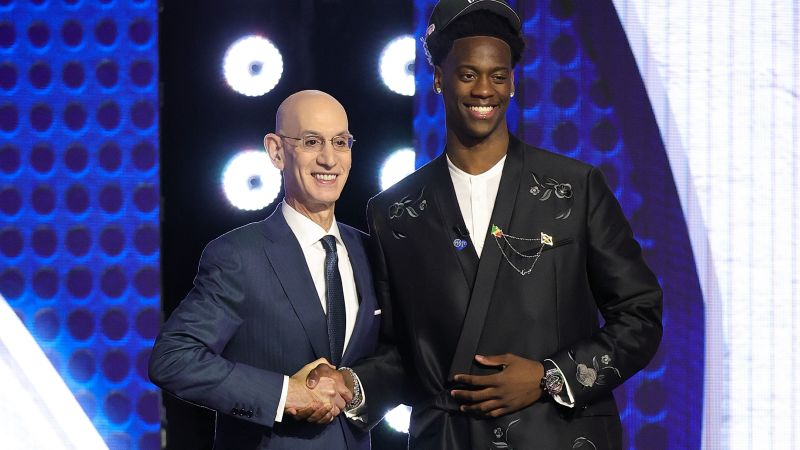
AJ Dybantsa is the No 1 pick – On a night that will be remembered for its blend of tradition and transformation, the Washington Wizards made history by selecting AJ Dybantsa with the first overall pick in the 2026 NBA Draft. The moment, which marked the culmination of years of dedication, was not just a personal triumph for Dybantsa but a statement about the evolving landscape of the league’s draft process. As the youngest player in the draft, Dybantsa’s ascent to the top of the NBA’s talent pool underscores the growing prominence of one-and-done prospects in shaping the future of professional basketball.
A Freshman Phenom and a Record-Breaking Night
Dybantsa, a forward who electrified college basketball during his lone season at BYU, secured the No. 1 pick after a standout performance that included a career-high 43 points in a single game. His ability to consistently deliver under pressure, averaging 25.5 points per game, positioned him as a prime candidate for the top spot. The Wizards’ decision to draft Dybantsa followed a trend that saw a record-tying eight consecutive freshman players selected in the first round, a testament to the league’s increasing reliance on early development of young talent.
“Obviously this night is just a celebration of all the hard work I’ve done in the past, and so now I’m going to celebrate,” Dybantsa said, his voice tinged with both humility and exhilaration. The 6-foot-9, 217-pound forward, who grew up idolizing Kevin Durant, seemed poised to inherit the mantle of the NBA’s most hyped rookie. Durant, a former Washington native, had once been the subject of high expectations, and Dybantsa’s selection has only intensified those hopes for the team’s fans.
While Dybantsa’s name was announced first, the draft night was equally notable for the presence of Michigan’s national championship squad. Three Wolverines—Morez Johnson Jr., Yaxel Lendeborg, and Aday Mara—were chosen in the first round, creating a rare moment of unity for the team. The trio’s selections, alongside a record number of freshman stars from across the country, highlighted the era’s shift toward prioritizing immediate impact over traditional college experience. This trend has raised questions about the long-term viability of the one-and-done model, which has been in place since the NBA eliminated territorial picks in 1966.
Controversy and Opportunity in the First Round
The draft’s top four picks were largely predictable, with Cameron Boozer (Duke) and Caleb Wilson (North Carolina) securing positions at No. 3 and No. 4, respectively. Boozer, who earned the College Player of the Year award for his impressive all-around game, was selected by Memphis, while Wilson joined Chicago. However, the selection of Darryn Peterson of Kansas at No. 2 by Utah sparked debate. Peterson, widely considered one of the most talented players in the class, had struggled with injuries, missing 11 games during the season, which some analysts argue left room for Dybantsa to emerge as the consensus top choice.
“I think down the road we can continue to do this,” Dybantsa added, reflecting on the draft’s trajectory. “They are comparing us to a certain amount of draft classes. Obviously we have to see how that plays out and how we do in the league, but if we talk it into existence, I think that would be pretty special.” His words hint at the long-term potential of the class, even as the Wizards’ gamble on a freshman phenom proved both bold and timely.
The Wizards’ strategy of targeting younger, high-impact players is reminiscent of their 2010 draft, when John Wall was selected with the No. 1 pick and quickly became a cornerstone of the franchise. Wall’s success as an All-Star, however, contrasts sharply with the 2001 selection of Kwame Brown, a center who struggled to maintain the same level of performance. Dybantsa’s selection has reignited conversations about the importance of drafting the right mix of physicality and skill, with his frame and scoring ability offering a compelling case for long-term success.
A Michigan Dynasty and a Coach’s Joy
The Michigan Wolverines’ dominance in the 2026 NCAA Tournament was mirrored in the NBA Draft, as three of their players—Morez Johnson Jr., Yaxel Lendeborg, and Aday Mara—were chosen in the first round. The trio’s selections were not only a reflection of their individual talents but also a sign of the team’s collective influence. Dusty May, the Wolverines’ head coach who left for the Mavericks just days before the draft, expressed immense pride in seeing his players thrive on the national stage. His social media post, celebrating the trio’s draft success, became a viral moment, encapsulating the emotional weight of the night.
“We got our ultimate goal of winning the national championship and we just got drafted together, all lottery picks,” Johnson said, his excitement palpable. The Michigan native, who had already secured a spot as a top-10 pick, now faces the challenge of translating his college success into NBA stardom. His ability to connect with teammates and coaches alike suggests a strong team dynamic that could ease the transition to professional play.
The draft’s unpredictability was evident in the selections that followed. The Clippers, after acquiring the No. 5 pick via a trade with the Pacers, opted for Illinois guard Keaton Wagler, a player with upside but less hype. The Brooklyn Nets then took Louisville’s Mikel Brown Jr., adding to the growing list of scoring guards in the first round. This pattern of selecting guards who could immediately contribute to rosters has become a hallmark of recent drafts, with the Wizards’ choice of Dybantsa fitting seamlessly into that trend.
Legacy and Expectations
Dybantsa’s journey to the NBA is steeped in personal significance. The forward, who was called by his full name—Anicet Dybantsa Jr.—as a tribute to his father, shared a quiet moment of reflection after his name was announced. Dressed in a black suit and wearing a black Wizards hat, he appeared to say a brief prayer, a gesture that resonated with fans and analysts alike. The image of Dybantsa, a young star with a deep connection to his roots, is likely to become an enduring symbol of the Wizards’ new era.
Comparisons to Kevin Durant, Dybantsa’s childhood idol, have already begun to shape perceptions of his NBA potential. Durant, known for his scoring prowess and longevity, represents the kind of player the Wizards hope Dybantsa can emulate. Yet, the team also has the benefit of historical context, recalling their own missteps with Kwame Brown in 2001. The contrast between these two selections serves as a reminder of the stakes involved in the No. 1 pick—a decision that can define a franchise for decades.
As the draft unfolds, the focus shifts to how these young players will adapt to the NBA’s demands. Dybantsa, with his combination of size, scoring ability, and rookie readiness, is seen as a rare talent who could become a cornerstone in Washington. Meanwhile, the success of Michigan’s trio offers a glimpse into the potential of a team that dominated college basketball. With the Wizards’ first-round selections now set, the next chapter of their journey begins, one that promises both challenges and opportunities for these promising athletes.
The night’s festivities, however, were not limited to the selections. Fans of the New York Knicks and Nets gathered in the city, where the Brooklyn Nets’ selection of a Louisville player added to the overall sense of excitement. The draft, as always, is a celebration of potential, a night when hope and hype intertwine. Yet, as the dust settles, the real test of these picks will be their impact on the court—a reality that the Wizards and their new star are eager to face.
Amid the celebration, a surprising development emerged when the Miami Heat acquired Giannis Antetokounmpo in a trade. While this move may have shifted the spotlight from the rookie class to veteran stars, it also
