
Senate votes to limit Trump’s Iran war powers in rare rebuke
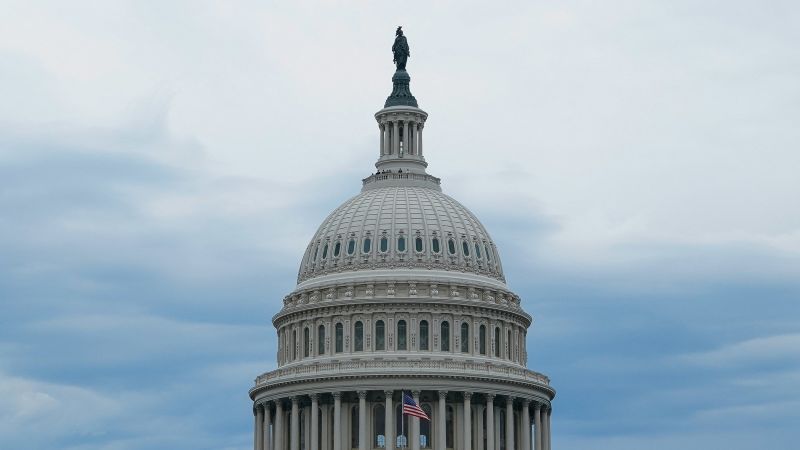
Senate Votes to Limit Trump’s Iran War Powers in Rare Rebuke
Concurrent Resolution Marks a Shift in Congressional Stance
Senate votes to limit Trump s Iran – On Tuesday, the U.S. Senate approved a resolution that mandates the president to withdraw military forces from hostilities with Iran, signaling a notable shift in political dynamics and a sharp critique of President Donald Trump’s foreign policy approach. The 50-48 vote, which included support from four Republican senators, underscored growing bipartisan concerns about the ongoing conflict and the role of legislative oversight in shaping military engagements. This decision came amid a broader campaign by Democrats to curtail executive power in matters of war, a strategy that has increasingly gained traction among Republican lawmakers in recent weeks.
The resolution, which requires the president to scale back U.S. military involvement in Iran, was framed as a critical step to ensure congressional accountability. Democrats, who have spearheaded the effort, argued that the measure would clarify the nation’s strategic priorities and prevent unilateral decisions on prolonged conflict. The vote marked the tenth time the Senate has addressed Iran war powers since the year began, highlighting the persistent debate over the scope of presidential authority in international affairs. Despite the resolution’s passage, its impact remains limited, as it does not carry the force of law and does not necessitate the president’s signature.
“Four Republican Losers voted with the Dumocrats, and Iran asked my people, ‘what does that all mean?’ These Senators have just made my job more difficult, but I will get it done, one way or the other,” Trump said in a post on Truth Social.
President Trump swiftly criticized the vote, dismissing it as poorly timed and meaningless. He accused the Senate of providing “aid and comfort to the Enemy” by passing the measure, which he claimed would complicate his efforts to maintain U.S. military presence in the region. The president’s frustration was evident in his public remarks, which singled out the four Republican senators—Rand Paul, Susan Collins, Lisa Murkowski, and Bill Cassidy—for their alignment with Democrats on the issue. Notably, two key GOP senators, Mitch McConnell and Dave McCormick, were absent, a decision that contributed to the resolution’s narrow approval. Their previous opposition to similar measures had made their absence a significant factor in the outcome.
While the Senate’s action reflects a rare moment of bipartisan cooperation, the House of Representatives had already passed the concurrent resolution earlier this month. The House vote, which occurred with a margin of 215-208, saw four Republicans joining Democrats in support, prompting Trump to label them “GRANDSTANDERS” and “unpatriotic” in a post on his social media platform. The resolution’s non-binding nature has drawn mixed reactions, with some lawmakers emphasizing its symbolic importance and others downplaying its practical effect.
A White House official reiterated the administration’s stance, stating that the Senate vote holds “no significance” and attributing its passage to the absence of key Republicans. The official noted that concurrent resolutions, by definition, do not require presidential approval and cannot enforce legal obligations. “The resolution directs the president to remove U.S. armed forces from hostilities against Iran, yet there are no hostilities from which to remove forces, as hostilities terminated with the ceasefire on April 7th,” the statement explained. This argument highlights the technical limitations of the measure, which aims to set a legislative direction rather than impose immediate action.
“I think it’s a good time to have the vote to say, ‘Hey, if we’re really in a period of maybe some stability here, let’s not just allow it to start up again without Congress being involved in that decision,’” said Tim Kaine, a Democratic senator who has advocated for the resolution’s passage.
Despite the ceasefire with Iran, some Democratic senators maintained that the vote was essential to reinforce congressional oversight. Kaine’s comments reflect a broader sentiment among Democrats that legislative checks must remain active even in times of relative calm. The resolution’s adoption also signals a shift in the Republican Party’s approach, as members like Paul and Collins have increasingly voiced support for limiting executive war powers. This trend has drawn ire from the administration, which views it as an attempt to undermine presidential authority in foreign policy.
The concurrent resolution’s lack of legal force has sparked debate over its effectiveness. While House Democrats argue that it could still serve as a foundation for future legal actions, critics insist that its symbolic value is its only strength. The resolution’s passage in both chambers underscores the growing consensus that the U.S. should not engage in prolonged military conflicts without clear congressional backing. However, its impact on actual policy remains uncertain, as the president retains the authority to act independently in the absence of binding legislation.
As the Senate’s vote gains momentum, questions remain about its long-term implications. The resolution’s narrow margin and the absence of key Republicans suggest a divided political landscape, where partisan alignment continues to shape legislative outcomes. Meanwhile, the White House’s dismissive tone highlights the administration’s determination to frame the measure as a political maneuver rather than a substantive policy change. The debate over war powers is expected to continue, with Democrats pushing for more decisive action and Republicans weighing their support based on evolving strategic considerations.
This story has been updated with additional developments. CNN’s Kristen Holmes and Alayna Treene contributed to this report.
