
Tucker Carlson says he will no longer support the Republican Party
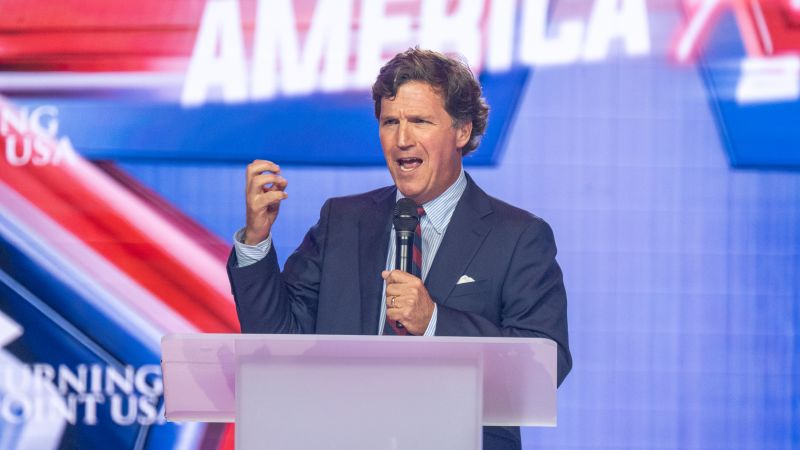
Tucker Carlson Says He Will No Longer Support the Republican Party
Tucker Carlson says he will no longer – Tucker Carlson, a prominent voice in conservative media, has taken a decisive step away from the Republican Party, declaring during a recent podcast that he will not endorse the party in the upcoming November midterm elections. This shift marks a significant departure from his long-standing advocacy for the GOP, a role he had embraced for over three decades as a pundit and a leading figure at Fox News Channel. Despite his reputation as a staunch defender of Republican principles, Carlson now questions the party’s direction, attributing its recent decisions to priorities that he believes have alienated its core values.
A Shift in Loyalty Amid Political Disillusionment
Carlson’s announcement came late last week on the “Can’t Be Censored” podcast, where he openly criticized the Republican Party’s alignment with Israel and its donors. “There’s no chance I would support the Republican Party,” he stated, signaling a clear break from the organization that once championed his career. While he ruled out backing the Democratic Party, he admitted uncertainty about his future political stance. “I don’t know what I’m going to do,” he said, highlighting his internal conflict as he reevaluates his position in the current political landscape.
His departure from Fox News in 2023 had already set the stage for this transformation. Since then, Carlson has cultivated a massive following through his independent podcast, which has become a platform for his evolving views. This newfound independence has allowed him to critique the Republican Party more openly, particularly its decisions that he perceives as favoring external interests over the needs of American citizens. The war with Iran, initiated in February by President Donald Trump, has intensified this disillusionment, prompting Carlson to reassess his allegiance to the party.
The War with Iran as a Catalyst for Change
Carlson’s dissatisfaction with the Republican Party has been largely fueled by Trump’s decision to escalate tensions with Iran. The conflict began in February, following Trump’s unilateral withdrawal from the 2015 Iran nuclear deal and subsequent military actions. This move, which Carlson supported initially, has since become a focal point of his criticism. “They are making decisions on the basis of other criteria, what’s best for this company, what’s best for Israel, what’s best for our donors,” he said during the podcast. “That’s not just, like, they are off in the wrong direction, like, that is unacceptable, that’s treasonous, it’s immoral, it can’t continue.”
Carlson’s remarks reflect a growing rift between his personal convictions and the party’s strategic choices. He has repeatedly argued that the Republican Party has prioritized the interests of Israel and corporate donors over the broader American electorate, leading to policies that he considers short-sighted and even harmful. “They are not representing their own voters, citizens, or the nation,” he said, emphasizing that the party’s actions have diverged from its foundational principles. This critique has gained momentum since the war began, with Carlson now questioning whether the GOP can remain true to its values in the face of such decisions.
Apology and Divergence from Trump
Although Carlson supported Trump in the 2024 presidential election, he later expressed regret over his stance, apologizing for what he called a “misleading people” moment. “I’ve been a consistent defender for 35 years of the Republican Party,” he noted, “but there’s no defending this.” The war with Iran, he argued, was not an act of national solidarity but a calculated move to serve the interests of Israel and financial backers. “It wasn’t intentional,” he said, adding that the decision to go to war was a betrayal of American priorities.
Carlson’s criticism extends beyond the Iran conflict to broader concerns about the Republican Party’s internal dynamics. He has accused the party of becoming a vehicle for corporate influence and ideological compromise, rather than a champion of conservative ideals. “They are making decisions based on what’s best for this company,” he said, “not what’s best for the country.” This sentiment underscores his belief that the GOP has strayed from its original purpose, leading to a crisis of trust among its supporters. “If I’m out, then I think a lot of other people are out,” he added, suggesting that his departure is part of a larger trend of disillusionment within the party.
The Impact of Carlson’s Breakaway
The implications of Carlson’s decision are far-reaching, not only for the Republican Party but for the political discourse in the United States. As a former Fox News host with a massive audience, his departure has sent shockwaves through the conservative media landscape. His criticism of the party’s alignment with Israel has sparked debates among viewers, many of whom now question whether the GOP can maintain its traditional stance on foreign policy. The 2024 election, in particular, has highlighted this tension, with Trump’s actions in the Middle East becoming a symbol of the party’s shifting priorities.
Carlson’s journey from a loyal Republican to a vocal critic illustrates the challenges faced by political commentators in maintaining alignment with their parties when ideological differences arise. His unique position as both a media personality and a political analyst has allowed him to bridge the gap between public opinion and policy decisions, making his critique all the more impactful. The audience that once followed him on Fox News now turns to his podcast for alternative perspectives, signaling a potential realignment in political support.
Despite his break with the Republican Party, Carlson remains a significant figure in the conservative movement. His ability to articulate his concerns while maintaining a large following demonstrates the influence of individual voices in shaping political narratives. As the November midterms approach, his decision to withhold support could signal a shift in voter sentiment, particularly among those who feel the GOP has lost its way. The question remains: Will his departure from the party mark the beginning of a broader realignment, or will it be an isolated case of political disappointment?
A New Era for Conservative Commentary
Carlson’s statements reflect a broader trend of conservatives reassessing their ties to the Republican Party, driven by a combination of policy disagreements and internal party dynamics. His criticism of the party’s decision-making process highlights a growing concern among some Republican figures about the influence of corporate donors and foreign allies. “This is not just a shift in opinion,” he said, “but a fundamental reevaluation of where the party stands.”
As the midterm elections draw closer, Carlson’s stance serves as a reminder of the importance of ideological consistency in political loyalty. His departure from the Republican Party may encourage others to follow suit, potentially reshaping the political landscape for the upcoming contests. While the Democratic Party has not yet claimed his support, the potential for a third-party movement or independent voting bloc remains a possibility. The war with Iran has thus become more than a foreign policy decision—it has evolved into a symbolic moment for the Republican Party, testing its ability to retain the trust of its most ardent supporters.
Carlson’s journey from a long-time Republican defender to a critic of the party’s current trajectory underscores the evolving nature of political allegiance in a polarized climate. His words, though bold, are grounded in a decades-long commitment to conservative values, making his current stance all the more significant. Whether this marks the beginning of a new chapter in his career or a turning point for the Republican Party, one thing is clear: the landscape of American politics is in flux, and Carlson’s voice is now a pivotal part of that change.
