
New images show what’s behind the tarp at the Kennedy Center
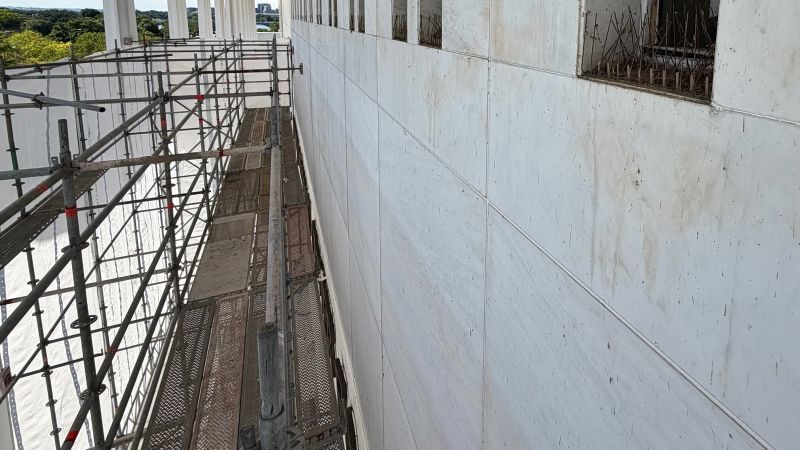
New images reveal Trump’s name no longer on Kennedy Center signage
New images show what s behind – Recent photographs acquired by CNN have captured the Kennedy Center with President Donald Trump’s name conspicuously absent from its exterior signage, aligning with a sworn statement by the center’s executive director, Matt Floca. The visuals, initially shared by the Washington Post, were made public by the activist group “Hands Off the Arts,” which has been actively pushing for the removal of Trump’s moniker from the iconic arts venue. These images mark the first clear evidence of the name’s removal, as a substantial tarp remains affixed to the building ten days post-action, obscuring the transformed façade.
The removal process began overnight on June 13, as workers meticulously stripped the Trump name from an outside wall in compliance with a court order. A federal judge had mandated that the Kennedy Center be renamed in honor of John F. Kennedy as a living memorial, effectively distancing the institution from Trump’s political legacy. While the exterior update is now visible, the interior of the center continues to grapple with financial constraints that are complicating its operations.
Inside the Kennedy Center, the financial landscape is increasingly challenging. A decline in ticket sales, coupled with the withdrawal of several artists, has left the venue struggling to maintain its usual programming. Political tensions and a reduced workforce have further exacerbated the situation, making it difficult to restore a full schedule of events. Multiple sources close to the center’s management have informed CNN that these factors are creating a pressing need for strategic adjustments to sustain the facility’s functionality during renovations.
Despite the external transformation, the Kennedy Center’s internal challenges persist. The historic arts center, which has long been a symbol of cultural excellence in Washington, D.C., is now facing an uphill battle to remain operational. The federal judge overseeing the case has required the center to continue its activities throughout the renovation period, yet the financial strain has led to tough decisions. Staff reductions and budget cuts have become necessary, with some stakeholders expressing concern over the long-term implications for the institution’s reputation and artistic offerings.
Activist group highlights symbolic significance of the change
“Hands Off the Arts was able to gather these images through our network of community members,” explained Mallory Miller, one of the group’s founders. Miller, who once managed dance programs at the Kennedy Center, emphasized the symbolic weight of the removal. “Tonight, a large tarp still covers the bare marble that these photos reveal to the world,” she said. “The president doesn’t want you to see them, and that’s precisely why they matter.”
“Tonight, there is a tarp that is covering the bare marble that these photos reveal to the world. The president does not want you to see them and that’s exactly why they’re important!”
Miller’s comments underscore the activist group’s mission to ensure the Kennedy Center’s identity remains untainted by political affiliations. The tarp, she noted, serves as a temporary veil over the change, which has been a long-standing goal for the organization. While the exterior name removal is a visible victory, the group is acutely aware that the center’s internal struggles are equally critical to its future.
Legal battle and ongoing requests for extension
The Kennedy Center’s request for additional time to meet legal deadlines has been a focal point of the ongoing lawsuit. In a recent filing, the institution sought to extend its compliance timeline, citing the complexities of the renovation process. The board is currently evaluating various options to finance and execute the changes, but the financial hurdles remain substantial.
“The situation inside the center is more complicated than just removing a name,” stated one insider familiar with the operations. “It’s about balancing the need for public service with the realities of a shrinking budget. We’re not just changing signs—we’re redefining the very essence of what this place stands for.”
Meanwhile, the legal proceedings continue to unfold. The judge’s ruling to rename the center in honor of John F. Kennedy has been a key turning point, but the institution’s ability to meet its obligations depends on its financial resilience. The Kennedy Center’s management has assured that the renovation will proceed, though the timeline and scope of the work are still under negotiation.
As the tarp remains on the building, the Kennedy Center’s transformation symbolizes a broader cultural shift. The removal of Trump’s name from the exterior is not just a political gesture but a reaffirmation of the venue’s commitment to its founding ideals. Yet, the internal financial pressures serve as a reminder that even iconic institutions must navigate the challenges of modern times to survive.
CNN’s Sunlen Serfaty, Devan Cole, and Aleena Fayaz contributed to this report, providing insight into the ongoing developments at the Kennedy Center. Their coverage highlights the interplay between political decisions and the practical realities of managing a world-renowned arts facility. As the center moves forward, the balance between symbolic gestures and operational sustainability will be a defining challenge in its journey to reclaim its legacy.
Broader implications for cultural institutions
The Kennedy Center’s experience reflects a trend seen in other cultural institutions seeking to distance themselves from controversial political figures. The decision to remove Trump’s name from the building underscores the growing influence of public sentiment on the branding of national landmarks. For the Kennedy Center, this shift is both a statement and a strategic move to align with its historical purpose as a memorial to President Kennedy.
“This isn’t just about renaming a building,” said Miller. “It’s about preserving the integrity of a space that has hosted some of the most significant cultural moments in American history.” The activist group’s efforts have sparked discussions about the role of political figures in shaping cultural institutions and the importance of public accountability in such decisions.
With the exterior now free of Trump’s name, the focus is shifting to the center’s ability to recover financially and rebuild its programs. The board is exploring partnerships, fundraising initiatives, and potential cost-saving measures to ensure the Kennedy Center can continue to thrive as a hub for the arts. For now, the tarp remains a visible reminder of the change, but the underlying message is clear: the center is committed to moving forward, regardless of the challenges ahead.
