
Zohran Mamdani’s influence over Democrats put to the test, and other things to watch in Tuesday’s elections
Zohran Mamdani’s Influence Over Democrats Put to the Test, and Other Things to Watch in Tuesday’s Elections
Zohran Mamdani s influence over Democrats – Tuesday’s elections will serve as a critical test for Mayor Zohran Mamdani’s growing influence within the Democratic Party, particularly as he navigates his role six months into his tenure. The mayoral race in New York, combined with concurrent primaries in Maryland and Utah, and a runoff in South Carolina, offers a glimpse into the shifting political dynamics and ideological divides shaping the party’s future. These contests are not just about selecting representatives but also about signaling the direction of Democratic priorities in the lead-up to the 2028 presidential primary.
Key Races in New York
New York’s primaries feature several high-stakes House races where Mamdani’s endorsements are expected to play a pivotal role. His support for Brad Lander in the 10th District is particularly notable, as Lander, a former New York City Comptroller, once ran against Mamdani in the mayoral race but aligned with him against former Governor Andrew Cuomo. While Lander became a key figure in validating Mamdani’s appeal to Jewish voters during the general election, he did not secure a City Hall position as initially anticipated.
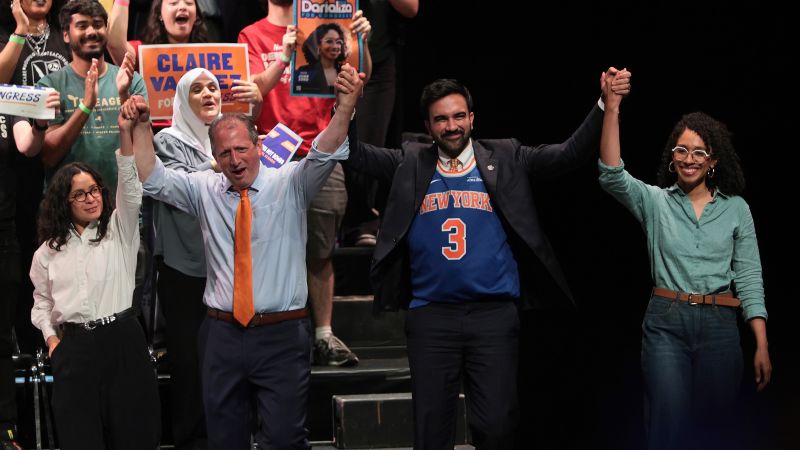
In the 13th District, Mamdani has backed Darializa Avila Chevalier, an educator and activist for immigrant rights, in her bid against Rep. Adriano Espaillat. This decision has sparked controversy among Latino leaders, who argue it undermines the party’s unity. Similarly, in the 7th District, where 17-term Rep. Nydia Velázquez is retiring, Mamdani’s endorsement of Assemblywoman Claire Valdez—against Brooklyn Borough President Antonio Reynoso, Velázquez’s preferred successor—has drawn attention. Valdez’s campaign, like Mamdani’s, leans toward progressive policies, though her opponent represents a more centrist faction of the party.
Broader Implications for the Democratic Party
Mamdani’s involvement in these races underscores a larger ideological battle within the Democratic Party. His movement toward democratic socialism has gained momentum, with recent victories in mayoral races across the country. A year ago, Mamdani and fellow democratic socialist Katie Wilson in Seattle secured mayoral positions, and similar trends are emerging in other major cities. City councilwoman Janeese Lewis George’s win in the Democratic primary for Washington, DC’s mayor, and the selection of Nithya Raman as a democratic socialist candidate in Los Angeles, highlight a broader realignment of the party’s base.
Mamdani’s rhetoric has also intensified in recent weeks. At a rally with Vermont Senator Bernie Sanders last week, he criticized the Democratic Party for clinging to outdated strategies. “For too long, the party has seen its job as explaining why we cannot instead of showing how we can,” he said. “That old way of thinking will lose on Tuesday. And frankly, it will lose in South Carolina and New Hampshire.” Mamdani further accused the American Israel Public Affairs Committee (AIPAC) of being part of a group of “monsters” that spread “misleading and bad faith attacks” through media campaigns. While his language has drawn criticism from some Jewish community leaders, Mamdani defended his stance, emphasizing the need for the party to embrace progressive vision over compromise.
Trump’s Endorsement Strategy in the Midterms
Meanwhile, former President Donald Trump has continued his pattern of strategic endorsements, even as his candidates face challenges. On Friday, he made a controversial move by backing two remaining gubernatorial candidates in South Carolina after one of his earlier endorsements lost a primary for the third time this month. This decision has raised questions about the effectiveness of his influence in the state, where the race for governor is now a runoff between Lt. Gov. Pamela Evette and state Attorney General Alan Wilson. Evette currently leads Wilson by just 3 percentage points, according to recent polls, making Tuesday’s contest a close battle.
Trump’s approach in South Carolina mirrors his tactics in previous elections. In the 2022 Missouri Senate primary, he endorsed “Eric” when two top candidates shared the same name, ultimately supporting Eric Schmitt, who won the race. Similarly, in the 2023 gubernatorial race, he initially backed a candidate who struggled in the polls before shifting his focus. This flexibility in endorsements has become a hallmark of Trump’s campaign strategy, allowing him to adjust support based on immediate political needs.
South Carolina’s primary runoff is a focal point for the Republican Party, with the contest shaping the state’s trajectory in the 2028 presidential race. The Democratic Party’s challenges in this race, however, are not limited to South Carolina. The New York primaries, Maryland’s state elections, and Utah’s congressional race all highlight the ongoing struggle to balance progressive ideals with the broader electorate. Mamdani’s role in these races is seen as a test of whether his vision for the party can resonate with voters outside of his core base.
Setting the Stage for 2028
With the 2028 Democratic primary looming, the midterms have become a battleground for defining the party’s future. Mamdani’s assertion that “the race for 2028 begins now” reflects the urgency with which both sides are preparing. His support for Avila Chevalier, despite her pro-Palestinian rally attendance following the Hamas attack on Israel in October 2023, has drawn mixed reactions. While some view her stance as a reflection of progressive values, others argue it could alienate moderate voters.
The stakes of these elections are high, not only for individual candidates but also for the party’s long-term strategy. As Mamdani and his allies push for a more radical direction, opponents within the party are determined to maintain a centrist approach. The outcomes in New York, Maryland, and South Carolina will provide early insights into which faction of the Democratic Party is gaining traction. For Republicans, Trump’s continued involvement in races like South Carolina’s governor contest ensures his influence remains a significant factor in shaping the 2028 race.
As voters head to the polls, the results will have far-reaching implications. Mamdani’s ability to sway support in his home state could signal a shift toward democratic socialism within the Democratic Party. Conversely, if his endorsed candidates falter, it may indicate that the party’s traditional establishment still holds sway. The interplay between progressive and centrist forces will be a defining theme of the 2028 primary, and Tuesday’s elections are the first chapter in that unfolding story.
