
‘What ceasefire?’: In northern Israel, locals doubt an agreement can end the war with Hezbollah
Residents of Metula Question the Feasibility of Ceasefires
What ceasefire – In the northernmost town of Israel, Metula, Daniel Dorfman’s pizza shop remains eerily quiet. The once-bustling establishment, nestled along HaRishonim Street—a historic thoroughfare that once echoed with the sounds of European tourists and bustling restaurants—is now a shadow of its former self. Weeks of relentless cross-border shelling have left the town in a state of constant tension, with only a handful of customers making their way to the tables. Dorfman, a local, expresses skepticism about the latest US-brokered ceasefire announced on Friday. “What ceasefire?” he says, his tone laced with resignation. “Until yesterday, there wasn’t a single day without fire. Explosions, drones, artillery—every day is the same. I’ve lost count of how many times we’ve been told there’s a ceasefire. It never really is.”
A Town Shaped by Conflict
Metula, which dates back over 130 years, was once known as “Europe” for its thriving hotels and restaurants. Today, it stands as a stark reminder of the war’s encroachment into civilian life. With a population of around 2,000 before the conflict, the town has endured decades of rocket fire from Hezbollah, a Lebanese militant group backed by Iran. The latest surge in attacks, beginning in October 2023, has transformed Metula into one of the most affected communities, with over 60% of homes damaged. Many residents, including Dorfman, have grown weary of the cycle, unable to return to their homes despite the promise of peace.
The war’s escalation began when Hezbollah launched rockets toward northern Israel in solidarity with Hamas. This marked a shift in the group’s tactics, as it extended its reach beyond Lebanon’s borders. The resulting bombardments have not only displaced thousands but also forced the Israeli military to deploy troops deep into southern Lebanon, where they established a security buffer zone. The area has become a front line, with both sides engaging in continuous fire. According to Lebanon’s health ministry, over 4,000 people have been killed and more than a million displaced since the conflict intensified. The Israeli military reports 36 soldiers and four civilians have been killed in the process, while Hezbollah’s arsenal of rockets and drones has kept the region in a state of perpetual alert.
Diplomatic Efforts and Skepticism
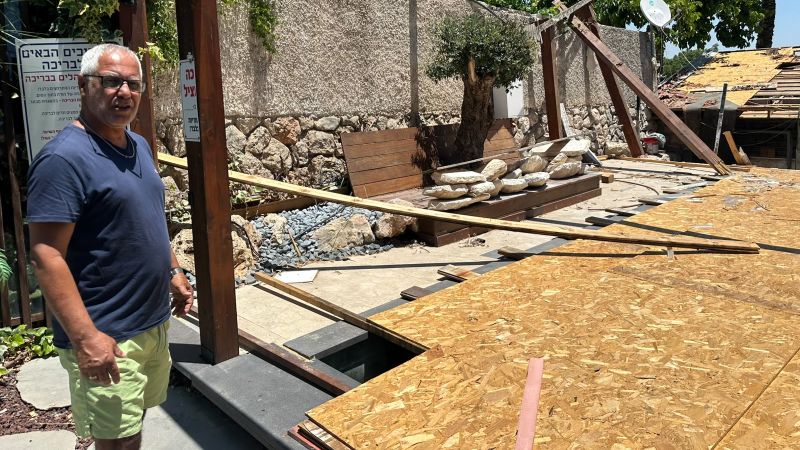
Amid the chaos, Israeli and Lebanese ambassadors have convened in Washington for a fifth round of talks aimed at ending the war. However, Hezbollah has not been invited to these discussions, calling them a “farce.” An Israeli official told CNN that the group may offer a limited withdrawal as a symbolic gesture to Lebanon’s government. Yet, for residents like Moti Aharon, 58, the diplomacy feels hollow. His century-old home, now partially destroyed, and the guesthouses he built have become unusable. “We don’t feel any ceasefires,” Aharon says. “The Americans don’t understand who they’re dealing with. They think they can talk to Iran with silk gloves. It won’t work.”
Earlier this year, Prime Minister Benjamin Netanyahu claimed Hezbollah had been pushed “years back” by Israel’s military campaign. But the latest fighting has shown the group’s resilience, dragging Lebanon into a broader regional conflict. The current situation mirrors past patterns, with the Israeli military reoccupying southern Lebanon’s terrain—a region it had held since 1985, before withdrawing after years of casualties. Now, the same cycle is repeating, with over five soldiers killed in a single weekend from Hezbollah fire. “For fifty years, it’s been the same game,” Aharon says. “They shoot, we shoot. Netanyahu can say we’ve won, that Hezbollah is deterred—it’s nonsense. This requires root-level change.”
A Fractured Peace Process
The ceasefire talks have also exposed tensions between the US and Israel. Since April 15, the Trump administration has brokered multiple pauses in hostilities, but the fighting has persisted. Even with US pressure, Israel’s military operations in Lebanon continue, as Prime Minister Netanyahu remains steadfast in his stance. Meanwhile, Iran has positioned itself as a key player, framing the end of the war in Lebanon as a condition for its own negotiations with Washington. This has led to a public rift between Trump and Netanyahu, with the former advocating for a broader peace and the latter resisting any concessions that might ease the conflict.
Lebanon’s government, caught in the crossfire, has struggled to assert control. The country’s health ministry reports that the war has left more than 4,000 people dead and over a million displaced, a staggering toll that underscores the stakes of the stalemate. For Metula’s residents, the numbers are personal. The town, once a haven for tourists, now lives with the constant threat of rockets. Dorfman’s pizza shop, a symbol of normalcy, serves as a reminder of the daily toll. “Every day is a battle,” he says. “You can’t plan anything. You just wait for the next attack.”
The Path Forward
As the fifth round of talks unfolds, the question remains: can a ceasefire truly bring stability? The history of the conflict suggests otherwise. The first ceasefire brokered by the Biden administration, nearly two years ago, held for 15 months before collapsing on March 2, 2025, when Hezbollah retaliated against Israeli strikes that killed Iran’s supreme leader. This marked the beginning of a new phase in the war, with Israel launching a ground incursion into southern Lebanon and reclaiming the security buffer zone. The pattern of escalation and retreat has repeated itself, with the Israeli military’s presence in the region becoming a familiar sight once again.
Despite the diplomatic efforts, the war’s roots run deep. Hezbollah’s alliance with Iran has ensured that the conflict remains tied to regional power struggles, while Lebanon’s government, often seen as a secondary player, bears the brunt of the destruction. The latest round of fighting has further complicated the situation, with both sides showing little willingness to back down. For Metula’s residents, the ceasefires are not just a matter of policy—they are a test of whether peace can ever feel real. “We’ve been through this before,” says Aharon. “Every time there’s a ceasefire, it’s just a pause. The war is always coming back.”
As the US continues to mediate, the challenge lies in addressing the underlying tensions that fuel the conflict. While the ceasefire talks offer a glimmer of hope, they also highlight the stark divide between the political promises and the lived realities of those in the war zones. The residents of Metula, like many others, remain unconvinced. For them, the war is not just a distant threat—it is an ever-present reality, one that has reshaped their lives and tested their faith in diplomacy.
