
A vengeful arsonist or a convenient scapegoat? What we’ve learned from testimony in the Palisades Fire trial
A Vengeful Arsonist or a Convenient Scapegoat? Palisades Fire Trial Unfolds
A vengeful arsonist or a convenient – Following a week of intense courtroom proceedings, federal prosecutors concluded their case this week in the trial of Jonathan Rinderknecht, the man accused of igniting the Palisades Fire—a catastrophic blaze that devastated parts of Los Angeles in early 2025. The fire, which claimed twelve lives and left thousands of homes and businesses in ruins, has become the focal point of a legal battle centered on whether Rinderknecht acted out of malice or was merely an unfortunate target of the government’s investigation.
The Prosecution’s Narrative
Prosecutors argued that Rinderknecht, who was working as an Uber driver on the night of December 31, 2024, was the sole individual present at the Hidden Buddha, a remote hillside clearing where the fire began. “Investigators examined what caused the fire on January 1,” said US Assistant Attorney Matt O’Brien during opening statements. “It wasn’t an accident.” The US Bureau of Alcohol, Tobacco, Firearms and Explosives (ATFD) confirmed that the blaze was intentionally set, linking it to Rinderknecht’s actions.
Key evidence presented by the prosecution included surveillance footage from nearby homes and wildfire monitoring cameras. The footage showed Rinderknecht’s rental car driving through the area before parking near the Hidden Buddha. Investigators also recovered a Bic grill lighter from the glove compartment of his vehicle, which they believe was used to start the fire. O’Brien emphasized that the lighter’s presence, combined with Rinderknecht’s solitary presence at the site, supports the claim that he was the triggerman.
Testimony from witnesses further reinforced the prosecution’s timeline. Multiple individuals who interacted with Rinderknecht during his shift on New Year’s Eve described him as focused and composed, but also as harboring resentment toward society. “He was fixated on Luigi Mangione,” O’Brien stated, suggesting a personal vendetta. The attorney also highlighted Rinderknecht’s habit of using ChatGPT as a confidant, where he reportedly expressed deep frustrations about his life and asked the AI to generate images of flames, symbolizing his anger.
Defense Challenges the Narrative
Steve Haney, Rinderknecht’s defense attorney, contested the prosecution’s portrayal of his client as a vengeful arsonist. In his opening statement, Haney acknowledged Rinderknecht’s presence at the Hidden Buddha but framed it as an incidental occurrence. “He hiked up to the area to watch New Year’s Eve fireworks after dropping off passengers,” Haney explained, arguing that the fire’s origin could not be definitively tied to his actions.
The defense emphasized the 911 calls Rinderknecht made immediately after spotting flames at midnight. “He called multiple times, but the calls didn’t connect until 12:17 a.m.,” Haney told the jury. This delay, he claimed, suggests Rinderknecht was trying to alert authorities rather than ignite the fire. “There is no reliable evidence he started that fire,” Haney asserted, challenging the prosecution’s assertion that the fire was deliberate.
Defense witnesses also testified about Rinderknecht’s routine. According to his Uber passengers, he was often seen talking to himself while driving, but there was no indication he was planning anything destructive. Haney further pointed out that Rinderknecht’s calm demeanor throughout the trial—wearing a black suit and tie, taking notes, and even smiling at times—supports his claim of innocence.
Legal Consequences and Trial Dynamics
Rinderknecht faces three charges: destruction of property by fire, arson affecting property used in interstate commerce, and setting timber ablaze. If found guilty, he could receive a minimum of five years and a maximum of 45 years in federal prison. The US Attorney’s Office for the Central District of California stressed the severity of the charges, noting the fire’s historical impact on the region.
During the trial, Rinderknecht’s behavior has been a point of interest. He often appeared composed, even engaging in brief conversations with his attorney. However, the jury may interpret his calmness as either a sign of confidence or a calculated attempt to avoid suspicion. The question remains: Will he take the stand to defend himself, or will he rely on his legal team to dismantle the prosecution’s case?
The prosecution’s case in chief relied heavily on expert testimony. An arson investigator testified that the Lachman Fire, which later evolved into the Palisades Fire, was a holdover fire that smoldered underground before flaring up on January 7, 2025, due to strong winds. O’Brien argued that Rinderknecht’s actions on New Year’s Eve were the catalyst for this chain of events. “He wanted revenge,” O’Brien stated, citing Rinderknecht’s documented frustrations over his personal life and financial struggles.
Despite the defense’s efforts, the prosecution’s narrative has taken shape. The discovery of the Bic lighter, the timing of the 911 calls, and Rinderknecht’s preoccupation with fire and his ex-girlfriends all point to a deliberate act. However, Haney’s team maintains that these elements are circumstantial, and that the fire could have been caused by another individual who was also in the area that night.
Public Reaction and the Road Ahead
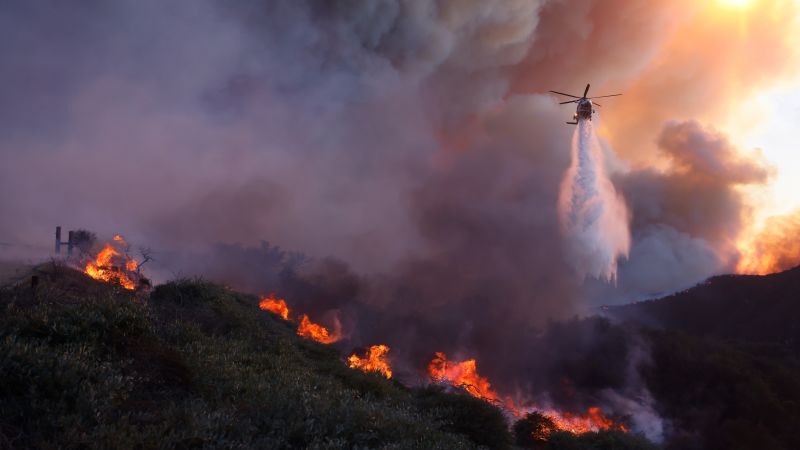
The Palisades Fire, which began on January 1, 2025, had a profound effect on the Los Angeles community. Families were displaced, businesses lost millions in revenue, and the region’s emergency response systems were tested. As the trial progresses, public attention remains high, with many questioning whether Rinderknecht is the true culprit or a convenient scapegoat for a disaster that may have had multiple contributing factors.
With the prosecution’s case now complete, the defense will have the opportunity to present its arguments. Haney’s strategy hinges on casting doubt on the timeline and the motivations presented by the government. “The evidence points to a man who was trying to stop a fire,” Haney reminded jurors during his opening statement, a line that has been repeated throughout the trial. As the jury deliberates, the case will serve as a reminder of the complexities of assigning blame in the wake of a large-scale disaster.
