
Zelensky returns Poland’s highest honor amid escalating row over nationalist wartime unit
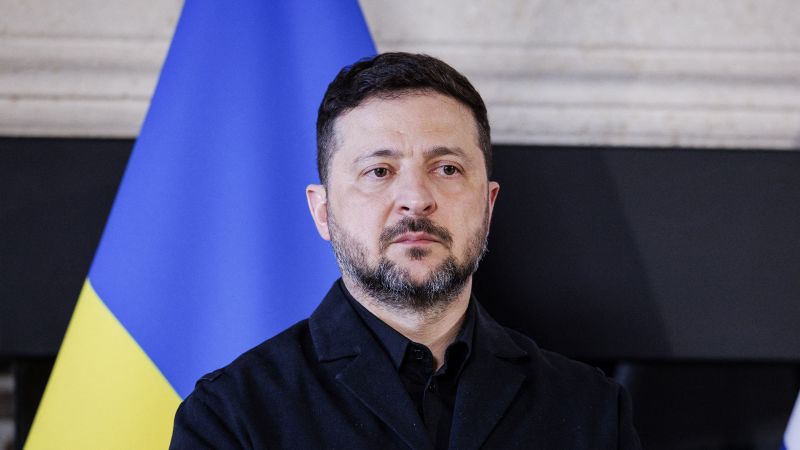
Zelensky Returns Poland’s Most Prestigious State Award Amid Escalating Historical Dispute
Zelensky returns Poland s highest honor – In a symbolic gesture of reconciliation, Ukrainian President Volodymyr Zelensky has returned the Order of the White Eagle, Poland’s highest state honor, after Polish President Karol Nawrocki revoked it as part of a politically charged conflict over World War II history. The decision comes amid heightened tensions between the two nations, with Zelensky’s move seen as a response to Nawrocki’s criticism of his naming a military unit after the Ukrainian Insurgent Army (UPA), a paramilitary group accused of massacring Poles during the war. The act of sending the award back was marked by a social media post, which included photographs of the honor and a receipt showing it was prepared for delivery to the Polish presidential office.
Zelensky’s action was framed as an acknowledgment of the honor’s symbolic weight and a reaffirmation of his commitment to Ukrainian identity. “Today, I sent the Order back to the President of Poland,” he wrote in a message shared on X. “I believe the future will confirm the respect Ukrainians deserve.” The post emphasized the shared sacrifices of Ukrainians and Poles during the war, while also highlighting the current rift over the UPA’s legacy. This move has drawn mixed reactions, with some Ukrainians viewing it as a necessary step to address historical grievances, while others argue it could weaken Poland’s support for Kyiv’s war effort.
The UPA and Poland’s Historical Reckoning
The dispute centers on the UPA, a Ukrainian nationalist group that fought for independence from Nazi Germany and Soviet forces during the 1940s and 1950s. While the UPA is celebrated in Ukraine for its role in resisting occupation, Poland has long associated it with atrocities against civilians. In 2016, the Polish Parliament officially labeled the UPA’s actions as genocide, citing mass killings of Poles in regions like Volhynia and Eastern Galicia. This historical narrative has shaped Poland’s stance on honoring Ukrainian leaders, particularly those who embrace the UPA’s legacy.
Nawrocki, a nationalist politician, used the revocation of the Order to underscore his belief in the UPA’s role in wartime crimes. “For the majority of Polish society, the Ukrainian Insurgent Army remains above all a formation responsible for cruel crimes against the citizens of the Polish Republic during World War II,” he stated in a social media address. The decision to strip Zelensky of the honor was seen by some as an attempt to align with anti-Ukrainian sentiment, which has been growing in Poland amid economic challenges and the influx of Ukrainian refugees. Despite their contributions to the Polish economy, Ukrainians in the country have faced increasing prejudice, with critics accusing them of perpetuating the UPA’s violence.
Poland’s Role in Supporting Ukraine
Although the honor was revoked, Nawrocki clarified that this does not signal a decline in Poland’s support for Ukraine’s defense against Russia. The country has remained a key ally to Kyiv, providing critical aid during the four-year invasion. Zelensky, in his post, expressed gratitude for Poland’s solidarity while acknowledging the need to resolve historical differences. “I am proud of our people and of EVERY Ukrainian warrior,” he wrote, emphasizing unity and resilience in the face of external pressures.
The controversy has also sparked criticism from within Ukraine. Kyrylo Budanov, head of the Ukrainian Presidential Office, called Nawrocki’s decision “an unfriendly act toward our people” and a “gift to the Moscow aggressor, which will certainly use it against both of our countries.” Four Ukrainian officials, including Budanov, have announced plans to return state honors bestowed by Poland. However, not all Ukrainians support this move. Former Prime Minister Arseniy Yatsenyuk argued on X that the current president’s decision could be corrected by future actions, urging caution against escalating tensions.
Bilateral Relations and the Road Ahead
The conflict has impacted diplomatic relations, with Poland and Ukraine recently making strides on the exhumation of victims from both sides. A December 2025 meeting between the two presidents in Warsaw was hailed as a step toward historical reconciliation. Yet, the current dispute has rekindled old grievances, with Polish Prime Minister Donald Tusk, a political rival of Nawrocki, warning that the row between the nations “delights Putin and shocks our allies.” Tusk’s comment on social media Friday night underscored the broader implications of the disagreement, suggesting it could undermine European unity.
Zelensky’s May 26 decree, which led to the naming of a unit after the UPA, was justified as a way to honor the group’s contributions to Ukraine’s independence. The move was meant to restore military traditions and recognize the unit’s role in defending Ukraine’s territorial integrity. However, critics in Poland argue that this decision overlooks the UPA’s alleged war crimes, which included the systematic killing of thousands of civilians. The UPA’s actions, along with those of Polish underground forces, have been blamed for creating a cycle of violence that left significant casualties on both sides.
The Polish government’s decision to revoke the honor reflects its deepening ideological divide over the UPA’s legacy. While former President Andrzej Duda had awarded Zelensky the Order of the White Eagle in 2023 for his efforts in security and human rights, Nawrocki has taken a more hardline approach. His actions have been criticized as exploiting historical tensions to bolster his political agenda, particularly in an election year. For Ukrainians in Poland, the decision has added to their sense of marginalization, despite their role in supporting the country’s economy and humanitarian efforts.
Zelensky’s return of the award marks a pivotal moment in the relationship between the two nations. While it may signal a temporary setback in their alliance, it also highlights the ongoing dialogue about historical narratives. Poland’s upcoming event on Ukraine’s postwar reconstruction, which Zelensky was expected to attend, offers an opportunity to bridge the gap. The event, scheduled for next week, aims to showcase Poland’s commitment to aiding Ukraine’s recovery, even as historical disputes persist.
In the broader context, the dispute reflects the complex interplay of national pride and political strategy. For Zelensky, the gesture is a way to assert Ukraine’s narrative and reaffirm its values. For Nawrocki, it is a declaration of Poland’s stance on wartime accountability. As the two leaders navigate this controversy, the international community watches closely, recognizing that their relationship is crucial to the stability of the region. The coming weeks will determine whether this conflict can be resolved through dialogue or if it will deepen the divide between the two nations.
