
Sunken wreck of WWII ‘hell ship’ used to transport POWs discovered after more than 80 years
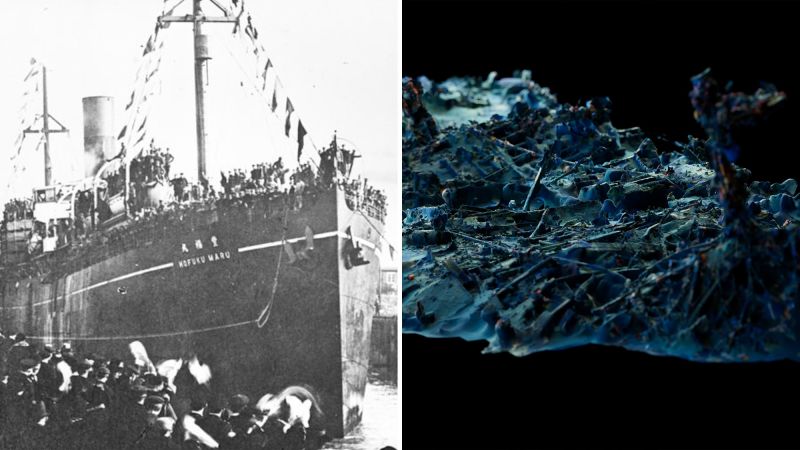
Sunken Wreck of WWII ‘Hell Ship’ Transporting POWs Found After Over 80 Years
Sunken wreck of WWII hell ship – In a groundbreaking discovery that has rewritten part of World War II history, the wreckage of the Hōfuku Maru—a Japanese “hell ship” once used to ferry British and Dutch prisoners of war—has been located after more than eight decades. The ship, which sank in 1944 during a devastating attack by US warplanes, is now resting on the ocean floor near Zambales province, off the western coast of Luzon, the Philippines’ largest island. This revelation marks a pivotal moment for historians and maritime archaeologists seeking to uncover the tragic fate of thousands of Allied soldiers trapped on these unmarked vessels.
A Tragic Voyage Through the South China Sea
The Hōfuku Maru was part of a convoy navigating the South China Sea on September 21, 1944, carrying approximately 1,200 prisoners of war. At the time, the ship was unmarked, a common practice for Japanese vessels that transported POWs across the Pacific. US warplanes, however, failed to recognize its civilian status and launched four torpedoes, one of which struck the Hōfuku Maru. The impact split the ship in two, causing it to sink rapidly. Most of the prisoners, weakened by months of captivity, perished in the disaster. Only around 200 survived, their bodies scattered across the seabed in a grim testament to the brutal conditions aboard.
Historians have long described these ships as hellships, a term reflecting the inhumane treatment endured by POWs during their transport. The confined holds, lack of sanitation, and meager rations created a deadly environment. As Tim Beckensall, a World War II historian and director of the Hellships Memorial Foundation, recounted: “We’re talking about a dark hold that’s metal. It stinks, it’s boiling hot. There’s no sanitary conditions. They’re not being fed properly, if at all. Hardly any water.” He emphasized that the conditions on board were “about the worst set of circumstances you could design,” a stark contrast to the relative safety of the open ocean.
The Search for a Lost Legacy
The journey to locate the Hōfuku Maru began with meticulous research into Japanese and US military archives. Beckensall and his team spent years combing through fragmented records and conflicting accounts, seeking clues to the ship’s final resting place. Their breakthrough came in June 2025, when a digitized Japanese document—written by officers on the convoy’s lead ship—was uncovered. This document provided a timeline and a map detailing where the attack occurred, confirming that the Hōfuku Maru was the second vessel in the line when it was struck. The information aligned with an aircraft action report from the USS Bunker Hill, which noted the sinking of an “AK vessel,” an auxiliary cargo ship designation, at a location more than 30 miles from earlier assumptions.
Once the location was pinpointed, the team collaborated with local fishermen who had long spoken of a massive wreck in the area. Their knowledge, combined with the researchers’ technical expertise, led to the successful identification of the site. The wreck was found at a depth of roughly 164 feet (50 meters), exactly where the sonar surveys had predicted. This discovery not only honored the memory of the victims but also highlighted the enduring importance of preserving such historical accounts.
A Collaborative Effort Across Borders
The search was made possible through a partnership between the Hellships Memorial Foundation, the Cultural Heritage Agency of the Netherlands, and the Discovery Channel. The Dutch agency, which funded the initial sonar survey and dive mission, played a critical role in enabling the expedition. The Discovery Channel’s involvement brought additional resources, including the recruitment of Calvin Mires, a maritime archaeologist from Marine Imaging Technologies, and Evan Kovacs, an underwater imaging specialist. Together, they documented the wreck with hundreds of high-resolution images, offering a visual record of the ship’s remains and the remnants of its tragic cargo.
Beckensall described the Japanese document as the “smoking gun” that validated the team’s efforts. “It was the Japanese document that started the whole thing, and it was the smoking gun that really led to all the others,” he said. The document not only clarified the sequence of the attack but also helped cross-reference details with other historical sources. This collaborative approach underscored the global significance of the Hōfuku Maru’s story, linking the Netherlands’ cultural heritage initiatives to international efforts to recover wartime history.
A Vital Piece of Forgotten History
Josh Gates, the host of “Expedition Unknown” and a central figure in the discovery, highlighted the emotional weight of the find. “The most surprising part of this investigation is actually the story itself—the tragic legacy of the Hellships is a chapter of World War II that many people have never heard of,” he wrote in an email. The series, which will debut on the Discovery Channel on June 24, serves as a platform to bring this overlooked history to light. Gates emphasized that the men who died aboard these ships “made the ultimate sacrifice” and that their remains, after 80 years, finally have a resting place.
The Hōfuku Maru is one of 56 unmarked hell ships used by the Japanese military during the war to transport over 62,000 POWs. Of these, 19 were sunk by Allied forces, leaving five of their locations unknown. The recovery of the Hōfuku Maru adds a crucial piece to this puzzle, offering new insights into the scale of the Japanese fleet’s operations and the suffering endured by prisoners throughout the Pacific theater. Beckensall noted that the ship’s sinking was “a dark chapter” in the history of war captivity, one that remains vividly etched in the memories of survivors and historians alike.
Preservation Challenges and Future Prospects
Despite the successful discovery, the wreck faces ongoing threats from its environment. Volcanic ash from the 1991 eruption of Mount Pinatubo has gradually settled over the site, complicating efforts to identify distinct features. The ash, carried by rivers and the sea, has obscured parts of the ship and its cargo, making it harder for researchers to piece together the full narrative of the disaster. However, the initial findings have already provided a wealth of data, including the ship’s structure and the condition of its remains.
Beckensall acknowledged the challenges, stating that the wreck’s poor preservation state required innovative techniques to study it. “Identifying any distinguishing features has been nearly impossible due to the extreme conditions,” he explained. Yet, the team’s use of sonar technology and underwater imaging has allowed them to create a detailed map of the site, revealing the ship’s remains and offering clues about the lives lost aboard. The next steps involve further exploration, with the hope of recovering artifacts and human remains that could deepen the understanding of the POWs’ experiences.
This discovery not only honors the victims of the Hōfuku Maru but also serves as a reminder of the broader atrocities committed during the war. As the Hellships Memorial Foundation continues its work, the story of the Hōfuku Maru stands as a testament to resilience, sacrifice, and the power of historical research to uncover truths long buried beneath the waves. The ship’s resting place, now a site of both mourning and remembrance, ensures that the legacy of those who perished will not be forgotten.
