
Technology is not the villain in ‘Toy Story 5.’ Excess is
Toy Story 5: A Fresh Perspective on Technology and Family Life
Technology is not the villain in Toy – In a quiet corner of Radiator Springs, where the vintage cars of Lightning McQueen and his friends once roamed, a sudden meteor shower threatened to upend their world. The scene, chaotic yet familiar, evoked the dramatic flair of disaster director Roland Emmerich. As the tiny vehicles faced potential ruin, Buzz Lightyear—a character from “Paw Patrol”—rushed to the rescue, driving Chase’s car through the turmoil. Watching this moment with my young son, I felt an unexpected wave of guilt. How had we, as parents, allowed such a flood of digital distractions to infiltrate even the whimsical world of toys? The thought lingered as I realized how much screen time our child had already accumulated.
The Battle Between Toys and Technology
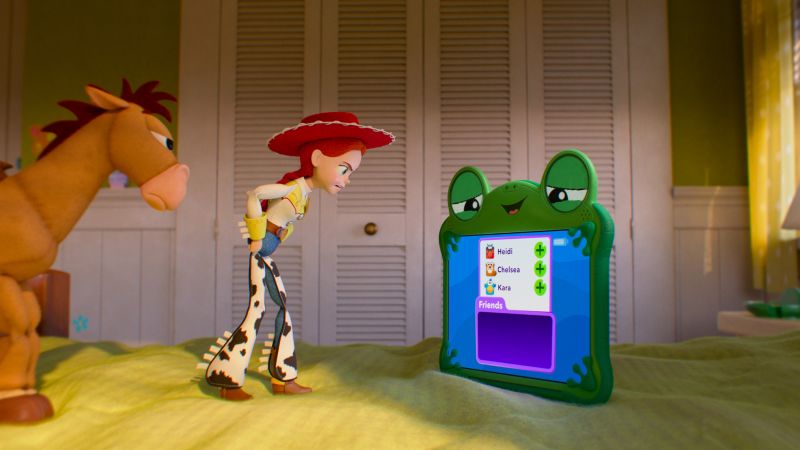
“Toy Story 5” doesn’t cast technology as the ultimate antagonist, but rather as a complex force shaping modern childhood. The film centers on Bonnie, an imaginative 8-year-old whose beloved toys grow anxious with the arrival of Lilypad, a tablet-like device that promises to revolutionize play. While the toys are initially captivated by its capabilities, the narrative explores the tension between digital engagement and the warmth of human connection. This isn’t just a story about toys; it’s a mirror held up to families grappling with the growing role of screens in daily life.
As the plot unfolds, we see Bonnie’s parents striving to balance their daughter’s love for creativity with the need for real-world social interaction. They introduce Lilypad with good intentions, hoping it will help Bonnie make friends, even if those connections begin in the virtual realm. Yet, the film doesn’t paint the parents as villains. Instead, it portrays their struggles with nuance, showing how well-meaning efforts can sometimes lead to unintended consequences. The toys, in their own way, become symbols of the past—resilient but slowly being replaced by the sleek, efficient allure of technology.
Screen Time as a Family Challenge
My toddler son, who has been a regular viewer of animated adventures, has grown accustomed to a twice-daily dose of his favorite shows. While I’ve always tried to be a strict monitor of his screen time, the movie’s themes made me question my own approach. Could a film that’s essentially about the power of screens make me feel guilty for allowing my child to enjoy them? The answer, I discovered, is both reassuring and thought-provoking.
“Toy Story 5” isn’t a scathing critique of technology. It acknowledges the benefits of digital tools while highlighting their potential to overshadow real-life experiences. The film’s message is clear: screens aren’t inherently bad, but their impact depends on how they’re used. For instance, Lilypad’s presence in Bonnie’s room transforms her playtime into a series of pre-programmed interactions, leaving little room for spontaneity. Yet, the story also shows how the toys adapt, using the device as a bridge to new friendships rather than a replacement for their own bonds.
“We may be on a device answering emails or doing work, working on proposals or projects, but our children are seeing us on the screen and not really understanding that,” said Josephine Hunt, a public-school teacher and mental health advocate in Park Ridge, New Jersey. Hunt emphasized that younger children often mimic their parents’ habits without questioning them. “Their world is shaped by what they observe, and if screens dominate their environment, they’ll see technology as a normal part of life,” she added.
Reframing the Conversation About Screen Time
The film’s narrative invites parents to rethink their approach to digital engagement. Rather than viewing screens as a threat, the story encourages active participation in a child’s digital experiences. Bonnie’s parents, though hesitant, eventually embrace the idea of guiding their daughter through the challenges of technology. This mirrors the real-world need for families to model healthy device habits and engage in open dialogue about screen use.
One key takeaway from the movie is the importance of family-wide awareness. The scene where a group of toys race through the house, leaving no trace of their presence, underscores how easily screens can become the center of attention. It’s a subtle but powerful reminder that device use isn’t just a child’s issue—it’s a collective one. As the film shows, even the most dedicated parents can find themselves absorbed by their own screens, creating a cycle that’s hard to break.
Experts like Hunt suggest that fostering conversations about technology can help children distinguish between necessary engagement and mindless entertainment. “Simple, age-appropriate discussions about device use can teach kids the difference between productive time and recreational screen time,” she explained. These talks can also help children identify physical and emotional signs of overuse, such as eye strain or restlessness. By involving kids in setting boundaries, parents can build trust and encourage mindful habits.
Striking a Balance in the Digital Age
The American Academy of Child and Adolescent Psychiatry estimated in 2025 that children aged 8 to 18 in the U.S. spend an average of 7.5 hours a day on screens. This statistic highlights how deeply embedded technology has become in our lives. Yet, “Toy Story 5” reminds us that balance is possible. The film’s resolution isn’t about banning screens but about rethinking their role in a child’s development. Bonnie’s toys, though initially threatened by Lilypad, learn to coexist with it, much like families can learn to integrate technology without letting it overshadow meaningful interactions.
For parents, the message is clear: technology is a tool, not a monster. The film encourages a collaborative approach, where parents and children explore the digital world together. By discussing scenarios like cyberbullying or socializing with friends during screen time, families can prepare for the challenges ahead. The movie also subtly critiques the idea of “screen time” as a separate category, suggesting that device use is part of a larger pattern of how families interact with the world.
In the end, “Toy Story 5” leaves us with a reflective question: How much of our lives are consumed by screens, and at what cost? The film’s depiction of a family’s struggle with technology resonates because it’s relatable. We’ve all been there—locked in a room, face illuminated by blue light, while the world outside fades into the background. The movie’s charm lies in its ability to make this universal dilemma feel personal, urging us to examine our own habits as much as our children’s.
As I watched the final scenes of “Toy Story 5,” I felt a sense of relief. The film doesn’t condemn technology but celebrates its potential to enhance, not erase, creativity. It’s a gentle nudge for parents to be more present, to model healthy habits, and to engage with their children’s digital lives as partners rather than overseers. The lesson isn’t about cutting off screens entirely, but about using them intentionally. After all, if a group of toys could navigate the complexities of a tablet, then so can we.
With its blend of humor, heart, and insightful social commentary, “Toy Story 5” offers more than just entertainment. It’s a reminder that technology isn’t the villain—it’s the canvas, and how we use it depends on our choices. As we prepare for the next chapter in our family’s relationship with screens, this film serves as a guiding light, encouraging us to stay connected, both to our children and to each other.
