
Vance’s threat is the latest sign US could be breaking with Israel
Vance’s Threat Signals Tension in U.S.-Israel Relations
Vance s threat is the latest – Recent tensions between the United States and Israel have reached a critical point, with Vice President JD Vance’s remarks marking a pivotal moment in the strained dynamics of their long-standing alliance. The administration’s growing unease with Israel’s actions has been evident for days, but Thursday’s sharp criticism from Vance appeared to solidify concerns that the U.S. might soon distance itself from its traditional support for the Jewish state. These comments come amid ongoing negotiations with Iran, which many analysts argue have been overly accommodating to Tehran’s interests. The fear is that Israel’s military operations could derail the U.S.-Iran agreement, forcing Washington to reassess its diplomatic approach.
A Ceasefire Renewed Amid Rising Distrust
On Friday, Israeli forces and Hezbollah agreed to extend their ceasefire, sources confirmed to CNN. This decision followed a recent escalation in hostilities that had threatened to disrupt delicate peace talks. While the agreement appears to stabilize the immediate situation, it has not quelled the deeper anxieties within the Trump administration about Israel’s role in the broader geopolitical landscape. The administration has been vocal in its warnings, signaling to Israel that it should either accept the terms of the deal or face consequences.
“You guys should take what we’ve given you and be happy, or else,” one senior official remarked, reflecting the administration’s growing frustration with Israel’s assertiveness. The phrase underscores a shift in tone, as Washington moves from diplomatic reassurance to a more confrontational stance. This pressure is not new, but the combination of Vance’s public statements and Trump’s earlier critiques has intensified the situation, suggesting a broader realignment in U.S. policy toward the Middle East.
Vance’s Remarks: A Stark Warning
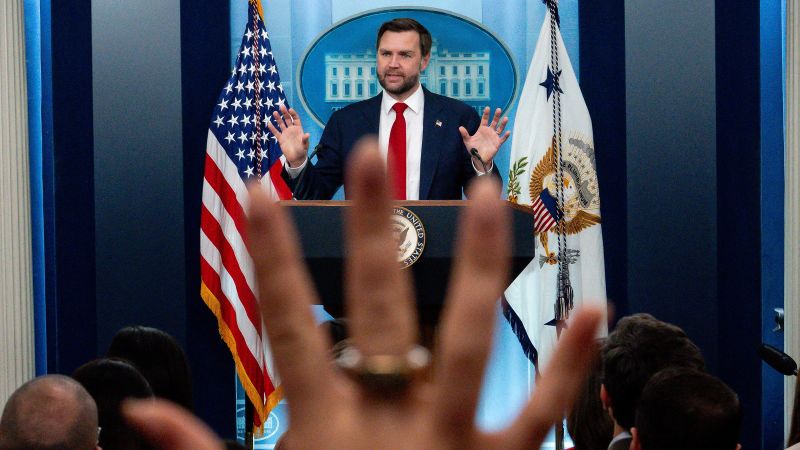
Vance’s comments at a press briefing on Thursday highlighted the administration’s concerns about Israel’s global reputation. “Donald J. Trump is the only head of state in the entire world who is sympathetic to the nation of Israel at this moment in time,” he said, drawing a direct comparison between Trump’s unwavering support and Israel’s current position. “And he happens to be the head of state of the world’s superpower. If I was in the cabinet of the Israeli government, I might not be attacking the only powerful ally that I have anywhere left in the entire world.”
“Donald J. Trump is the only head of state in the entire world who is sympathetic to the nation of Israel at this moment in time,” Vance stated, emphasizing the uniqueness of Trump’s stance. “And he happens to be the head of state of the world’s superpower. If I was in the cabinet of the Israeli government, I might not be attacking the only powerful ally that I have anywhere left in the entire world.”
Vance’s critique of Israel’s reliance on American military aid was equally pointed. He argued that the country’s dependence on U.S. weaponry, coupled with its strategic position in the region, necessitates a more measured approach. “You can’t just kill your way out of solving every single national security problem,” he said, echoing a sentiment previously expressed by Trump. This line of reasoning suggests that the administration is pushing Israel to recognize its vulnerability and adjust its tactics accordingly.
Trump’s Consistent Critique of Israeli Strategy
Trump’s opposition to Israel’s military actions has been a consistent thread in recent weeks. Earlier this month, he publicly acknowledged his frustration with Netanyahu’s leadership, calling the prime minister “crazy” for Israel’s aggressive campaign in Lebanon. “I said, ‘Bibi, you better be careful, or you will be on your own very soon,’” Trump recounted to Axios, highlighting his direct warnings to the Israeli leader.
“I said, ‘Bibi, you better be careful, or you will be on your own very soon,’” Trump added, underscoring his belief that Netanyahu’s actions could jeopardize the U.S.-Iran deal.
Trump’s criticism escalated further on June 14, when he criticized an Israeli strike on Beirut on social media, calling it “should not have happened.” He argued that the Hezbollah attack Israel was responding to was “very small and meaningless,” a stark contrast to Israel’s justification for the operation. These remarks were part of a larger pattern, with Trump also criticizing Israel’s use of U.S. missile systems during a recent visit to the G7 in France. “You don’t have to knock down an apartment house every time you’re looking for somebody,” he said, “because there are a lot of people in those apartment houses and they’re not all Hezbollah — that I can tell you.”
Trump’s comments have been accompanied by a strong emphasis on Israel’s existential dependence on American support. “If it weren’t for the United States of America,” he claimed, “Israel would not exist right now. Israel would have been blown off the face of the earth, 100%. And every smart person in Israel knows that.” This statement, though hyperbolic, reflects the administration’s belief that Israel’s survival hinges on U.S. backing, a sentiment that Vance’s remarks have reinforced.
Republican Party’s Shifting Stance
Even within the Republican Party, the relationship with Israel is showing signs of strain. While the party has historically championed strong ties with the Jewish state, recent developments suggest a more cautious approach. This internal shift may be influenced by the administration’s public criticism of Israel’s actions, as well as growing concerns among voters about the cost of prolonged conflict in the Middle East. The situation is further complicated by Israel’s desire to leverage the war for diplomatic gains, particularly in pressuring Iran.
The U.S.-Iran agreement has been a cornerstone of the administration’s foreign policy, but Israel’s military maneuvers have created friction. Analysts note that the Jewish state sees this conflict as a rare opportunity to rally international support against Iran, which could weaken Tehran’s geopolitical position. This ambition, however, has clashed with Washington’s efforts to secure a peaceful resolution, leading to a standoff where both sides have different priorities. The Trump administration, eager to end the war, is pushing for restraint, while Israel and Netanyahu remain determined to pursue their objectives.
Implications of the Strain
While the immediate break between the U.S. and Israel remains uncertain, the administration’s approach is clear: it is willing to exert pressure to ensure Israel’s compliance. Vance’s remarks, though prominent, are part of a broader strategy that includes Trump’s own critiques. The question now is whether these warnings will translate into tangible policy changes or if they are merely political posturing. Sources suggest the latter, as the administration continues to balance its desire for peace with its need to maintain credibility with Israeli leaders.
Despite the administration’s efforts, Israel’s position is unlikely to waver immediately. The country’s leaders view the current conflict as a critical moment to demonstrate strength and solidarity in the face of regional threats. This resolve has led to a standoff where the U.S. seeks to minimize the war’s impact, while Israel aims to maximize its leverage. The result is a tenuous alliance, where cooperation is driven by necessity rather than shared vision.
As the situation evolves, the broader implications for U.S. foreign policy remain unclear. The administration’s willingness to challenge Israel’s actions signals a potential realignment in priorities, but it also raises questions about the future of the U.S.-Israel partnership. Whether this tension will lead to a lasting rift or simply a period of recalibration depends on how both sides navigate the next phase of negotiations and military operations. For now, the ceasefire agreement between Israel and Hezbollah offers a temporary reprieve, but the underlying disagreements continue to simmer, setting the stage for a more complex relationship in the coming weeks.
