
Trump beats a longtime adversary with a late Georgia endorsement, and other election takeaways
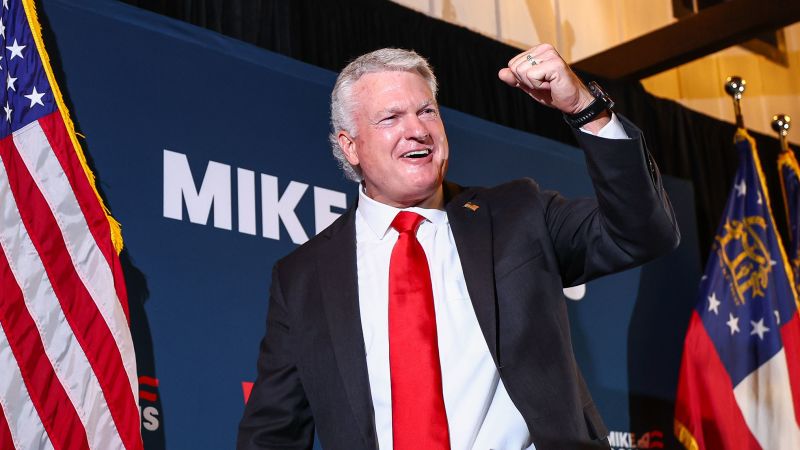
Trump Secures Late-Stage Endorsement in Georgia, Overcoming a Long-Standing Rival
Trump beats a longtime adversary – President Donald Trump’s strategic maneuvering in Georgia paid off on Tuesday as his endorsed candidate, Rep. Mike Collins, narrowly defeated Gov. Brian Kemp’s chosen contender, former football coach Derek Dooley, in the Republican Senate primary runoff. This victory marks a pivotal moment in the race to unseat Democratic Sen. Jon Ossoff, a battle that has drawn national attention due to its potential implications for the 2028 presidential election. While Trump’s support for Collins solidified his position as the GOP’s nominee, voters in Georgia also demonstrated a clear preference for Democratic candidates in other races, underscoring the state’s role as a critical battleground in this midterm cycle.
The Senate Race: A Battle for the Future
Collins’ win sets the stage for a highly anticipated Senate showdown in November, where the outcome could reshape the balance of power in the U.S. Senate. Ossoff, the first millennial senator, is not only a formidable opponent but also a rising star within the Democratic Party, seen as a potential 2028 presidential contender. His campaign, bolstered by a staggering $32 million in funds, gives him a significant financial advantage over Collins, who had to rely on Republican fundraising to bridge the gap. This disparity highlights the challenge Collins faces in November, where his ability to mobilize voters will be tested against Ossoff’s established name recognition and fundraising prowess.
Trump’s endorsement of Collins was a calculated move, aimed at countering Kemp’s influence in the state. The two-term governor had previously rejected Trump’s claims of widespread voter fraud in Georgia’s 2020 election, a stance that fueled the president’s desire to remove him from office. This rivalry reached its peak in Tuesday’s runoff, with Trump leveraging his political capital to back Collins, a hardline conservative aligned with his “Make America Great Again” campaign. The endorsement ultimately proved decisive, as Collins’ victory signals a shift in the GOP’s strategy for challenging Ossoff.
Uneven Results for Trump’s Picks in the GOP Primary
While Trump’s support for Collins was a key win, his influence in other races showed mixed results. In the governor’s race, Trump-backed candidate Rick Jackson, a self-funded businessman, edged out Kemp’s running mate, Lt. Gov. Rebecca Jones, despite endorsements from both the president and governor. This outcome left Kemp and Trump both with bruised reputations, as their shared choice failed to secure the nomination. Meanwhile, in Alabama, Trump’s endorsement of Rep. Barry Moore secured a narrow victory in the GOP Senate primary, demonstrating the president’s ability to sway key races despite regional differences.
However, in Oklahoma, Trump’s selected candidate for governor, Mike Mazzei, fell short of expectations, finishing in second place with roughly one-fourth of the vote. The primary runoff will now determine the next governor, highlighting the president’s uneven impact across the country. These results reflect a broader trend in the Republican primary cycle, where Trump’s endorsements have become both a blessing and a burden. While they can galvanize support, they also draw scrutiny from voters who question the alignment of his chosen candidates with party values.
Ossoff’s Rise as a Democratic Hopeful
Despite the challenges, Ossoff’s performance in Georgia has positioned him as a rising figure within the Democratic Party. His campaign has generated buzz as a potential 2028 presidential bid, with Democratic leaders viewing him as a candidate who could challenge Trump’s dominance in the Republican Party. However, Kemp, a popular governor, had been considered the party’s best hope to derail Ossoff’s ambitions. Kemp’s failure to secure a win in the Senate race, combined with his loss in the governor’s race, has left Democrats scrambling to find a new strategy to counter his influence.
Kemp’s role in the GOP primary was significant, as he sought to replace himself as the party’s standard-bearer in the Senate race. His endorsement of Dooley was an attempt to harness the appeal of a moderate candidate, but Trump’s late-stage intervention with Collins proved more effective. This dynamic has created a unique situation where Kemp, despite his political clout, is now seen as a potential liability for Democrats, who must now focus on defending Ossoff’s seat against a Republican who could emerge as a formidable challenger.
The Strategic Battle Between Trump and Kemp
The race in Georgia has been a proxy battle between Trump and Kemp, two of the most prominent figures in the Republican Party. Kemp’s initial reluctance to endorse Trump’s claims of election fraud in 2020 led to a power struggle, with Trump seeking to replace him in 2022. This tension resurfaced in Tuesday’s runoff, where Trump’s endorsement of Collins was a clear attempt to weaken Kemp’s influence. The president’s criticism of Dooley, a former University of Tennessee football coach, further underscored his focus on aligning with candidates who would aggressively challenge Ossoff.
“That’s not exactly the right thing to say, and it’s certainly not what we all stand for with Make America Great Again,” Trump said during a telephone rally for Collins on Monday.
Dooley’s acknowledgment that Trump lost Georgia in 2020 was seen by Trump as a betrayal of the party’s core message, prompting the president to distance himself from the candidate. This moment highlights the deep ideological divide within the GOP, where Trump’s loyalists and more centrist Republicans have differing priorities. Collins, on the other hand, has positioned himself as a fighter for Trump’s agenda, vowing to reclaim the Senate seat and counter Ossoff’s growing political power.
Looking Ahead to November
For Collins, the path to victory in November is fraught with obstacles. Ossoff’s $32 million war chest, supported by a coalition of donors and PACs, gives him a financial edge that could translate into media attention and grassroots mobilization. However, Collins has the advantage of a clear message: a return to Republican control of the Senate in a state that Trump won in 2024. His campaign has emphasized the need to restore conservative values and address the challenges facing Georgia, a strategy that may resonate with voters tired of Democratic governance.
Ossoff’s advisers, meanwhile, acknowledge the importance of maintaining focus on 2026. A loss in November would not only jeopardize his Senate seat but also dash any hopes of a presidential run in 2028. The stakes are high, with both candidates aware that their performance in Georgia could set the tone for future elections. Trump’s endorsement of Collins has been a masterstroke in the short term, but the long-term success of the strategy will depend on how effectively Collins can capitalize on this support while addressing the concerns of a diverse electorate.
Implications for the Midterm and Beyond
Georgia’s elections have broader implications for the midterm race, as they test the strength of the Republican Party’s message and the viability of its candidates. Kemp’s loss in the governor’s race, while not a complete disaster, signals a shift in voter sentiment that could impact other races. The state’s Republican voters, who supported Collins over Kemp’s choice, have shown a preference for candidates who align more closely with Trump’s vision. This trend may influence the national GOP’s strategy, with the party potentially favoring more ideologically aligned candidates in future contests.
Yet, the Democratic Party remains optimistic about Ossoff’s prospects, viewing him as a bridge between the current generation of politicians and the next. His ability to secure such a large financial lead suggests that he has the resources to mount a strong campaign, but his success in November will depend on his ability to connect with voters and maintain momentum. For now, the focus is on the immediate race, with both Collins and Ossoff preparing to fight for the Senate seat that could define their political trajectories for years to come.
As the election cycle progresses, the results from Georgia will serve as a bellwether for the broader midterm elections. Trump’s endorsement of Collins has been a critical factor in the GOP’s strategy, but the true test of this approach will come in November. The state’s voters, who rejected both Trump and Kemp in the runoff, will decide whether the president’s influence can be sustained or if the Republican Party will need to look elsewhere for its next generation of leaders. With Ossoff’s campaign in full swing, the outcome of this race will be watched closely by political analysts and party strategists alike.
