
Oil prices fall on US-Iran agreement
Oil Prices Fall on US-Iran Agreement
Oil prices fall on US Iran – On Sunday, global oil prices experienced a decline following President Donald Trump’s announcement of a deal with Iran. The United States, which had imposed a naval blockade on the country, plans to lift restrictions, signaling a potential shift in the geopolitical landscape affecting energy markets. This development has led to immediate reactions in the oil sector, with prices showing a noticeable drop despite lingering concerns about the region’s stability.
Market Reactions and Price Movements
Brent crude prices fell by 3.9% to approximately $84 per barrel, while US crude dropped 4.8% to around $81 per barrel. If these levels hold, it would mark the lowest crude oil price since March 4, just days into the conflict with Iran. The market’s response to the agreement was mixed, as investors anticipated the deal framework being finalized over the weekend, which prompted prices to settle below $90 per barrel for the first time since the war began.
“I’m very concerned we could see oil prices skyrocket later this summer with crude oil prices heading well into the mid- to high-$100 range, and gasoline pump prices heading back to all-time highs around $5 a gallon,” said Bob McNally, president of Rapidan Energy.
Analysts note that while the initial price drop is encouraging, the market still faces challenges to return to pre-war levels. Prices have yet to dip below $70 per barrel, a threshold they were at before the United States and Israel launched attacks on Iran in late February. The path to stabilization involves several critical steps, including the de-mining of the Strait of Hormuz, the restoration of free maritime traffic, and the resumption of Middle Eastern oil production.
Strait of Hormuz and Production Resumption
The Strait of Hormuz, a vital artery for global oil supply, remains a focal point for market observers. Trump emphasized that the blockade would be lifted, allowing ships to pass without additional fees. A member of Iran’s parliament noted that some vessels had previously paid about $2 million on average for transit through the strait. However, even after its reopening, it may take weeks for production to fully ramp up, as oil wells in the region were largely shut down during the conflict.
Experts caution that the wells might not reach pre-war output levels. “The disruption could persist, and if emergency stockpiles are depleted, prices might surge again,” McNally warned. The US Strategic Petroleum Reserve, for instance, could play a crucial role in mitigating volatility. Yet, the market’s confidence remains cautious, with many waiting for tangible evidence of the strait’s full re-opening.
“It’s great if it happens, but I’ll believe it when I see actual ships making the free and unhindered passage through the strait,” said Joe McMonigle, president of the Global Center for Energy Analysis and a resident of Saudi Arabia.
Meanwhile, the broader financial markets showed optimism. Stock futures rose on Sunday, with Dow futures gaining 0.6% and S&P 500 and Nasdaq futures each climbing more than 0.7%. This sentiment reflects growing hope that the agreement will reduce tensions and restore normalcy to energy trade. However, the road to recovery is not without obstacles, as the region’s infrastructure and supply chains require time to mend.
Historical Context and Long-Term Outlook
The current price drop contrasts sharply with the turmoil of the early war months, when oil prices soared due to fears of supply disruptions. The $84 and $81 per barrel figures represent a return to more stable territory, but they are still significantly higher than the $70 per barrel levels seen before the February attacks. Analysts suggest that the market’s trajectory will depend on how quickly Middle Eastern production can restart and whether emergency reserves are replenished.
Iran’s deputy foreign minister for legal and international affairs confirmed the deal’s completion, stating that the memorandum of agreement would be signed in Switzerland on Friday. Both sides have signaled their commitment to easing tensions, with the US pledging to remove its naval blockade and Iran agreeing to the toll-free passage of ships through the Strait of Hormuz. This mutual agreement aims to address immediate concerns but also sets the stage for long-term negotiations.
Gas Prices and Consumer Impact
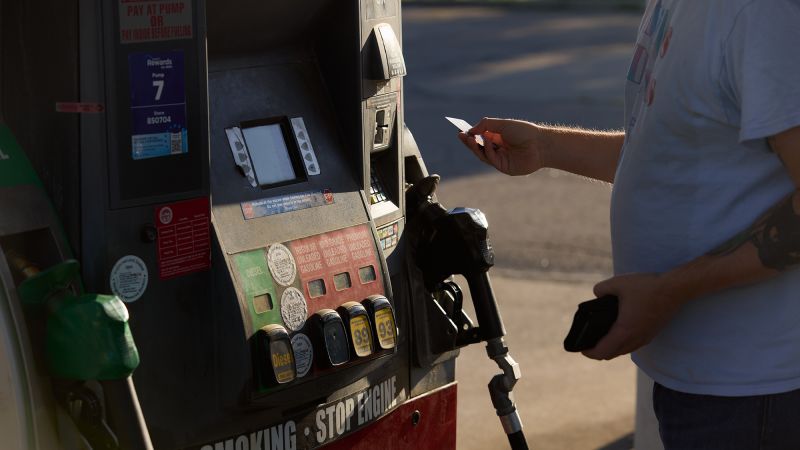
Gasoline prices in the US also saw a slight decrease, averaging $4.07 per gallon on Sunday, according to the AAA. This decline has been consistent over three weeks, yet prices remain 36.6% higher than they were prior to the war’s outbreak. While the drop is welcome for consumers, it highlights the ongoing pressure on energy markets and the need for sustained improvements in supply stability.
Analysts argue that the temporary relief in oil prices is unlikely to last if the underlying issues persist. The agreement provides a framework for de-escalation, but the long-term success will hinge on Iran’s ability to maintain production and the US’s commitment to the terms outlined. The price of oil is a barometer for global economic health, and its current position underscores the interconnectedness of geopolitics and energy markets.
Global Implications and Future Outlook
The US-Iran deal has broader implications beyond immediate price adjustments. By easing restrictions on Iran’s oil exports, the agreement could inject billions of dollars into the country’s economy and potentially stabilize regional dynamics. However, the energy sector’s recovery will require time, as infrastructure damage and production delays may prolong the effects of the conflict.
Despite the initial optimism, some market participants remain cautious. The removal of mines from the Strait of Hormuz is a key step, but its implementation could face logistical hurdles. Additionally, the de-escalation of tensions may not immediately translate to increased oil production, as operators need time to rebuild confidence and repair facilities. The strategic importance of the strait means that any prolonged disruption could have cascading effects on global energy markets.
As the deal takes shape, the focus will shift to its implementation. Trump’s announcement on social media that the agreement is “now complete” has been met with cautious optimism. Iran’s confirmation of the memorandum’s finalization further solidifies the agreement’s foundation. Yet, the real test will come in the weeks ahead as the market evaluates whether the strait is truly open and production levels can rebound.
For now, the agreement has created a brief reprieve for oil prices, but the road to normalization remains challenging. While the market has welcomed the development, the path to sustained stability depends on the collective actions of all involved parties. As the world watches the unfolding events, the energy sector continues to serve as a critical indicator of global economic resilience in the face of geopolitical uncertainty.
