
Russia’s overwhelming manpower advantage against Ukraine is starting to wane
Russia’s overwhelming manpower advantage against Ukraine is starting to wane
Recruitment challenges and economic strain reshape the war’s trajectory
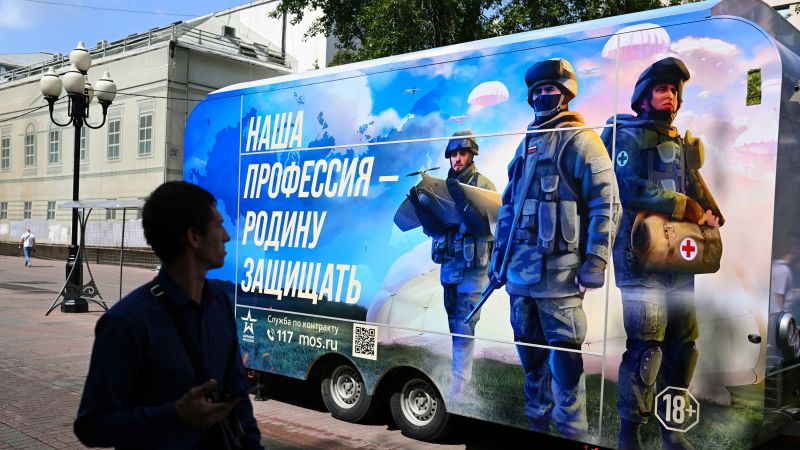
Russia s overwhelming manpower advantage against – In an effort to bolster its forces, Russia has launched a campaign offering substantial financial incentives to young men willing to serve in the Ukraine conflict. With bonuses of up to $80,000 and debt relief of up to $140,000, the military is leveraging these rewards to attract volunteers. Yet, despite the lure of such prizes, recruitment numbers have dropped by 20% in the first quarter of 2026 compared to the previous year, according to Russian economist Janis Kluge. This decline signals a growing reluctance among potential recruits, even as the war enters its fifth year.
“Rubles don’t fight wars,” said Nigel Gould-Davies, a senior fellow at the International Institute for Strategic Studies (IISS). “This is the first war in Russia’s history where the state is paying citizens to fight rather than forcing them, and that’s creating a strain on the economy and manpower.”
The Kremlin’s strategy has long depended on attritional warfare, relying on its vast population and extensive military industry to sustain a slow, grinding campaign. However, this approach is now facing hurdles. While oil prices have surged due to the Iran war, providing a temporary financial boost to Putin’s war efforts, the economic strain caused by prolonged conflict is proving more difficult to manage. Analysts suggest that the state’s reliance on monetary incentives rather than conscription is beginning to falter, leading to a shortage of both soldiers and laborers.
As the war drags on, the need for troops has intensified, yet the results of the recruitment drive have been mixed. Gould-Davies noted that the incentives, while attractive, may no longer be enough to convince men to enlist. “There are signs that this strategy is losing its effectiveness,” he said in a recent report. “Russia is now losing more soldiers than it can replace.” This imbalance is forcing the government to explore more drastic measures to maintain its military presence.
One such measure involves sending former prisoners to the front lines, a practice that has raised concerns about the treatment of conscripts. Additionally, Russia has sought support from North Korea, deploying three waves of soldiers from the country to supplement its forces. Immigrants from regions like India and Africa have also been encouraged to join, offering a potential solution to the growing manpower crisis. However, these efforts are only temporary fixes.
Broader economic consequences of the war
The conflict’s impact extends beyond the battlefield, creating a ripple effect across the Russian economy. With millions of men of conscription age leaving the country or avoiding service, industries reliant on labor are struggling. “It’s not just about finding people to fight… they’re having trouble filling jobs in factories and other sectors,” Gould-Davies explained to CNN. This labor shortage is driving up wages, contributing to inflation and adding pressure on already strained resources.
Factories in the defense industry are operating at maximum capacity, working around the clock to meet the demand for military equipment. Yet, the relentless pace of production is exacerbating the labor crisis, as workers are pulled from other industries to support the war effort. “The Russian economy is suffering from the worst labor shortage in its history,” Gould-Davies emphasized. “Labor is a scarcer resource than physical capital or financial assets. It’s harder to increase, especially when the state can’t control birth rates.”
According to Western intelligence estimates, nearly 500,000 Russian soldiers have lost their lives since the war began. Hundreds of thousands more have fled the country to escape the draft, leaving behind a shrinking workforce. This exodus has created a domino effect, with industries facing delays and shortages. The government’s recent announcement of a new recruitment drive, promising to cover debts for those enlisting, highlights the desperation to maintain troop numbers.
Future choices for the Kremlin
As the war continues, the Kremlin is likely to face difficult decisions. The labor shortage could compel Russia to tap into international labor markets, recruiting workers from India, North Korea, and various African nations. Such moves would ease pressure on the military and civilian sectors but may also raise questions about the fairness of the recruitment process.
More drastic measures might include a second forced mobilization, coupled with restrictions on citizens’ ability to leave the country. This approach could mirror the first partial mobilization, which was met with widespread public discontent and led to a significant wave of emigration. “The Kremlin will soon have to choose between escalating its demands on the economy and scaling back its war goals,” Gould-Davies predicted. “Either way, the consequences will be profound.”
For now, the Russian military is relying on a combination of financial rewards, political propaganda, and coercion to sustain its operations. Ads on roadside billboards and social media platforms depict the promise of heroism and citizenship, but these messages are increasingly overshadowed by reports of poor treatment on the front lines. Some soldiers are even bribing officers to avoid missions deemed certain death, suggesting that the allure of the incentives is waning.
Analysts warn that the current trend may signal a turning point in the war. If the recruitment drive continues to underperform, the Kremlin will need to implement more aggressive policies, potentially at the cost of public support. The economic strain, compounded by the labor crisis, could force Russia to prioritize efficiency over manpower, reshaping the nature of the conflict in the years to come.
The interplay between military needs and economic realities is becoming a defining feature of Russia’s war effort. While the initial strategy of attritional warfare seemed sustainable, the realities of prolonged conflict are revealing its limitations. As the country grapples with a shrinking pool of volunteers and a labor shortage that threatens its industrial base, the path forward may require a more complex balance of incentives, conscription, and international collaboration. Whether the Kremlin can maintain its grip on the war or be forced to adapt remains a critical question for the future of Ukraine and Russia’s economy.
