
Southern Baptists vote to advance a formal ban on churches with women pastors
Southern Baptists Vote to Formalize Ban on Women Pastors
Southern Baptists vote to advance a formal – In a decisive move that underscores the denomination’s conservative stance, Southern Baptists convened in Orlando, Florida, for their annual meeting and overwhelmingly approved a proposal to enshrine a formal prohibition against women serving as pastors in the Southern Baptist Convention. The vote, which received 6,028 affirmative ballots compared to 2,026 opposing ones, marked a clear 3-to-1 majority and surpassed the required two-thirds threshold. This action aims to solidify existing norms within the SBC, which already maintains a faith statement opposing the ordination of women as senior pastors. While the amendment does not immediately alter the status of individual congregations, it sets the stage for a constitutional change that could shape the future of the denomination’s leadership structure.
Historic Agreement and Constitutional Clarity
The annual meeting, attended by over 11,000 delegates, concluded with a strong consensus on the issue. The event, often described as a blend of worship and governance, featured debates on both spiritual and procedural matters. Among the key topics, the discussion on women pastors drew significant attention, with the vote on the amendment taking center stage. While the debate over the location of the next meeting dragged on for hours, the resolution regarding gender roles in pastoral leadership was passed with remarkable efficiency. Albert Mohler, president of the Southern Baptist Theological Seminary and a key advocate for the amendment, emphasized that this decision reflects a defining moment for the denomination. “This is an opportunity for Southern Baptists to speak in truth, in unity, and in conviction,” he stated, highlighting the symbolic importance of the measure.
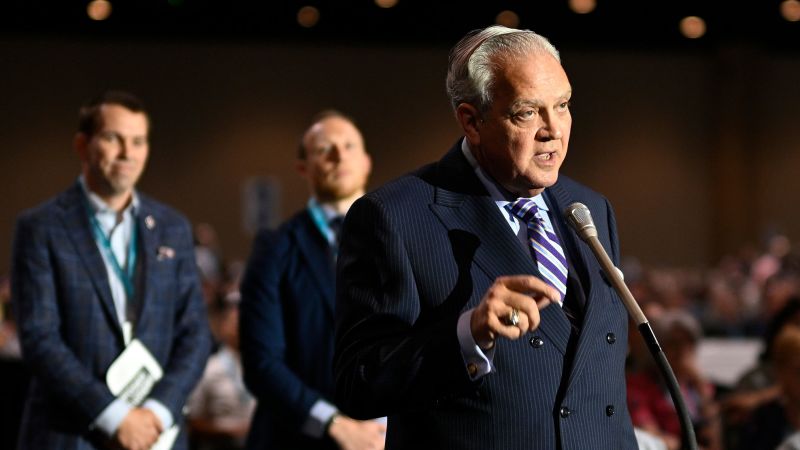
Mohler argued that the amendment would clarify the denomination’s position, distinguishing it from more liberal Protestant groups that ordain women and open their highest offices to them. “There’s a great line that divides liberal and biblical evangelicalism, and you can see it on this very issue,” he added, asserting that the trajectory of liberal denominations is evident in their willingness to embrace gender equality in ministry. The debate, however, was brief and largely devoid of support for women pastors. The sole opposition came from Doug Mize, a pastor from South Carolina, who contended that the SBC’s existing mechanisms already suffice to address the issue. “What we have already works,” Mize said, noting that churches with women in senior pastoral roles have been expelled under the current constitution.
Biblical Interpretations and Denominational Power
Supporters of the ban cited specific biblical passages to justify their stance, arguing that these texts limit pastoral roles to men. They pointed to verses such as Paul’s instruction in 1 Timothy 2:12, which they interpret as a prohibition against women teaching or leading in certain contexts. Conversely, advocates for women’s ministry highlighted other scriptures that emphasize equality between genders, such as Galatians 3:28, which declares that in Christ, there is no distinction between male and female. They also referenced examples where women are explicitly called to proclaim the gospel, such as the ministry of Phoebe, a deacon in the early church, and Priscilla, who co-authored a letter with her husband Aquila.
While the SBC cannot dictate the internal practices of its self-governing churches, it holds the authority to expel congregations that deviate from its core beliefs. The current constitution defines “friendly cooperation” as adherence to the denomination’s faith and practices, allowing for the removal of churches that do not align with its teachings. This power has been exercised in the past, including against the Saddleback Church in California, which was expelled for its support of women in senior pastoral roles. The amendment’s language, however, is more explicit, requiring the exclusion of any church that “affirms, appoints, or endorses a woman serving in the office or function of a pastor/elder/overseer, specifically preaching to the assembled congregation.” This definition leaves little room for ambiguity, reinforcing the denomination’s commitment to male leadership in the pulpit.
A Constitutional Journey and Past Attempts
Although the amendment passed with a strong majority, it is not the first time Southern Baptists have sought to formalize the ban. In previous annual meetings, a majority of delegates supported similar measures, but only one year achieved the necessary two-thirds supermajority to enact constitutional changes. This hurdle has delayed the implementation of the ban, but the latest vote signals a growing momentum. Mohler, who played a central role in drafting the amendment, noted that the 2000 passage of the original ban laid the groundwork for this current effort. “We need constitutional clarity on this issue,” he said, stressing the importance of formalizing the SBC’s position to ensure consistency across its member churches.
The amendment’s approval comes at a time when the SBC is increasingly focused on preserving traditional values. The decision to enshrine the ban in the constitution contrasts sharply with the practices of liberal Protestant denominations, which have long ordained women and hold them in positions of leadership. For example, the United Church of Christ and the Episcopal Church have embraced gender equality in their clergy, while the Southern Baptist Convention continues to assert male-only pastoral authority. However, even within conservative evangelical circles, there is diversity. Pentecostal and charismatic denominations, such as some megachurches, have welcomed women in leadership roles, with figures like Paula White-Cain, who serves as the head of the White House Faith Office, gaining national recognition.
Reactions and Broader Implications
The vote has sparked mixed reactions within the broader Christian community. Baptist Women in Ministry, an organization supporting female ministers across various Baptist denominations, issued a statement condemning the decision. The group expressed solidarity with women affected by the measure, criticizing the “hateful rhetoric and propaganda” used to promote the ban. “This vote has harmed women in ministry and threatened their role in the church,” the statement read. The group also highlighted the tension between the SBC’s conservative approach and the inclusive practices of other denominations, including the Catholic and Orthodox churches, which ordain only men to the priesthood.
Despite the division, the SBC’s decision reinforces its identity as a traditionalist movement within American Christianity. The amendment’s approval not only codifies the denomination’s stance but also positions it as a counterpoint to evolving views on gender in religious leadership. For Southern Baptists, the vote represents a reaffirmation of their theological convictions, ensuring that churches adhering to these principles remain united under a shared framework. As the denomination moves forward, the next step will be a similar two-thirds vote at the 2027 meeting to finalize the amendment’s inclusion in the constitution. This process will likely intensify debates over the balance between tradition and modernity, as well as the role of women in shaping the future of Southern Baptist theology and practice.
“This is an opportunity for Southern Baptists to speak in truth, in unity, and in conviction,” said Mohler, president of the Southern Baptist Theological Seminary in Louisville, Kentucky. “There’s a great line that divides liberal and biblical evangelicalism, and you can see it on this very issue. The trajectory of liberal denominations is clear.”
As the SBC solidifies its position, the broader implications for Christian denominations become evident. While some groups embrace progressive interpretations of scripture, the Southern Baptist Convention remains a powerful advocate for traditional roles, using its constitutional authority to uphold its vision of pastoral leadership. The vote is a reminder of the ongoing dialogue between conservative and liberal factions within Christianity, with the Southern Baptists taking a firm stand on a matter that has long been a point of contention. For now, the amendment stands as a testament to the denomination’s resolve to maintain its distinct theological identity in an ever-changing religious landscape.
