
Markets whipsaw as AI sell-off resumes
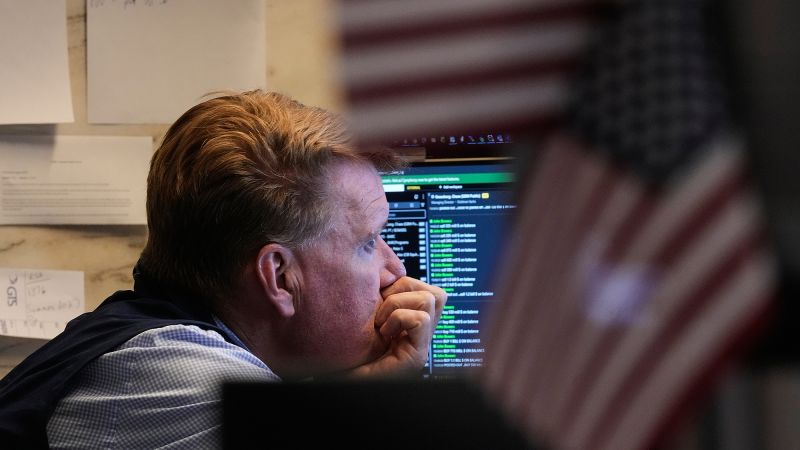
Markets Whipsaw as AI Sell-Off Resumes
Markets whipsaw as AI sell off resumes – On Tuesday, stock markets experienced significant fluctuations, driven by a sharp shift in investor sentiment toward AI-driven equities. Traders offloaded shares linked to artificial intelligence, shifted capital to other industries, and cashed in gains following a sustained rally in tech stocks over the past few months. This dynamic created a volatile environment, with major indices showing divergent trends as the market adjusted to new realities.
Index Movements Highlight Sector Disparities
The Nasdaq Composite, heavily weighted toward technology, opened with a modest upward trend before plunging over 3.6% in a sudden reversal. However, the market quickly stabilized as investors began buying the dip, resulting in a final decline of just 0.97% by the close. The S&P 500 mirrored this pattern, initially falling more than 2.2% but rebounding to a loss of only 0.26% as the day progressed. In contrast, the Dow Jones Industrial Average, which has a lower concentration of tech firms, rose 86 points, or 0.17%, recouping earlier losses that had pushed it down nearly 575 points.
These contrasting outcomes underscore the sensitivity of tech-heavy indices to shifts in AI-related demand. While the Nasdaq and S&P dipped, the Dow’s relative stability highlighted the broader market’s resilience. Analysts noted that the sector-specific adjustments were expected, given the extraordinary gains seen in AI stocks earlier in the year. Yet, the rapid correction signaled a pause in the momentum that had driven tech stocks to historic levels.
AI Stocks Face Sell-Off Amid Overbought Conditions
Many semiconductor manufacturers, which had been at the forefront of the AI-driven rally, saw substantial declines. The rapid selling pressure reflected concerns about overvaluation and the need for consolidation after months of aggressive gains. Companies like Nvidia (NVDA), the largest by market value in the S&P 500, fell about 0.2% after a sharp 4% drop during the trading session. Similarly, Marvell Technology (MRVL) plummeted 7.6%, while Broadcom (AVGO) dropped 1.1% after a 6.5% decline. These moves weighed heavily on the broader market, contributing to the indices’ losses.
Bill Northey, a senior investment director at US Bank Asset Management, explained that such corrections are typical after prolonged upward trends. “It’s not unusual to see a period of consolidation after exceptional performance,” he noted. Northey emphasized that the fundamentals supporting the chipmaker rally remain strong, but the market’s cyclical nature means periods of retrenchment are inevitable as enthusiasm ebbs and flows. “Bouts of consolidation are part of the process,” he added, highlighting the balance between growth and caution in investor behavior.
Market Volatility and Strategic Positioning
The volatility on Tuesday marked a continuation of recent market swings, with the Nasdaq and S&P 500 posting their worst performance of the year on Friday. Despite a rebound on Monday, the market’s instability resurfaced, halting any sustained recovery. This pattern has led to increased uncertainty, with investors recalibrating their strategies in response to shifting conditions.
Some market participants are viewing the sell-off as an opportunity. “A lot of the sell-off from our perspective is an opportunity to buy some really essential, critical AI infrastructure stocks at cheaper prices,” said Rob Thummel, a portfolio manager at Tortoise Capital. He suggested that the pullback could present value for long-term investors, particularly in sectors underpinning the AI revolution. However, others are taking a more cautious approach, waiting for clarity before committing capital.
SpaceX IPO and Investor Behavior
The market’s turbulence also coincides with the upcoming initial public offering (IPO) of SpaceX, a development that has drawn considerable attention. Many investors are reportedly adjusting their portfolios to position for the space company’s debut, either by selling existing holdings to raise cash or by deferring purchases until the IPO is announced. “Investors are really trying to figure out how to position themselves for SpaceX,” said Michael Monaghan, a partner and portfolio manager at Founder ETFs. “Because all eyes are on the deal, people aren’t looking at what other stocks they’re going to be initiating new positions on or buying in their portfolio,” Monaghan added.
This strategic realignment reflects the broader trend of investors seeking high-growth opportunities in the face of uncertainty. The anticipation of SpaceX’s IPO has created a ripple effect, influencing the timing of trades across various sectors. While the space company’s potential is significant, its entry into the public market may temporarily divert attention from other investment options.
Oil Prices and Geopolitical Factors
Meanwhile, oil prices showed signs of stabilization, albeit with modest gains. The U.S. government’s response to a recent attack on a military helicopter in Iran played a key role in this development. President Donald Trump announced that Iran had downed an Apache helicopter, with both pilots remaining unharmed. “The United States must, of necessity, respond to this attack,” he stated, signaling potential geopolitical developments that could impact energy markets.
Brent crude prices rose slightly, climbing to $91.45 per barrel after a 3% decline. U.S. crude oil recovered to $88.20, up 3.4% from its earlier drop to $86. This rebound helped ease concerns about inflation, leading to a modest decline in U.S. Treasury yields. However, the key 10-year yield remains above 4.5%, potentially influencing investor preferences toward equities.
Broader Implications for Tech and AI Sectors
The Nasdaq and S&P 500 have been closely tracking the tech sector’s performance, with both indices hitting record highs earlier this month. Since June 2, the Nasdaq has retreated about 5%, while the S&P 500 is down approximately 3%. Despite these corrections, the indices are still up more than 10% and 8%, respectively, for the year. This resilience suggests that the underlying demand for tech and AI stocks remains robust, even amid short-term volatility.
Analysts pointed out that the market’s adjustment is not uniform. While the broader indices dipped, more than 350 stocks in the S&P 500 closed higher on Tuesday, indicating that not all tech equities were affected equally. This divergence highlights the complexity of the sector, where some companies are weathering the storm while others are struggling to maintain momentum. The semiconductor industry, in particular, continues to be a focal point of this adjustment, with companies facing both opportunities and challenges.
Investor behavior in the semiconductor space has been a key driver
