
The day Serena Williams returned and tennis got a hero back
The day Serena Williams returned and tennis got a hero back
A Rock ‘n’ Roll Return
The day Serena Williams returned and tennis – Tennis isn’t typically known for its flair, especially during high-profile events like the Queen’s Club Championships in London’s green-lit suburbs. Yet, when Serena Williams took to the court for her first match in nearly four years, the atmosphere shifted. The scene felt almost cinematic, a blend of anticipation and disbelief as the crowd erupted in cheers. Unlike the vibrant energy of a rock concert, where musicians command the stage with electric presence, Williams brought her own kind of magnetism—quiet, deliberate, and undeniably powerful. Her presence alone transformed the arena into a focal point, as if time had paused to honor a legend’s comeback.
The Magic of the Moment
Williams entered the court with a demeanor that spoke of experience and composure. Her bright pink sneakers, a signature style, were a stark contrast to the muted tones of the traditional tennis attire. The crowd, packed into the Andy Murray Arena, was a sea of faces, many of whom had waited years to witness this moment. As she walked onto the court, the air buzzed with a mix of nostalgia and excitement. It was as if the spectators had stepped into a highlight reel of tennis history, where every swing and serve felt like a chapter in a timeless story.
Focus Beyond the Noise
Despite the clamor around her, Williams remained steadfast in her routine. She didn’t acknowledge the roaring applause from the stands, nor did she pause to take in the significance of the occasion. Instead, she focused on the task at hand, her movements precise and unflinching. The stadium announcer, during a pre-match ceremony, listed her accolades—a 23-time Grand Slam singles champion, a trailblazer for women in the sport. Yet, Williams didn’t let the accolades distract her. Her warmup was a study in calm, her eyes fixed on the baseline, her posture radiating confidence.
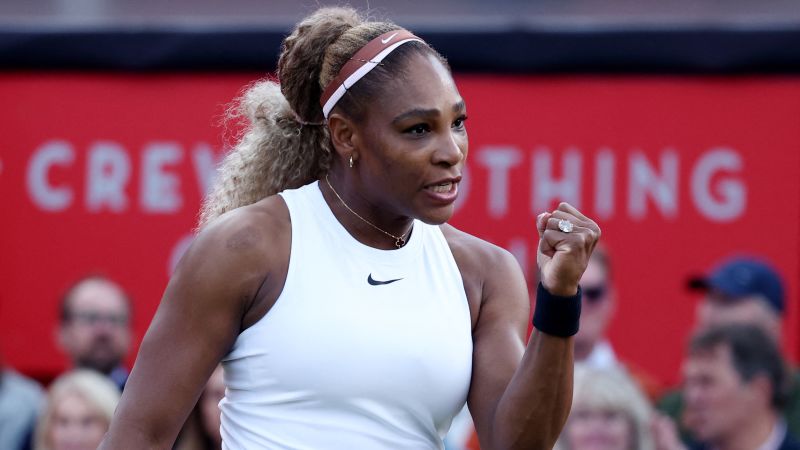
Her first shot was a net, but the second was an aggressive volley that hinted at her sharp reflexes. The third, a powerful return, was met with the unmistakable sound of her trademark grunt. The crowd’s reaction was immediate and overwhelming, with spectators standing to applaud the moment she struck her first winner. One fan, seated behind her family, screamed with joy, fists pumping in the air, as if the point itself was a major triumph. The energy in the arena was electric, a testament to the reverence she still commands.
A Family Affair
Williams’ family was in attendance, their presence a reminder of the personal stakes behind her return. Young Adira, her daughter, sat on her father’s lap, a symbol of the legacy she’s building for the next generation. The idea that her children might one day follow in her footsteps was a driving force for her comeback. Speaking to reporters after the match, Williams shared that her decision to return was partly to ensure her daughters could experience her playing firsthand. “It’s about them watching me compete,” she said, her voice steady despite the emotional weight of the moment.
Yet, the moment was also a reminder of the reality that came with her return. After the match, her children were quick to ground her in the present, with one asking for a trip to the toy store and another inquiring about dinner. It was a small but telling contrast between the grandeur of the sport and the everyday lives of those close to her. Still, the family’s support was palpable, their cheers a constant backdrop as they watched their mother reclaim her place on the court.
Companions on the Court
Williams wasn’t alone in her return. Her teenage teammate, Victoria Mboko, was there to accompany her, a symbol of the new era she’s helping shape. Together, they dismantled their opponents in straight sets, a performance that left fans in awe. Mboko’s presence added a fresh dynamic to the match, as the duo’s partnership was both a celebration of Williams’ resilience and a nod to the future of the sport. The victory was a statement, proving that even after years away, her competitive edge remained sharp.
Williams’ return also drew attention from other icons of the sports world. Lindsey Vonn, the US skier known for her own comeback stories, was among the familiar faces in the stands. Her presence underscored the universal appeal of athletes who defy expectations. While the men’s grand slam final had been a major event, the Queen’s Club match now held equal, if not greater, significance. Tennis journalists, typically glued to the French Open, had rushed to be part of this historic moment, highlighting the immense anticipation for her return.
Normalcy in the Spotlight
For all the drama surrounding her comeback, Williams described the experience as “quite normal” to her. “Once you get there, it doesn’t matter what’s going on in the outside world,” she told reporters after the win. “It’s always what you’re there for.” This mindset, she explained, was the key to her success. The 44-year-old athlete’s focus was unshakable, her mind a fortress against the distractions of fame. “I felt a bit nervous 30 minutes before stepping out,” she admitted, “but that’s part of the process.”
Her words resonated with the crowd, who had been witnessing something extraordinary. The match wasn’t just about her skills or her age—it was about the indomitable spirit that has defined her career. Even as she faced the challenge of returning to competitive play, her performance was a masterclass in discipline and grace. The power she once wielded was still present, her grit unchanged, and her ability to create magic under pressure as sharp as ever.
A Legacy Reborn
Williams’ return was more than a personal milestone; it was a moment that redefined the narrative around aging in sports. Her presence on the court challenged the notion that time diminishes greatness, instead showcasing how experience can elevate performance. The Queen’s Club Championships had become a stage for this revelation, with every serve and volley a reminder of her enduring influence. For fans, the match was a celebration of a legend’s resilience. For the sport, it was a reaffirmation of its ability to adapt and inspire.
As the cameras captured every detail of her practice sessions and the media center buzzed with speculation, one staff member described the frenzy as “insane.” The surge in attention was a reflection of how deeply her return had resonated with the tennis community. From the moment she confirmed her return, the world seemed to pause, eager to witness the reemergence of a figure who had become synonymous with excellence. Her journey back to the court was not just a return to the game—it was a testament to the unbreakable bond between an athlete and their craft.
Williams’ story is a blend of triumph and vulnerability, a reminder that even the greatest athletes face moments of doubt. Yet, her ability to rise above those challenges has always been a hallmark of her career. As she stood in the Andy Murray Arena, the weight of history behind her and the hope of the future before her, she was no longer just a player. She was a symbol, a beacon of perseverance, and a hero who had returned to remind everyone why tennis remains a sport of enduring passion and possibility.
“It doesn’t matter what’s going on in the outside world. It’s always what you’re there for,” Williams said, her voice calm yet resolute.
