
What we know about the UFC fight at the White House
What We Know About the UFC Fight at the White House
A Bold Move to the Heart of Washington
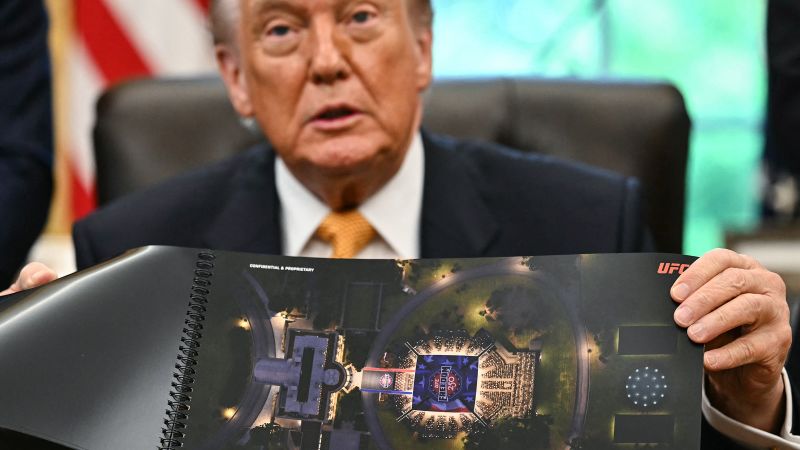
What we know about the UFC fight – In a surprising turn of events, President Donald Trump proposed hosting a UFC fight on the White House South Lawn, an idea initially dismissed as a lighthearted joke. During a July visit to Iowa, he teased the concept, linking it to the nation’s 250th-anniversary celebrations. Fast forward to early 2026, and the vision has materialized into a tangible spectacle. Construction crews have begun erecting a fight cage on the presidential grounds, while a colossal arched lighting structure—dubbed “The Claw” by the Ultimate Fighting Championship—now dominates the area. This marks a significant shift in how the White House is being utilized for public events, blending politics with the high-octane world of combat sports.
Building the Stage for a Historic Event
The construction of “The Claw” became visible in late May, towering over the White House briefing room and drawing attention from reporters. The structure, which spans the iconic Octagon—a hallmark of UFC arenas—has been meticulously designed to enhance the visual appeal of the event. According to CEO Dana White, the lighting grid was fabricated in Belgium, then transported to Philadelphia for assembly and testing before being shipped to Washington, D.C. The process underscores the logistical complexity of staging such a large-scale event in the nation’s capital.
“It’s a lighting grid that almost looks like a spaceship, and it goes over the Octagon,” White explained, highlighting the technological marvel of the setup.
With the fight scheduled for June 14, the White House has become the epicenter of anticipation. More than 90,000 spectators are expected to gather on the South Lawn to witness the action, transforming the presidential residence into a temporary arena. The event’s timing coincides with Flag Day and Trump’s 80th birthday, adding layers of symbolic importance. Beyond the main bout, the White House has planned a series of pre-fight activities, including meet-and-greets with current and former fighters, a Zac Brown Band concert, and a ceremonial weigh-in, all leading up to a watch party on the Ellipse.
Breaking Down the Fight Card
The main event promises to be a highlight of the UFC Freedom 250 card, featuring a clash between American Justin Gaethje and Georgian Ilia Topuria in the lightweight title bout. This matchup, along with the heavyweight interim title fight between Brazilian Alex Pereira and France’s Ciryl Gane, has drawn widespread interest. The UFC has listed all matches on its website, providing detailed profiles of the athletes. Notably, eight American fighters are set to compete, reflecting the organization’s emphasis on domestic talent.
As part of the event’s promotional efforts, Trump has invited a star-studded list of celebrities, including Tom Brady, Dwayne “The Rock” Johnson, Jared Leto, Guy Ritchie, Adam Sandler, Mario Lopez, and Jason Statham. These high-profile attendees aim to elevate the event’s cultural impact, ensuring it resonates beyond the world of combat sports. The inclusion of such figures also aligns with Trump’s strategy of leveraging media attention to amplify the visibility of the White House-hosted spectacle.
Securing Access for the Public
Despite the event’s high-profile nature, access remains limited. A total of 85,000 tickets are allocated for the general public at the Ellipse watch party, while 200 additional passes are reserved for the South Lawn. The distribution of tickets follows a strict three-part ratio: one-third for military personnel and their families, another third for White House staff and their relatives, and the final third for VIPs. This approach highlights the strategic allocation of resources to ensure the event’s success and exclusivity.
A White House official noted the intense demand for tickets, with many individuals competing for a spot in the audience. The military’s role is particularly significant, as Pentagon leaders are collaborating to select service members who meet body composition standards. These guidelines, outlined in internal memos reviewed by CNN, emphasize the importance of maintaining a physically fit and representative group of attendees. This process ensures that the military presence is both meaningful and practical.
Financial Commitments and Media Strategy
The question of who is funding the event has been a topic of discussion. The White House swiftly clarified on social media that the Ultimate Fighting Championship is covering the costs. White stated in an interview with Sports Business Journal that the organization would “eat the whole thing,” including the high expenses associated with the lighting grid. Mark Shapiro, president of TKO Holdings Group, echoed this sentiment, calling the venue a valuable opportunity for the brand. “Despite the estimated $60 million cost, the venue is an opportunity for the brand, given the earned media and attention surrounding the massive event,” Shapiro remarked.
The event’s financial investment is justified by the potential for exposure. Hosting a UFC fight at the White House offers a unique platform to reach a broader audience, blending entertainment with political symbolism. This strategy is part of a larger effort to position the UFC as a key player in the cultural landscape of the United States, leveraging the prestige of the presidential estate to generate buzz.
Weather as a Key Concern
One challenge the organizers must address is the weather. A second White House official acknowledged that the outdoor setting introduces unpredictability, making weather conditions a critical factor. To mitigate risks, the team is working closely with the U.S. military to monitor forecasts hourly and adjust plans as needed. While White expressed a preference for indoor events, he emphasized that the team is prepared for any scenario. “If it rains, we’re going to have a plan,” he said, underscoring the contingency measures in place.
The event’s logistical challenges extend beyond the physical setup. From coordinating with the military to managing ticket distribution, every detail has been meticulously planned. This effort reflects a broader trend of integrating entertainment and politics, with the White House becoming a stage for both national celebration and international competition. As the June 14 date approaches, the anticipation grows, with the fight poised to make a lasting impression on the nation’s cultural and political scene.
The UFC Freedom 250 fight represents more than just a sporting event—it is a statement of national pride, a showcase of American and international talent, and a testament to the collaboration between the presidency and the entertainment industry. With the White House as its backdrop, the fight will be watched by thousands, ensuring that the spectacle of combat sports reaches new heights of public engagement. As the lights of “The Claw” shine over the South Lawn, the stage is set for an unforgettable chapter in the history of both the UFC and the White House.
