
Longtime Epstein assistant paints late sex offender as master manipulator and denies knowing about his crimes
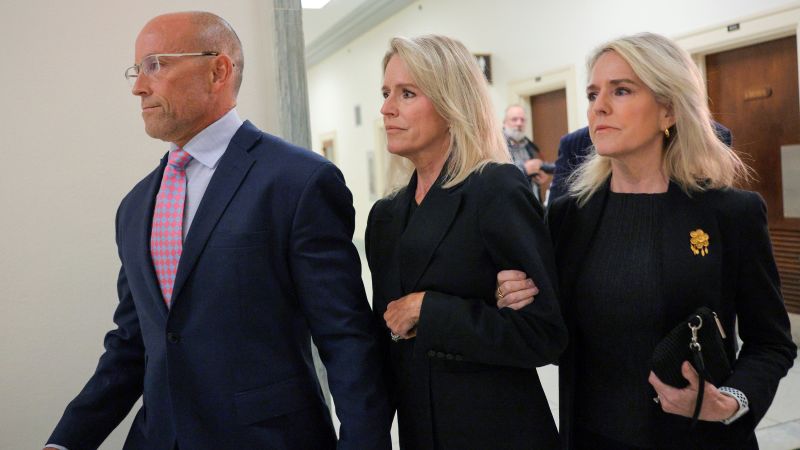
Lesley Groff, Epstein’s Longtime Assistant, Testifies Before House Oversight Committee
Longtime Epstein assistant paints late sex offender – During a Tuesday hearing, Lesley Groff, a former executive assistant to the late sex offender Jeffrey Epstein, shared her account with the House Oversight Committee, asserting she was unaware of his criminal activities. According to two sources who had access to the testimony, Groff described Epstein as a “master manipulator” who carefully concealed his secrets from her, even as she managed his daily schedule for nearly two decades. The session, which lasted over an hour, included Groff’s personal reflections on her time working for Epstein, offering insight into the inner workings of his operations.
Groff’s Role in Epstein’s Inner Circle
Groff, who has been relatively quiet in public discourse, is among the most prominent figures in Epstein’s close-knit network to address Congress directly. Her responsibilities spanned a wide range of tasks, from arranging massages for Epstein with young women and girls to coordinating meetings with influential individuals. This was highlighted by the Justice Department’s extensive file collection, which documents every facet of Epstein’s life and activities. Groff’s testimony underscores the complexity of her role, as she positioned herself as a figure who believed in Epstein’s legitimacy until the end.
“I want to say without any doubt that I have come to believe the man who employed me from February of 2001 through July of 2019 was a monster,” Groff stated. “For 18 years, I worked for Dr. Jekyll but was never permitted to see the true Mr. Hyde.”
While Groff acknowledged Epstein’s transformation into a “monster” in hindsight, she emphasized her belief in his public persona during her time with him. She claimed that the massage appointments she booked for Epstein were with “massage therapists,” not minors or victims of sexual abuse. “These calls lasted literally a few seconds,” she recounted. “‘Hi, this is Lesley calling for Mr. Epstein. Are you available for a massage at 4:00?’”
Groff maintained that none of the women involved in the appointments ever indicated they were underage or had been sexually assaulted. “Nothing I heard or saw led me to believe otherwise,” she said, reinforcing her claim of innocence in the matter. She also testified that she was not sexually abused by Epstein, a detail that was noted by one source as part of her broader narrative of disassociation from his actions.
Epstein’s Crimes and Groff’s Alleged Ignorance
Despite her claims of ignorance, Groff’s testimony was met with immediate scrutiny from survivors of Epstein’s abuse. Sharlene Rochard, a survivor, questioned how someone so closely tied to Epstein could remain oblivious to his crimes. “One of the hardest parts for survivors is hearing the people who were closest to Epstein claim they saw nothing,” Rochard told CNN. “That doesn’t match my experience.”
Rep. Stephen Lynch, a Democrat on the committee, echoed similar doubts, pointing out the inconsistency between Groff’s assertion of not knowing Epstein’s wrongdoing and her prolonged association with him. “It is highly inconsistent what she’s maintaining,” Lynch said, “that she really didn’t know Jeffrey Epstein even though she worked for him for 18 years.” He challenged Groff’s claim that she was unaware of any impropriety, noting Epstein’s status as a registered sex offender. “He was a registered sex offender and had to report,” Lynch added, emphasizing the expectation that someone in his inner circle would have been aware of his actions.
Groff also explained her decision to stay with Epstein for so long, stating that he had “lied to [her] and insisted that he had been blackmailed and set up.” She claimed that Epstein’s secrecy was a calculated effort to protect his reputation, and that she was told by both him and Ghislaine Maxwell, his associate, not to engage with their colleagues or friends. “He told me that I should not associate with their friends and colleagues,” she said, “insisting their business was none of mine.”
Testimony and Emotional Impact
Throughout her remarks, Groff expressed deep remorse for her role in Epstein’s operations. She addressed the survivors directly, stating that her “heart breaks for these women” and vowing to live with the guilt of working for him during his abuse. “I will live with this horrible feeling for the rest of my life,” she said, while acknowledging her complicity in Epstein’s secretive lifestyle.
However, her testimony also revealed the pressures she faced during her time with Epstein. Since his arrest, Groff has reportedly been isolated by friends, subjected to death threats, and her family has experienced harassment. These personal challenges, she suggested, influenced her ability to speak out earlier, even as she now seeks to distance herself from his actions.
Committee’s Focus and Unrestricted Inquiry
The House Oversight Committee’s session covered a broad spectrum of topics, with lawmakers from both parties engaging in a series of questions over the course of the afternoon. A source familiar with the proceedings noted that there was no prearranged agenda for Groff’s interview, allowing for an open and unfiltered exchange of information. This approach aimed to ensure that all aspects of Epstein’s life and crimes were explored thoroughly.
Groff, who had largely avoided the spotlight, seemed determined to cooperate with the investigation. “I want to help you in any way I can,” she told lawmakers at the beginning of her testimony, expressing a commitment to transparency. Yet, her account of Epstein’s behavior was juxtaposed with the experiences of those who had suffered under his influence, raising questions about the extent of her knowledge and the reliability of her claims.
While Groff focused on her perception of Epstein as a man who separated his “legitimate life” from his “secret life as an abuser,” her testimony did not fully address the systemic nature of Epstein’s operations. The committee’s inquiry included discussions about Epstein’s network, the role of Maxwell, and the broader implications of his crimes. Groff’s statements, however, were centered on her personal relationship with Epstein and her belief that he had misled her into complicity.
As the hearing progressed, Groff’s account of Epstein’s behavior was scrutinized alongside the evidence presented by the Justice Department. Her testimony, though detailed, left room for skepticism, particularly given the stark contrast between her perspective and the accounts of survivors who described Epstein as a predatory figure. The panel’s questions continued to probe her awareness, with lawmakers challenging her assertion that she was shielded from the truth by Epstein’s manipulative tactics.
Despite her efforts to portray herself as a victim of Epstein’s deception, Groff’s testimony highlighted the complexities of her role in his inner circle. Whether her claims of ignorance are valid or not remains a central debate, as the committee continues to investigate the full scope of Epstein’s crimes and the people who were closest to him. Her words, while heartfelt, add another layer to the ongoing narrative of how power, secrecy, and manipulation shaped the lives of those connected to the late financier.
As the session concluded, the focus remained on Groff’s ability to reconcile her 18 years of service with the knowledge of Epstein’s wrongdoing. Her testimony, though unique, serves as a reminder of the many individuals who were entangled in his web of influence, each with their own stories and perspectives on the late sex offender’s legacy.
