
Intel was on the brink of downfall. A twist in the AI race could boost its revival
Intel on the Brink: AI Shift Offers Revival Hope
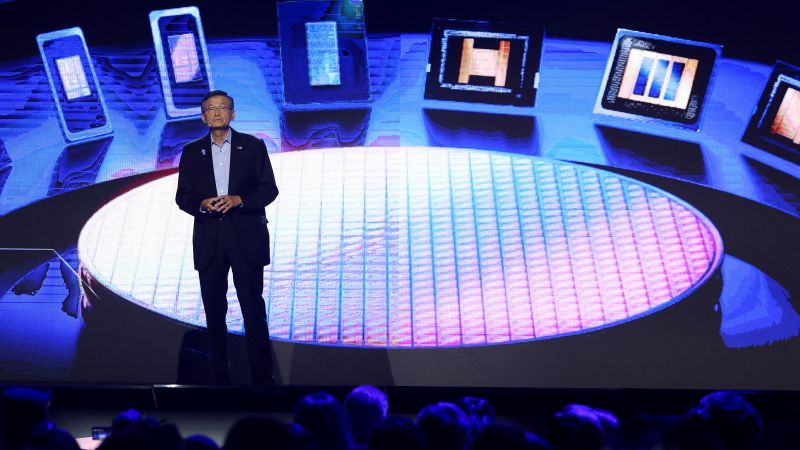
Intel was on the brink of downfall in 2025, but a strategic pivot in the AI race has reignited its prospects. When Lip-Bu Tan took over as CEO in March, the company faced a critical juncture, having lost ground to competitors like Nvidia and AMD. With Taiwan Semiconductor Manufacturing Company (TSMC) dominating advanced chip production, Intel’s manufacturing arm seemed sidelined. However, Tan’s first major speech at Computex in April hinted at a potential comeback, emphasizing the need for a focused, execution-driven approach to restore the company’s relevance.
Rebuilding Through Innovation
Tan, known for his decade-long experience at Cadence Design Systems, has been quietly steering Intel’s operations since his appointment. The Computex event marked a turning point, as Intel’s core CPUs—long the backbone of computing—now play a vital role in AI applications. Analysts note that the company’s focus on CPU efficiency, particularly for agentic AI systems, could position it as a key player in the evolving tech landscape. While GPUs remain dominant in training AI models, CPUs are increasingly critical for real-time inference tasks, a shift that Intel is keen to capitalize on.
“The CPU revival could save the company,” said Dan Nystedt, vice president of TriOrient, to CNN. “The majority of Intel’s business is CPUs.”
Leadership and Operational Overhaul
Under Tan’s leadership, Intel is streamlining operations and refocusing on its engineering strengths. The CEO has taken decisive steps, including cutting 34% of the workforce and halting expansion in Germany and Poland. These moves aim to eliminate bureaucratic inefficiencies and empower innovation. Additionally, recruiting executives from Qualcomm and Arm signals Intel’s commitment to modernizing its leadership structure. Partnerships with Nvidia and Softbank, alongside asset sales, are also injecting new momentum into the company’s financial and strategic outlook.
“The CPU is now the conductor, and the GPU is the orchestra,” remarked Jensen Huang, Nvidia’s CEO, during a Computex keynote. This analogy highlights the growing importance of CPUs in agentic AI, which has prompted even Nvidia to adjust its priorities.
Challenges and Strategic Resilience
Despite these efforts, Intel’s recovery is not guaranteed. The company has been criticized for its delayed response to the AI market’s rapid expansion, and competition remains fierce. However, Tan’s emphasis on supply chain reliability and customer-centric engineering has drawn positive attention. By leveraging its historical expertise in CPU design, Intel aims to reclaim its footing in the semiconductor industry. Analysts suggest that this focus could help the company navigate the challenges of an AI-driven market and secure a foothold in emerging technologies.
Intel’s ability to adapt hinges on its capacity to meet rising demand. The shift toward CPU-powered inference tasks has created a niche where Intel’s strengths can shine. As agentic AI becomes central to digital transformation, the company’s legacy in processing power may provide a competitive advantage. Tan’s leadership is now being tested to see if these strategic moves can turn Intel’s fortunes around.
Opportunities in the AI Ecosystem
The AI race has opened new avenues for Intel, particularly in the realm of inference computing. While GPUs are still essential for training complex models, CPUs are now critical for deploying them in everyday applications. This transition has redefined Intel’s value proposition, allowing it to target industries such as smart home devices and messaging platforms where CPU efficiency is paramount. OpenClaw, a widely used AI agent, exemplifies the growing reliance on CPUs for real-world automation.
“We are very focused on supply, making sure that we can delight the customer,” Tan reiterated during his Computex address. His remarks underscore a renewed emphasis on execution, positioning Intel to compete in a market that is reshaping traditional semiconductor dynamics.
A New Era for Intel
As the AI market evolves, Intel’s position in the semiconductor industry is once again in flux. The company’s ability to reposition itself as a leader in CPU-driven AI could determine its future trajectory. With Tan’s leadership and a recalibrated strategy, Intel is vying to reclaim its former dominance. The coming months will be pivotal in assessing whether this transformation can lead to sustained growth and a lasting revival.
