
Who are the World Cup favorites?
Who are the World Cup favorites?
Who are the World Cup favorites – As the World Cup approaches, speculation about the likely champions has reached a fever pitch. While many experts and bettors have narrowed their focus to a select group of teams, the tournament’s unpredictability ensures that no single squad can be guaranteed victory. Historical trends suggest that only a handful of nations have consistently dominated the competition, yet the gap between the top contenders and underdogs often closes dramatically during the final stages. With a week remaining until the opening match, the favorites are expected to come from a mix of seasoned veterans and emerging talents, creating a thrilling but competitive landscape.
Spain: A High-Scoring Threat
Spain has emerged as a formidable force in recent international competitions, solidifying its position as one of the leading contenders for the World Cup title. The team’s success in the past four years—winning the 2022-23 UEFA Nations League, the 2024 Euros, and the men’s Olympic tournament in Paris—has bolstered confidence in their ability to perform under pressure. Their European qualifiers were a masterclass in efficiency, finishing unbeaten at the top of their group with a blend of tactical precision and individual brilliance.
What sets Spain apart is its high-octane attacking style, which has evolved since their 2010 triumph. The squad now emphasizes speed and direct play, integrating quick transitions and aggressive pressing to disrupt opponents. This approach has been spearheaded by players like Lamine Yamal, the 18-year-old phenom who has already begun to draw comparisons to Lionel Messi. Yamal’s emergence as a key player has added a new dimension to Spain’s offense, though his fitness remains a question mark ahead of the tournament.
Its players often perform even better with the national team than they do for their clubs.
Despite their attacking flair, Spain’s young squad presents some vulnerabilities. The lack of experience in high-stakes matches could be a challenge, particularly when facing disciplined defenses. However, the team’s depth and adaptability offer reassurance. Nico Williams, a winger known for his explosive pace, and Pedri, the maestro of Spain’s midfield, continue to shine, while the midfield’s dynamic play creates opportunities for the forwards. That said, the absence of Barça star Fermín López due to a foot injury may impact their cohesion in critical moments.
France: The Dynasty in the Making
France, the reigning World Cup champion, brings a unique blend of experience and youthful energy to the table. The team’s ability to balance these elements has been a hallmark of their recent success, with a squad that has reached the past two finals and a history of thriving under pressure. Their European qualifying campaign was marked by resilience, securing a spot in the tournament despite challenges from stronger rivals.
France’s attack remains one of the most dangerous in the competition. Kylian Mbappé, the team’s undisputed star, has become a symbol of their dominance, having led the charge in the 2022 final and scored a hat-trick in the closing stages of that match. While Dembélé, the Ballon d’Or winner, is expected to play a pivotal role, his recent injuries have kept him out of European qualifiers. This has forced the team to rely on a mix of established stars and emerging talents, such as Michael Olise, who brings fresh energy to the right wing.
What sets France apart is their ability to switch between possession-based play and rapid counterattacks. This versatility has allowed them to maintain high performance levels across different formats, from the World Cup to club competitions. Coach Didier Deschamps, a veteran tactician, has masterfully harnessed this potential, guiding the team to consecutive finals and ensuring they remain a top contender. His decision to retire after this tournament adds a sense of urgency, as he aims to secure a historic third title.
Argentina: The Back-to-Back Ambition
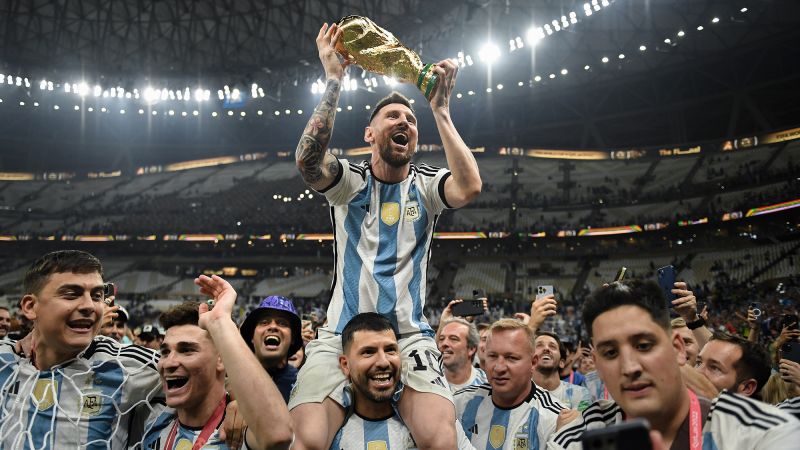
Argentina’s quest to win back-to-back World Cups places them in a rare category, joining an elite group of nations that have achieved this feat—Italy in the 1930s and Brazil in the 1950s and 1960s. The Albiceleste’s recent victory in the 2024 Copa América, held in the United States, has reinforced their status as a team capable of reaching the pinnacle of international soccer. Their South American qualifiers were a testament to their dominance, with a consistent performance that left no doubt about their credentials.
Argentina’s tactical identity has remained unchanged since their 2022 triumph, combining relentless pressing and quick transitions to maintain control of the game. The team’s intensity on the field is matched by their determination off it, as they seek to extend their legacy. However, the absence of key players in the second half of 2025—due to injuries and fitness concerns—has tested their depth. This has been offset by the emergence of younger stars and the continued excellence of veterans, ensuring a well-rounded squad.
With the World Cup on the horizon, Argentina’s focus is on replicating their success from the Copa América. Their ability to adapt and innovate, even in the face of adversity, makes them a strong favorite. The team’s chemistry and leadership, particularly from players like Lionel Messi and Ángel Di María, provide a foundation for their ambitions. Yet, their reliance on individual brilliance may be tested as the tournament progresses, demanding both tactical flexibility and collective execution.
While Spain, France, and Argentina dominate the current favorites list, other teams like England, Portugal, and Brazil are also viewed as potential dark horses. England’s strong squad and tactical discipline, Portugal’s strategic depth, and Brazil’s rich history and attacking pedigree all contribute to their inclusion in the conversation. These nations may not be the outright favorites, but their ability to adapt and perform under pressure could challenge the top teams in the knockout stages.
The World Cup is a tournament where anything can happen, and the margins between success and failure are razor-thin. Even the most powerful teams can falter under the weight of expectation, making the journey to the final as unpredictable as the outcome. As the buildup continues, the favorites will need to balance their strengths with addressing their weaknesses, ensuring they are prepared for the ultimate test of skill and resilience.
