
5 things to know about the Ebola outbreak
5 Key Insights on the Latest Ebola Crisis
5 things to know about the Ebola – The recent Ebola outbreak in the Democratic Republic of Congo (DRC) has sparked widespread alarm, with health experts warning of its potential scale. While the disease remains a serious threat, recent assessments suggest that a global pandemic is unlikely due to effective containment measures and the nature of its transmission. Here are critical updates from the latest developments in this ongoing public health challenge.
The Urgency of Early Intervention
Health authorities have emphasized the importance of swift action to curb the spread of the virus. A recent study by the Centers for Disease Control and Prevention (CDC) highlights that the current outbreak could surpass historical records if immediate steps are not taken. The WHO declared the situation a public health emergency of international concern on May 17, two weeks after identifying the outbreak in the DRC’s Ituri Province. However, officials now believe the virus may have been circulating earlier, possibly as far back as February.
“In an outbreak, time lost is transmission gained.”
— WHO Regional Director for Africa
A Remote Town’s Silent Battle
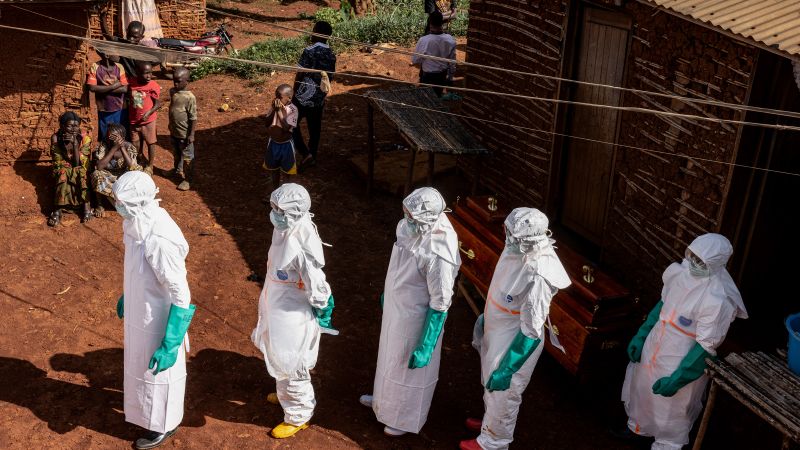
Residents of Mongbwalu, a secluded gold mining settlement in Ituri Province, reported unusual deaths around February 22. The mayor shared that a body was removed from the local morgue, followed by a funeral ritual involving a burned coffin. Within days, multiple fatalities emerged, leading to confusion among local leaders. At first, they suspected tuberculosis, but initial Ebola tests proved inconclusive—targeting the more prevalent Zaire strain instead of the Bundibugyo variant now responsible for the outbreak.
As investigations progressed, it became clear the disease had been spreading unnoticed for weeks. Health officials admitted the timeline of the outbreak may have started earlier than documented. This delay underscores the challenges of detecting emerging infectious diseases in resource-limited regions, where medical infrastructure is often stretched thin.
Projection of a Growing Crisis
Experts warn that the current outbreak could surpass the 2014-2016 West Africa epidemic, which claimed over 28,000 cases and 11,000 lives. Early estimates place at least 60 deaths so far, but models indicate the numbers could climb significantly. If the Bundibugyo strain’s spread is confirmed to have begun in late May, projections suggest the outbreak might reach hundreds of cases within months.
Dr. Jay Bhattacharya, acting CDC director, outlined the urgency of isolating infected individuals and implementing strict containment protocols. He stressed that the virus’s behavior, while dangerous, depends heavily on how quickly it can be controlled. “We’re looking at scenarios where this could become one of the largest outbreaks on record,” he noted during a CNN All Access event, where he discussed the U.S. response alongside correspondent Clarissa Ward.
Understanding Ebola’s Spread Dynamics
Despite its reputation as a highly lethal virus, Ebola is not easily transmitted. Unlike measles or COVID-19, it requires close contact with bodily fluids from an infected person who is symptomatic. This means the risk of transmission is lower unless a patient is in the advanced stages of illness. However, once someone reaches this phase, a single drop of blood or sweat can pose a significant threat.
Healthcare workers and family caregivers remain the most vulnerable group. During a 2014 visit to Guinea, Dr. Sanjay Gupta witnessed firsthand the difficulty of managing an outbreak in settings with limited resources. “Even a minor lapse in protection—like a small cut near the fingernail—can lead to infection,” he recounted, underscoring the need for vigilance in high-risk environments.
Demographics of the Outbreak
Data from the DRC reveals that the majority of cases involve women between the ages of 20 and 39. This demographic trend raises questions about the virus’s impact on specific populations and the factors contributing to its spread. While the exact reasons for this pattern are still under analysis, the high mortality rate among these individuals highlights the severity of the outbreak.
Challenges in the DRC include remote locations and insufficient medical supplies. Hospitals in affected areas have struggled to provide adequate care due to shortages of personal protective equipment (PPE) and other critical resources. Despite international efforts to bolster supplies, the situation remains tense, with frontline workers facing immense pressure to control the virus while protecting themselves and their communities.
Global Risk Assessment
While the regional risk is elevated, the World Health Organization maintains that the threat to the rest of the world is minimal. This assessment is based on the virus’s transmission patterns and the effectiveness of current containment strategies. “The disease is not airborne and spreads slowly compared to other pathogens,” explained WHO officials during a briefing, offering reassurance that the global community is not immediately at risk.
Still, the outbreak’s potential to escalate has prompted renewed focus on public health preparedness. The CDC’s modeling serves as a warning that without rapid intervention, the situation could worsen. This includes enhancing surveillance, accelerating vaccine distribution, and improving community engagement to identify and isolate cases early. Such measures are critical in preventing the outbreak from evolving into a larger crisis.
As the situation unfolds, the collaboration between international agencies and local leaders becomes increasingly vital. The mayor of Mongbwalu, for instance, has taken steps to coordinate efforts with health workers, demonstrating the importance of grassroots participation in combating outbreaks. With continued support and vigilance, the hope is that the DRC can contain the virus before it spreads beyond its borders.
Public awareness campaigns are also playing a key role in mitigating panic. Educating communities about transmission risks and preventive measures helps reduce stigma and encourages reporting of symptoms. In this context, the CDC and WHO’s joint efforts to share accurate information are crucial for maintaining trust and ensuring cooperation from those on the frontlines of the outbreak.
Ultimately, the success of containment efforts hinges on a combination of factors: timely detection, rapid isolation, and consistent use of protective equipment. The DRC’s experience with previous outbreaks has provided valuable lessons, and these are being applied to improve response strategies. As the world watches, the focus remains on preventing a repeat of the 2014-2016 crisis and ensuring that the current outbreak does not spiral out of control.
