
Can Marco Rubio convince Trump that a free Cuba is America First?
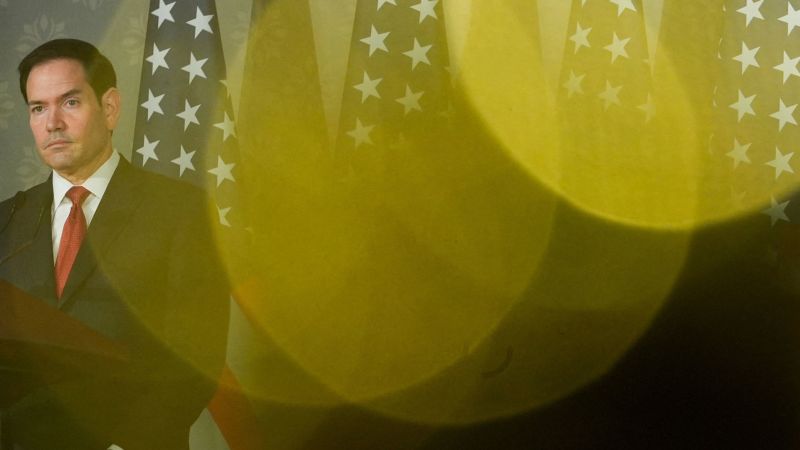
Can Marco Rubio convince Trump that a free Cuba is America First?
Can Marco Rubio convince Trump that – As the U.S. intensifies its pressure on Cuba, the nation’s foreign policy is once again shaped by a surprising partnership: Secretary of State Marco Rubio, who once criticized Donald Trump’s approach, now works closely with the former president to reshape the island’s future. This dynamic has placed Rubio in a delicate position, balancing his lifelong advocacy for Cuban liberty with the political pragmatism of the administration he now serves. The current strategy, marked by economic sanctions and diplomatic overtures, reflects a broader effort to redefine Cuba’s role in the global order under the banner of “America First.”
A New Era of Cuban Pressure
In recent months, the U.S. has taken a multifaceted approach to Cuba, combining financial restrictions with symbolic gestures. The imposition of sanctions on Cuban President Miguel Díaz-Canal, his wife, and stepson—alongside targeting family members of former leader Raúl Castro—has amplified the administration’s pressure on Havana. These actions follow a CIA ultimatum delivered in person by Director John Ratcliffe, who warned Cuban officials of the consequences if they failed to implement political reforms. Meanwhile, the USS Nimitz aircraft carrier strike group looms in the Caribbean, a military presence that underscores the readiness to escalate if negotiations stall.
Rubio, whose Cuban-American heritage fuels his advocacy, has positioned himself as the architect of this campaign. His goal is to accelerate Cuba’s transition from a one-party system to a more democratic structure, a vision that has long been a cornerstone of his political identity. Yet, the path to this objective has been fraught with challenges, as Trump’s insistence on gradual progress clashes with Rubio’s desire for swift change. This tension highlights the growing complexity of their shared agenda and the personal stakes for the senator.
The 2016 Campaign and Early Tensions
During his 2016 presidential campaign, Rubio articulated a clear vision for Cuba’s future, emphasizing the importance of democratic freedoms. Standing before a Miami audience, he outlined his principles for engaging with the island: free elections, an independent press, and open speech for its 11 million residents. This stance contrasted sharply with Trump’s response, which was characterized by vague promises of “a good deal” with the Castro regime. Rubio’s criticism of Trump’s answer resonated with the crowd, who erupted in approval, setting the stage for their current collaboration.
Rubio’s resolve in 2016 has since been tested by the evolving landscape of U.S.-Cuba relations. Now, as he navigates the administration, he faces the same challenge he once mocked in a political rival: convincing Trump that a free Cuba aligns with the broader goals of American leadership. The fuel blockade, which has caused frequent blackouts in Havana, is a direct example of this pressure. By targeting Cuba’s economy, the administration aims to weaken the regime’s grip while encouraging political shifts. However, the effectiveness of this strategy remains uncertain.
The Weight of Expectations
Rubio’s role in this campaign has expanded beyond his initial ambitions. As acting national security adviser, he holds dual authority over U.S. foreign policy, a rare position since Henry Kissinger’s tenure. This power allows him to influence decisions on Cuba, Iran, and Venezuela, yet it also demands compromise. Trump’s recent hesitation to pursue regime change has raised questions about how much autonomy Rubio retains. “I don’t know about changing the regime,” the president remarked last month when pressed for specifics, signaling a preference for incremental progress over sweeping overhaul.
For Rubio, the stakes are deeply personal. As the son of Cuban immigrants, he carries the legacy of the exile community, which has long sought to overthrow the Castro government. The pressure to deliver on this promise now rests on his shoulders, even as he grapples with the administration’s priorities. The White House has grown increasingly frustrated by the difficulty of forcing Havana into major concessions, a challenge that has tested the patience of both leaders. Yet, Rubio remains committed to his vision, describing the current situation as “the golden ring” for his career.
A Dual Role in Global Strategy
Rubio’s influence extends beyond Cuba, shaping Trump’s broader foreign policy. From his positions as secretary of state and acting national security adviser, he has guided the administration’s approach to Iran, Venezuela, and China, while also managing tensions with European allies. This multifaceted role has allowed him to consolidate power, but it has also created a web of competing interests. His focus on Cuba, however, remains central to his identity as a political leader.
The current campaign has also tested Rubio’s ability to mediate between his own aspirations and Trump’s vision. While the president prioritizes a “good deal” that maintains stability, Rubio pushes for transformative change. This divergence is evident in their public statements: Trump’s emphasis on pragmatism contrasts with Rubio’s idealism. The question persists—will Rubio’s efforts lead to a liberated Cuba, or will the outcome reflect Trump’s more cautious approach?
The Legacy of a Cuban-American Dream
Rubio’s advocacy for Cuba is rooted in his childhood experiences, where the island’s history of authoritarian rule shaped his worldview. The Cuban diaspora, concentrated in South Florida, has long supported his efforts, viewing him as a champion of their cause. Yet, their hopes are now intertwined with the fortunes of a presidency that has shifted its focus. “This is what he has dreamed about, both personally and professionally,” said Lawrence Gumbiner, who led the U.S. Embassy in Havana during Trump’s first term. “He realizes he has to dance around his boss, President Trump, and the expectations of the diaspora, while confronting the reality of the situation.”
Rubio’s strategy includes both carrots and sticks, aiming to lure Cuban leaders toward reform while simultaneously pressuring them to step down. This dual approach is evident in the administration’s recent actions, which combine economic hardship with diplomatic engagement. The goal is to create a scenario where Cuba’s leaders have no choice but to negotiate, but the Cuban government has shown resilience, maintaining its grip on power despite mounting pressure.
As the 2028 presidential election approaches, Rubio’s success in this campaign could define his legacy. His ability to reconcile Trump’s America First ethos with his own vision for a free Cuba will determine whether he emerges as a unifying force or a figure caught between competing agendas. For now, the Cuban-American community watches closely, hoping that the same ideals that once fueled Rubio’s early political career will now translate into tangible change on the island. The outcome of this effort, however, remains uncertain, as the intersection of personal ambition and political pragmatism continues to shape the course of U.S.-Cuba relations.
“The United States is open to a negotiated situation that puts Cuba on a path toward democracy, prosperity, freedom, and normalcy,” Rubio told lawmakers in a recent testimony. “We would be open to that, and we would work with whoever is open to doing it.”
Rubio’s journey from a political aspirant to a key player in the administration reflects the evolving nature of U.S. foreign policy. His work on Cuba has become a litmus test for the administration’s commitment to regime change, as well as a personal quest to honor his family’s struggles. The path forward is fraught with uncertainty, but for Rubio, it is a chance to prove that his ideals can align with the realities of power. Whether this will lead to the “free Cuba” he once envisioned remains a question that will be answered in the coming months.
