
UK’s Starmer hits out at people ‘trying to interfere in our democracy,’ after Vance blames Nowak death on mass migration
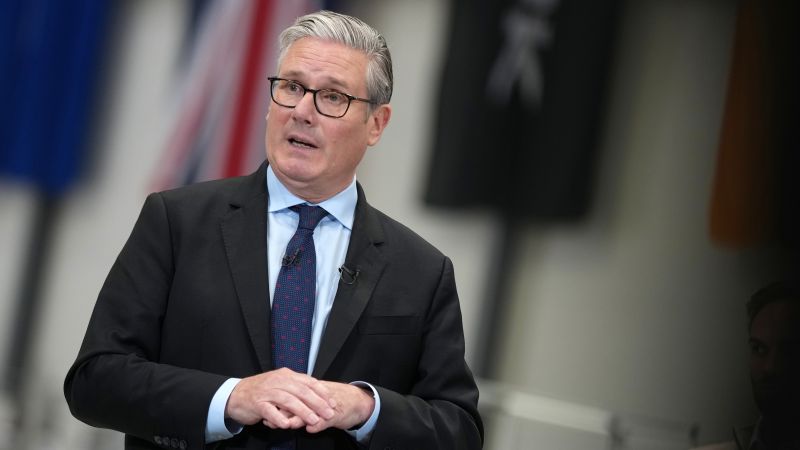
UK Prime Minister Condemns Attempts to Undermine Democratic Processes
UK s Starmer hits out at people – Following remarks by US Vice President JD Vance that connected mass migration to the recent death of a young White British student, UK Prime Minister Keir Starmer has denounced those attempting to undermine the nation’s democratic foundations. The controversy erupted after Vance blamed the “flow of mass migration” for the fatal stabbing of Henry Nowak, an 18-year-old finance student, in an incident that occurred late last year. Starmer’s response emphasized the need to protect the integrity of British institutions from external pressures, as the case has been exploited by far-right groups to frame the police and other public services as biased against White Britons.
The Incident That Sparked the Debate
Henry Nowak was killed on December 3, 2025, while returning home from a night out with friends. According to local police, he was stabbed five times by Vickrum Digwa, a 23-year-old Sikh man, who then falsely claimed to officers that he had been the victim of a racist attack. This led to Nowak being placed in handcuffs even as he lay critically injured, with bodycam footage capturing his desperate pleas for help. “I can’t breathe,” he cried, while “I’ve been stabbed,” as the officer responding to the scene dismissed his claims, saying, “I don’t think you have, mate.”
Far-Right Interpretation of the Case
The tragedy has been amplified by far-right activists, who have used it to argue that British institutions, including law enforcement, are systematically favoring ethnic minorities over White citizens. Digwa, who had previously expressed racist views, was later convicted of murder and sentenced to life in prison. However, the case has become a symbol for critics of immigration policies, who accuse the system of prioritizing migrant communities at the expense of others. This narrative has been further reinforced by remarks from Vance, who linked the incident to broader concerns about the impact of mass migration on societal cohesion.
Political Back-and-Forth Over Migration and Police Practices
Vance’s comments, posted on X, argued that the student’s death could have been prevented if European elites had resisted the “politics of self-hatred” and the “mass invasion of migrants.” He suggested that the failure to curb migration had created an environment where racism and bias could thrive, leading to Nowak’s fatal encounter. The UK’s Downing Street office quickly responded, with a spokesperson warning against those “trying to interfere in our democracy” and “stir up division on our streets.” The statement highlighted the Nowak family’s desire to avoid further polarization, stating, “They have said they do not want his death to be used to create further division, hatred or tension.”
US State Department Echoes Far-Right Concerns
Soon after Vance’s post, the US Department of State extended condolences to the Nowak family, inadvertently fueling the same debate by implying that “two-tiered policing” contributed to the incident. The department’s statement on X suggested that police officers, fearing accusations of racism, might have given preferential treatment to ethnic minorities, leaving Nowak vulnerable. This aligns with a common argument among right-wing figures, who claim that the current policing approach has shifted toward protecting migrant communities, potentially at the cost of White British lives.
Downing Street Defends the System
In response to the US claims, Deputy Prime Minister David Lammy asserted that “mistakes can happen in any public service” and that ongoing investigations are a testament to the system’s functionality. He explicitly rejected the idea of “two-tiered policing,” stating, “We don’t recognise the characterisation of two-tiered policing.” Lammy’s remarks aimed to reassure the public that the UK’s institutions remain impartial and that the Nowak case should not be used to generalize police behavior.
Reactions and Broader Implications
The exchange between Starmer and Vance has intensified discussions about the role of migration in shaping social dynamics. While the US vice president framed the issue as a failure of European political leadership, the UK leader focused on the importance of maintaining unity in the face of external criticism. This divergence in perspectives underscores the growing polarization over immigration and its perceived impact on national identity. The incident has also reignited debates about police accountability, with critics arguing that the system’s response to the attack may reflect broader biases.
Nowak’s death, which occurred in the quiet hours of a December night, has since become a focal point for political discourse. His family, who have expressed a desire to keep the tragedy from becoming a tool for division, are now caught in the crossfire of ideological arguments. As the UK government continues to defend its institutions, the case remains a symbol of the tensions between immigration policies and the values of equality and justice. Analysts suggest that the debate will likely persist, with both sides using the incident to advance their narratives.
Context and Historical Precedents
While the specifics of Nowak’s case are unique, it reflects a pattern of incidents where immigration has been used as a catalyst for political conflict. Vance’s remarks, though specific to Nowak, tap into a broader argument that mass migration has altered the cultural and social landscape of Western nations. This idea has been echoed by various far-right groups, who view the influx of migrants as a threat to traditional values. However, the UK government has emphasized that the system is designed to handle such complexities, with ongoing efforts to ensure fairness and impartiality.
As the conversation continues, it remains to be seen whether the Nowak case will be seen as a one-off tragedy or a harbinger of deeper societal divides. The exchange between Starmer and Vance highlights the growing interconnectedness of global political issues, with leaders on both sides of the Atlantic drawing parallels between migration and the state of democracy. For now, the focus remains on the need to respect the Nowak family’s wishes and to ensure that the incident is not weaponized to further stoke division.
Breaking down the timeline, the attack on Nowak occurred in December 2025, with the full details of the incident only emerging in early 2026. This delayed disclosure has allowed the narrative to evolve, with various stakeholders offering differing interpretations. The police’s role in the incident, particularly their decision to handcuff Nowak while he was still alive, has been a point of contention. While some see this as a necessary action, others argue it was a moment of hesitation that allowed the tragedy to unfold.
Ultimately, the case has become a microcosm of the larger debate about migration and its influence on national identity. As the UK and US leaders continue to exchange views, the incident serves as a reminder of the complex interplay between policy, perception, and public sentiment. The Nowak family’s grief remains central to the discussion, with their hopes for a unified response to the tragedy overshadowing the political rhetoric that has since emerged.
“The last few generations of European elites had stood their ground against the politics of self-hatred and the mass invasion of migrants,” Vance wrote on X, suggesting that a stronger stance on migration could have prevented the attack. “The student would still be alive if they had.”
With the incident now a flashpoint in the UK-US political relationship, the focus is on how both nations navigate the balance between immigration and social cohesion. As the debate unfolds, the Nowak case will likely remain a touchstone for discussions about the role of migration in shaping the future of democratic institutions.
